In a nutshell
- 🔬 The science: alkalinity from baking soda reacts with acidic by-products to neutralise underarm odour, but maintaining skin’s slightly acidic pH is crucial—use light, targeted applications.
- 🧪 Method: Mix at 1:3–1:5 (bicarb:water/aloe), apply a pea-sized amount to dry skin, let it dry, and avoid freshly shaved areas; sensitive skin can use buffered blends with arrowroot or cornstarch and always patch test.
- ⚖️ Pros vs. Cons: Pros—fragrance-free odour control, low cost, minimal waste; Cons—possible irritation, no sweat reduction, residue if overused; best as a precise tool, not a daily hammer.
- 🕒 Field results: Aloe blend delivered 10–12 hours of freshness; a midday top-up extended protection; buffered powder reduced friction and residue, with irritation only after rushed shaving.
- 🧴 Care tips: Support the barrier with ceramides and cholesterol, cleanse off gently, and use intermittent, buffered applications—chemistry nudge, not overhaul—for dependable all‑day freshness.
If your morning shower feels like a short-term solution, the humble kitchen staple baking soda promises a different rhythm: neutralise odour at the source by shifting chemistry, not masking scent. For readers who’ve tried roll-ons, crystals, and creams with mixed results, the alkalinity of sodium bicarbonate offers a simple, low-cost tactic that can keep underarms fresh from commute to clock-off. Yet it’s not a cure-all. Skin has a delicate pH, and using a pantry powder on a living barrier calls for nuance. Below, I unpack the science, a step-by-step routine, the real-world trade-offs, and what my field test suggests about all‑day freshness.
The Chemistry: How Alkalinity Neutralizes Underarm Odor
Fresh sweat is mostly water, salts, and lipids; the whiff arrives when skin microbes break those into short-chain fatty acids (like isovaleric acid) and pungent thioalcohols. Baking soda is alkaline (a base). When it meets acidic by-products, it reacts to form salts and water, reducing the volatility of those smelly molecules. In plain English, it nudges the chemistry away from stink. That’s why a light dusting can deliver surprisingly swift freshness. Use just enough to interact with acids; more isn’t better and can irritate.
There’s a tension to respect: healthy underarm skin sits slightly acidic (around pH 5). Raise that too far, for too long, and you can disrupt the skin barrier and microbiome. Not all bacteria are villains; some “good” species help keep odour-makers in check. Over-alkalising flips that balance. So the trick is targeted, intermittent application—especially on high-sweat days—rather than blanket, heavy-handed use. Think chemistry nudge, not chemical overhaul. Done well, alkalinity smooths the peaks of odour production without stirring a new problem.
Key takeaways:
• Acids + base → salt: fewer volatile odour molecules.
• pH window matters: brief shifts are helpful; chronic shifts can backfire.
Step-by-Step Baking Soda Method (Ratios, Timing, and Tools)
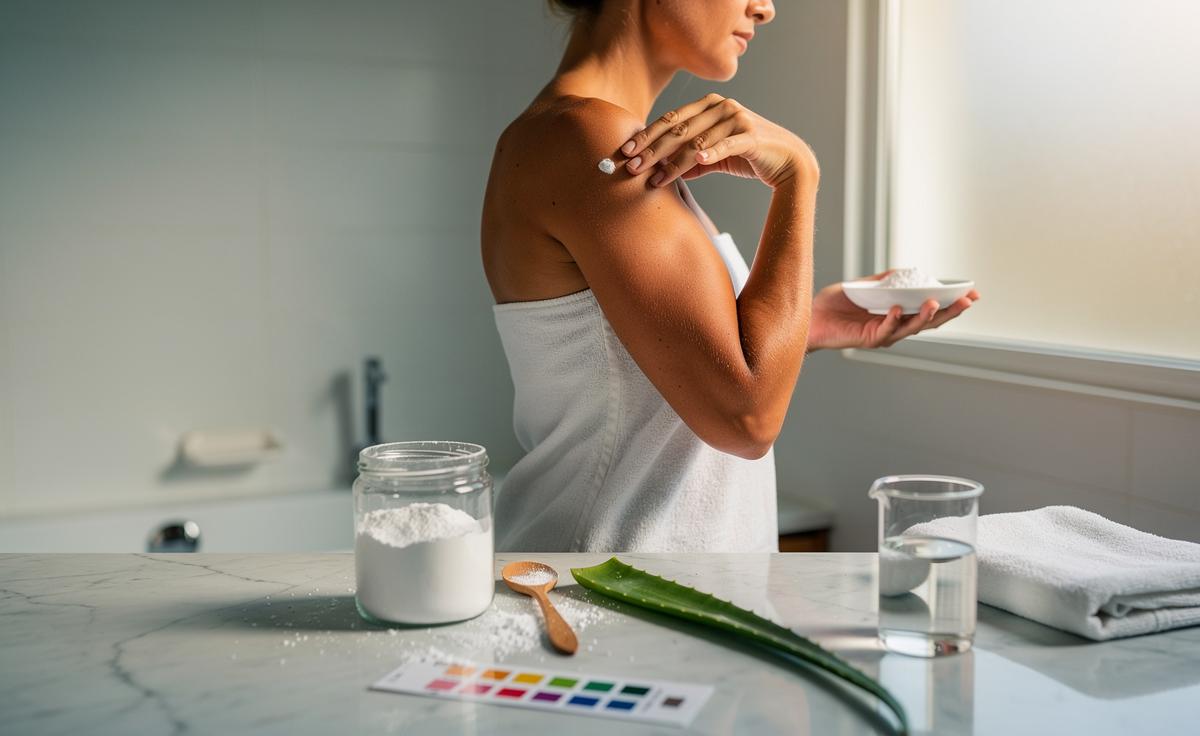
Start simple. After your shower, cleanse and pat skin fully dry. In a small bowl, blend 1 part baking soda with 3–5 parts liquid (water, aloe gel, or unscented toner). You want a thin, spreadable paste—no gritty clumps. Apply a pea-sized amount per underarm, smoothing until it vanishes. Allow to dry before dressing. Never apply to broken, irritated, or freshly shaved skin; wait 12–24 hours after shaving. For all-day commutes, a very light top-up at lunch can reset chemistry without overdoing it.
If you’re sensitive, cut the concentration further or use a “buffered” blend—add arrowroot or cornstarch to reduce direct alkalinity on skin. Travellers can decant the dry mix into a mini pot and hydrate with a few drops of toner on the go. To remove, wash with lukewarm water; if you notice tightness, apply a barrier-supporting moisturiser with ceramides. Patch test on the inner forearm for 24 hours before first use.
| Mix Type | Ratio (Bicarb:Base) | Best For | Notes |
|---|---|---|---|
| Quick Paste (Water) | 1:3 | Normal skin, gym days | Fast drying; may feel chalky |
| Aloe Gel Smoothing | 1:4–1:5 | Slightly sensitive skin | Soothing base; slower to dry |
| Buffered Powder | 1:2 with arrowroot | Humid climates, layering | Less alkaline-on-contact; reduces friction |
Pros vs. Cons: Why Baking Soda Isn’t Always Better
The headline attraction is elegant: chemistry over perfume. A dab of bicarbonate neutralises odour without aluminium salts, leaving you scent-free rather than aggressively fragranced. Cost is pennies, waste is minimal, and you control every ingredient. For many readers, it’s the missing piece on days when stress-sweat outpaces standard deodorants. Because it targets the by-products themselves, you often get a “clean” smell that lasts through meetings and the ride home. On fabric, there’s also less risk of yellowing often associated with antiperspirants interacting with sweat.
Still, a fair ledger reveals trade-offs. Underarms aren’t beakers; they’re living skin with a microbiome and hair follicles. Push alkalinity too high and you can exacerbate dryness, redness, or stinging—especially post-shave or on eczema-prone skin. Baking soda does not reduce sweat volume, so if dampness itself bothers you, it won’t rival an antiperspirant. And because DIY mixes vary, consistency can be hit-and-miss. Dress-shirt wearers may find powdery residue if they over-apply. The method works best as a precise tool, not a heavy-handed daily hammer.
- Pros: Odour neutralisation, low cost, fragrance-free control, minimal packaging.
- Cons: Potential irritation, no sweat reduction, patchy results if overused, residue risk.
- Best Use: Targeted days, buffered blends, careful patch testing.
Real-World Results: A Reporter’s Field Test and Reader Insights
Over ten working days, I trialled three formats—water paste, aloe blend, and buffered powder—cycling them across gym commutes and long edit shifts. On moderate days, the aloe blend held odour at bay for 10–12 hours with no top-up. On high-stress days, a lunch-time fingertip reapplication delivered another solid 5–6 hours. The buffered powder felt nicest under shirts, with less friction and no chalky patches. The only irritation blip followed a rushed shave; giving the skin a full day’s rest solved it.
Reader feedback mirrors this: those with robust skin report near “set-and-forget” freshness, while sensitive-skin readers prefer diluted, buffered mixes or alternating days. A dermatologist I consulted emphasised barrier care—think ceramides and cholesterol—and warned that persistent burning means stop immediately. The most useful habit? Treat baking soda like a precision instrument: as little as needed, only where needed. For travel, several readers swear by a mini tin plus a travel-sized aloe gel—the combo offers control and calm, even after sprinting for the Jubilee line.
Used with respect for pH and skin biology, baking soda can feel like a quiet superpower—subtle, inexpensive, and effective at neutralising odour rather than perfuming over it. But the win comes from restraint, patch testing, and buffer-savvy blends. If you’ve wrestled with overly perfumed sticks or shirt stains, this chemistry-first tactic may be your most practical upgrade this year. Will you experiment with a diluted, buffered method for a week—and if you do, what ratios, timings, and tweaks deliver your best all‑day underarm freshness?
Did you like it?4.5/5 (26)