In a nutshell
- 🌼 Chamomile tea rinse brightens blonde hair by depositing apigenin, acting as a plant-based glaze that boosts reflectivity; effects are cumulative and subtle—more tonal brightening than true bleaching.
- 🫖 Method: brew 3–5 bags per 250 ml, steep 20–30 minutes, cool, optionally add a little lemon and glycerin, saturate hair, and leave 15–30 minutes with gentle warmth; repeat 1–3 times weekly and strand-test first.
- ⚖️ Pros vs. Cons: Pros—subtle, low-cost, scalp-soothing, great between salon visits; Cons—can skew yellow on very light cool tones, minimal effect on dark bases, dryness with excess acidity; mind UK hard water and use a chelating wash monthly.
- 🧪 Evidence & Myths: Optical brightening and mild surface oxidation drive results; “stronger isn’t always better” and too much lemon can roughen cuticles; expect visible glow after 3–5 rinses, balance warmth with occasional violet shampoo.
- 📊 Quick guide: choose Mild (soft warmth), Standard (noticeable golden lift), or Intense (deeper honey tone, brass risk) based on hair type—fine pale blondes to highlighted brunettes—and adjust brew strength accordingly.
Chamomile tea rinses have quietly moved from folk remedy to bathroom staple for people seeking sun-touched blonde highlights without bleach. Steeped like a cuppa and poured through freshly washed hair, this natural dye coaxes golden reflection while softening the cuticle. The magic is cumulative: mild plant pigments bond to strands and, with warmth or sunlight, brighten the overall tone. It will not bleach your hair overnight, but it can nudge blonde toward a clearer, honeyed register over several uses. Here is the science, the step-by-step routine, and the nuanced pros and cons that matter—especially if you are juggling colour-treated hair, UK hard water, or a winter without much sun.
How Chamomile Works on Blonde Pigment
Chamomile’s signature hue comes primarily from apigenin, a yellow-gold flavone that can deposit onto the hair cuticle. On light to medium blonde hair, those microscopic layers of pigment act like a filter, shifting reflection toward warm-gold and making natural highlights appear brighter. A rinse does not open the cuticle the way oxidising dyes do; instead, it lays down a sheer veil of colour that subtly builds. Think of it as a plant-based glaze that amplifies the blonde you already have.
There is also a modest lightening assist. Warmth and UV exposure can gently oxidise surface melanin, especially when hair is in a slightly acidic environment. Many DIYers pair chamomile with a splash of lemon (citric acid) to lower pH, helping smooth the cuticle so light bounces more evenly. Yet the main effect remains tonal—more brightness from better reflectivity—rather than deep pigment removal.
Results vary by baseline shade and porosity. Natural blondes see quicker payoff; highlighted brunettes may notice glow on lighter pieces but no shift in their deeper base. Over-steeping or ultra-strong brews can skew brassy on very pale, cool blondes, so strength matters. More tea is not always better; precision beats potency when your target is soft, sunlit lift.
- Deposition: Apigenin binds lightly to the cuticle, adding golden tone.
- Optical brightening: Smoother, flatter cuticles reflect more light.
- Mild oxidation: Warmth/UV nudge surface melanin lighter over time.
Step-by-Step Rinse: From Kettle to Sunlit Shine
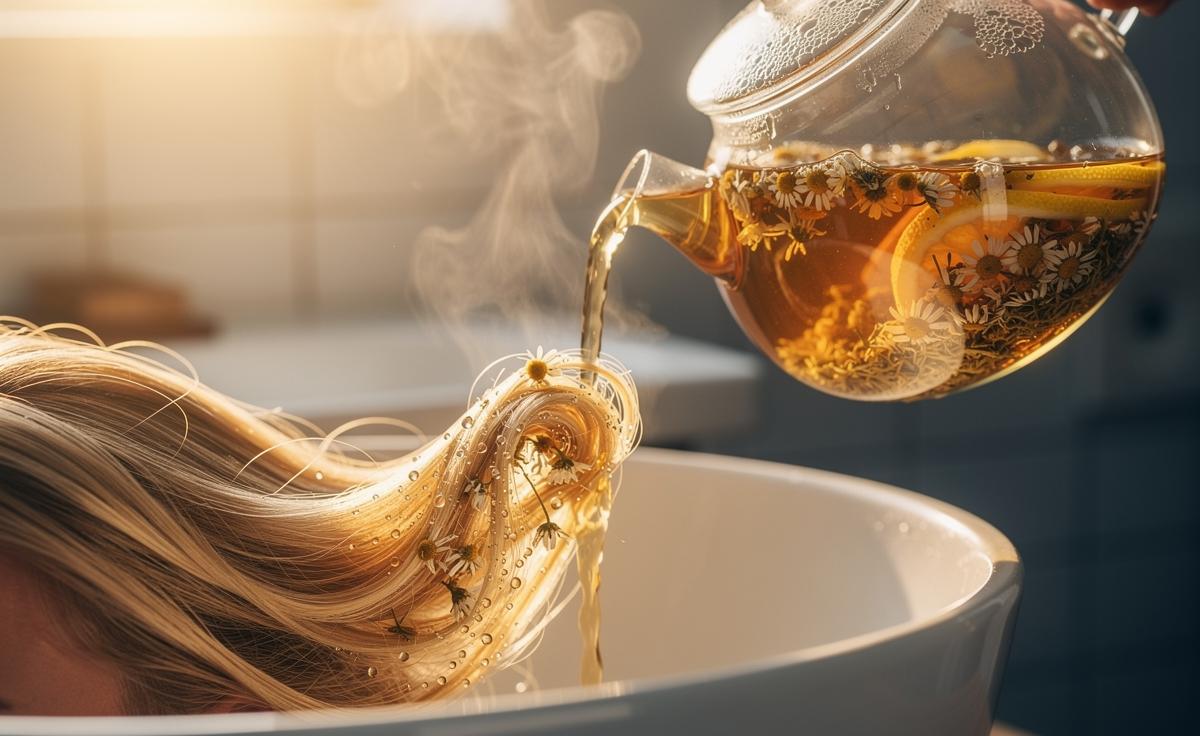
Start with clean, towel-dried hair. Brew a strong infusion: 2 tablespoons dried chamomile flowers or 3–5 tea bags per 250 ml boiling water. Steep 20–30 minutes, then cool to skin temperature. Optionally add 1–2 teaspoons of lemon juice per cup for extra clarity and 2–3 drops of hair-safe glycerin for slip. Pour slowly over hair into a bowl to catch and re-pour several times until fully saturated. Leave in for 15–30 minutes under gentle warmth or diffuse sunlight—never scalding heat.
Rinse lightly with cool water or leave-in for maximum deposit; then condition to rebalance moisture. Repeat 1–3 times weekly for 2–4 weeks to see a noticeable shift, then maintain as needed. In hard-water regions (much of the UK), minerals can mute shine; using filtered or kettle-descaled water and a monthly chelating wash keeps results clearer. Always strand-test first if your hair is very porous, platinum, or colour-treated.
| Rinse Strength | Brew Ratio | Steep Time | Expected Effect | Best For |
|---|---|---|---|---|
| Mild | 2 bags / 250 ml | 10–15 mins | Soft warmth, added shine | Fine, pale blondes; first-timers |
| Standard | 3–4 bags / 250 ml | 20–30 mins | Noticeable golden brightening | Natural blonde to dark blonde |
| Intense | 5–6 bags / 250 ml | 30–40 mins | Deeper honey tone, risk of brass | Dark blonde/highlighted brunettes |
- Do: Use gentle heat, condition after, protect from midday UV.
- Don’t: Overload with lemon; high acidity can dry and roughen hair.
Pros vs. Cons for Different Hair Types
For many, chamomile offers a low-cost, low-commitment brightening with a soothing scent and potential scalp-calming benefits. It is ideal for natural blondes, highlighted brunettes seeking softness in lighter strands, and those avoiding peroxide between salon visits. The finish reads natural because it is—no harsh lines, just a lifted halo that’s kinder to texture. Used judiciously, it supports shine while dialling in a sunlit gloss.
But it is not universal. Very cool, platinum, or grey hair can skew yellow. Dark brown to black hair will not lighten; at most, it gains warmth in the sun. Overuse or high acidity may dry ends, and individuals allergic to ragweed or daisies should avoid it. Colour-treated hair poses nuance: chamomile is generally safe on highlights, yet can nudge salon toners warmer. When in doubt, perform a strand test and space applications to monitor tone.
- Pros
- Subtle, buildable brightness
- Non-peroxide approach between salon services
- Budget-friendly and kitchen-simple
- Cons
- Potential yellowing on very light cool tones
- Minimal effect on dark bases
- Dryness risk with excessive acidity or sun
Evidence, Myths, and Real-World Results
Plant chemists have long documented apigenin as a stable, yellow chromophore. In hair, most of chamomile’s perceived “lightening” is optical: smoothed cuticles reflect more light, and a fine gold filter counteracts dullness. Heat or UV can modestly oxidise surface pigment, but there is no deep-lift mechanism akin to bleach. That is why results are gradual, natural-looking, and capped at a few shades of added brightness—not transformative colour.
Myth-busting matters. Why “stronger is better” isn’t always better: ultra-concentrated tea can tip warm or stain porous ends. Why “lemon equals faster results” isn’t always better: high acidity roughens cuticles, reducing shine. Sun helps, but controlled warmth works in winter; the key is consistency and aftercare. Expect the first noticeable glow in 3–5 rinses, then maintain weekly. Pair with a violet shampoo once a fortnight if you prefer cooler gold rather than full honey. Measure progress against a white towel photo in daylight to track subtle improvements honestly.
- Signs it’s working: brighter baby hairs, warmer highlights under indoor light, easier shine with a cold rinse.
- Pause and reassess if: ends look brassy, hair feels squeaky-dry, or toner fades faster than usual.
Chamomile is the rare beauty ritual that rewards patience: a teapot, a towel, a week or two, and you have a softer, sunnier blonde with minimal risk. Use smart safeguards—strand tests, modest acidity, and diligent conditioning—and you retain control over tone while skipping harsh bleach. In a world of instant fixes, its gentle pace is precisely the point. If you try it, what baseline shade, brew strength, and schedule will you choose to tailor the finish to your lifestyle and the light where you live?
Did you like it?4.6/5 (23)