In a nutshell
- 🧪 The science: phyllosilicate minerals with vast surface area and cation‑exchange capacity bind sebum via adsorption and interlayer swelling, delivering matte skin without solvent-like stripping.
- ⚖️ Bentonite vs. Kaolin: bentonite is high-capacity but can over-dry and trigger rebound oil; kaolin is gentler and steadier. Blends (about 60–80% kaolin + 10–20% bentonite) balance performance and comfort.
- ⏱️ How to use: don’t let masks fully dry; aim for the damp-to-just-set window (5–10 minutes), try zoning for T‑zones, and follow with humectants and a light occlusive; start weekly and build to twice if tolerated.
- 📊 Practical nuances: kaolin = everyday-friendly, bentonite = rapid mattifying, illite = middle ground; particle size and purity drive feel; for DIY, avoid metal bowls with bentonite and add glycerin/honey for comfort.
- 🧴 Results and formulation: case notes show steadier shine with kaolin-first blends plus zinc PCA/niacinamide; use film formers and skin-friendly pH for fewer cracks and better wear—aim for a “smart matte” that protects the barrier.
There’s a quiet satisfaction in watching a clay mask pull the shine from a mid-afternoon T‑zone, leaving skin matte yet alive. For beauty lovers and formulators alike, the appeal lies in how minerals behave like microscopic sponges, drawing oil into their layered structures. In the UK, where fickle weather can turn combination skin temperamental, clay masks have become a dependable reset. The secret isn’t magic; it’s surface chemistry. Understanding how clays absorb oils—and how to use them without stripping—can turn a once-a-week ritual into a precise tool for balance. Here’s the science, the practice, and the little decisions that turn a good mask into a great one.
The Science Behind Oil-Absorbing Clays
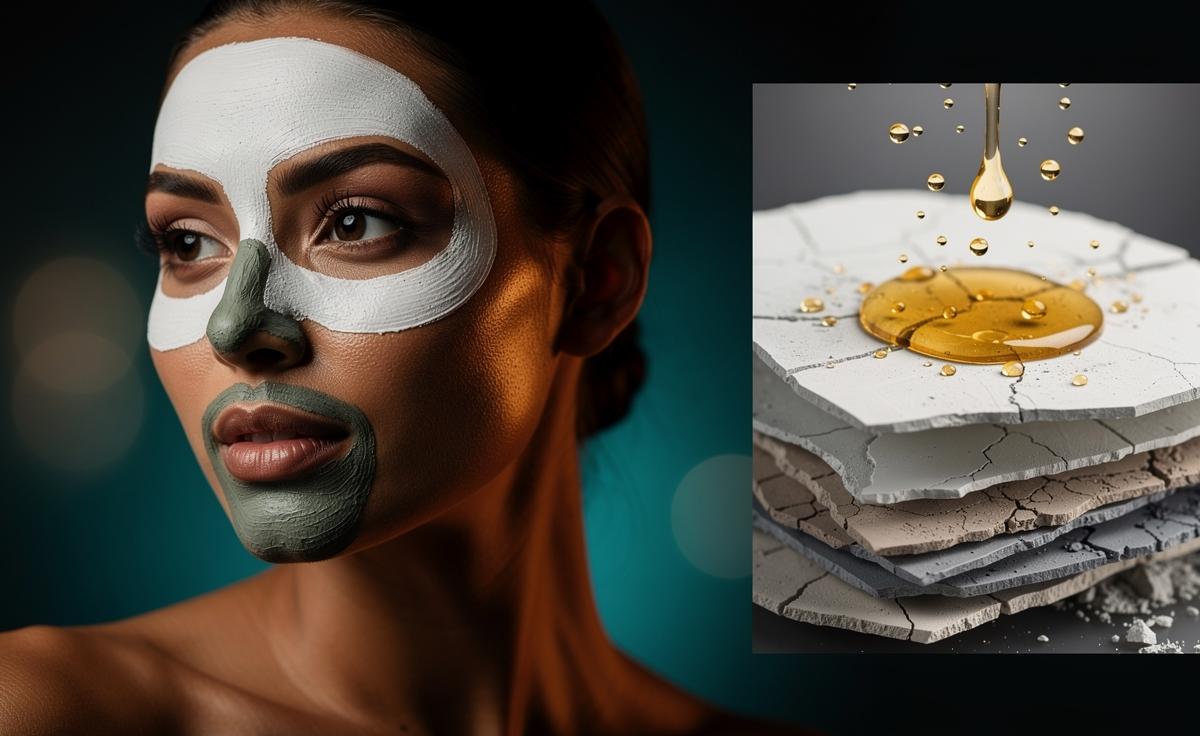
Clays are phyllosilicates, layered minerals with expansive surface areas and an inherent negative charge. That structure gives them a high cation-exchange capacity and a knack for attracting sebum’s positively charged components and nonpolar lipids via van der Waals forces. In practical terms, oil migrates into microscopic platelets and pores where it’s trapped. Two mechanisms dominate: physical adsorption on vast surfaces, and interlayer “swelling” that pulls fluid into the clay’s galleries. The result is controlled matte-ness without solvent-like harshness.
Different clays work at different speeds. Bentonite (rich in montmorillonite) swells aggressively, mopping up oil quickly and tightening the look of pores. Kaolin (china clay) is gentler: smaller charge, softer pull, and better suited to daily or frequent use. Illite/green clay sits between the two, offering firmer grip with mineral trace elements many enthusiasts prize. Crucially, particle size and purity steer experience: finely milled clays feel silkier and distribute more evenly, while contaminants or oversized particles risk irritation.
| Mineral | Oil Absorption Mechanism | Skin Feel | Pros | Considerations |
|---|---|---|---|---|
| Kaolin | Surface adsorption, mild charge | Soft, low-tug | Everyday-friendly; low risk of over-drying | Slower oil pickup on very oily skin |
| Bentonite | Interlayer swelling + strong adsorption | Firm set, tight feel | High capacity; rapid mattifying | Can over-dry or disrupt barrier if overused |
| Illite/Green Clay | Moderate adsorption, mineral-rich | Balanced grip | Good middle ground; tactile “spa” feel | Quality varies; may feel gritty if coarsely milled |
Bentonite vs. Kaolin: Why Stronger Isn’t Always Better
On a muggy London week, I patched bentonite and kaolin on different halves of my T‑zone. Bentonite delivered instant matte—textbook “photo-ready” skin. But by evening, the bentonite side felt tight, nudging me to reach for a heavier moisturiser. The kaolin side looked less dramatically matte yet stayed comfortable, with fewer rebound oil slicks. This is the paradox of potency: a stronger pull can provoke the skin to re‑oil, whereas a steady, gentler draw keeps equilibrium.
In formulas, bentonite’s swelling can thicken a mask beautifully and boost oil capacity. However, more isn’t always more. Why stronger isn’t always better: high-capacity clays can outpace the skin’s tolerance, especially on noses and cheeks already coping with central heating and urban pollutants. Kaolin, by contrast, plays well with humectants (glycerin, sorbitol) and barrier allies like squalane, creating a “smart matte” that absorbs oil while leaving micro-reservoirs of water in the stratum corneum. If your skin often feels tight after masking, the issue may be clay choice and not your moisturiser. Pros look for blends—kaolin-led bases kissed with 10–20% bentonite—to balance capacity and comfort.
How to Use a Clay Mask Without Over-Drying
The most common mistake is letting clay dry to a cracking desert. That’s the “pull” phase, when water evaporates and the mask grips too hard. For shine control with respect for the barrier, aim for the damp-to-just-set window. Apply a thin, even layer to cleansed skin; mist lightly if edges dry faster than the centre. On combination skin, try zoning: kaolin all over, bentonite only on the nose and chin.
Timing matters. For kaolin, 8–10 minutes is often ample; bentonite may need just 5–7 on sensitive areas. Rinse with lukewarm water and a soft cloth, then replenish with a humectant serum (glycerin, hyaluronic acid) and a light occlusive like squalane. Weekly cadence? Begin with once a week, rising to twice if your skin tolerates it during summer. Never mask on a compromised barrier or over exfoliants the same day. And if you’re acne-prone, ensure “non‑comedogenic” emollients in your post-mask routine, but don’t skip them—dehydrated skin can produce more sebum.
- Patch test on the jawline for 15 minutes before first use.
- Mix dry clay with filtered water or hydrosol; avoid metal bowls for bentonite.
- Add a teaspoon of honey or glycerin to DIY mixes for comfort.
- Stop at “tacky, not flaky”; rinse before full dryness.
Real-World Results: Case Notes and Formulation Tips
A reader in Manchester with combination skin swapped a weekly all‑bentonite mask for a kaolin-first blend plus a zinc PCA booster. Two weeks later, she reported fewer mid‑day blotting papers and less tightness at night. While anecdotal, it mirrors what formulators see: when oil control improves without barrier backlash, the shine curve flattens through the day. Comfort sustains consistency; consistency sustains results.
For brands and DIY enthusiasts, small levers matter. Blend clays to tune absorption kinetics; introduce humectants (glycerin 2–4%) and film formers (panthenol, hydroxyethylcellulose) to reduce crack‑off. Consider niacinamide (2–5%) for long‑term sebum modulation, and keep pH near skin‑friendly levels if you include actives. Fine particle size elevates slip; tested purity reduces irritation risk. Packaging? Wide-mouth jars are convenient, but airless or powder formats extend freshness—especially for water-containing masks where preservatives must work harder. The best shine control is targeted, comfortable, and repeatable. Pros often land on 60–80% kaolin, 10–20% bentonite, and the rest sensorial and barrier support.
Clay masks endure because they deliver a tangible reset: oil lifted, texture smoothed, clarity returned. The trick is matching mineral strength to your skin’s temperament and using technique to stop at “balanced,” not “bare.” With the right clay blend, timing, and aftercare, shine control becomes a calm ritual rather than a firefight with blotting papers. What will you adjust first—your clay choice, your timing, or your post-mask routine—to turn mattifying into genuine balance?
Did you like it?4.6/5 (26)