In a nutshell
- 🌴 Science: Lauric acid in coconut oil penetrates the hair shaft, reduces protein loss, and strengthens fibres—improving length retention rather than speeding follicle growth.
- 🛠️ Method: Apply 1–2 tsp to mids-ends, light on scalp, massage 5 minutes, wrap 30–90 minutes or overnight, then conditioner-before-shampoo to remove; repeat 1–2x weekly—less is more.
- 🧪 Oil choices: Pick virgin, refined, or fractionated to match porosity and density; high-porosity loves virgin, fine hair prefers lighter MCT; patch test and watch for acne-prone scalp issues.
- ⚖️ Pros vs. Cons: Benefits—gloss, frizz control, fewer splits, lower hygral fatigue; Risks—weight, buildup, congestion. It won’t reverse genetic or scarring alopecias; consider squalane/babassu as lighter alternatives.
- 📊 Practical take: A UK winter trial saw fewer snapped ends and sleeker styles; track shedding vs. breakage and tweak oil type, timing, and quantity—consistency beats intensity.
Glossier than folklore yet rooted in chemistry, the coconut oil hair wrap is a ritual many British bathrooms have quietly adopted. The promise is simple: feed the follicles with rich fats to help hair appear to grow faster. In practice, the win often comes from stronger strands that break less, so you retain the length you already produce. Here’s a journalist’s field guide to what the science actually says, how to wrap like a pro, and when to steer clear. Expect practical steps, data-literate nuance, and a few notes from trichologists and stylists who see the trend play out in real heads of hair across the UK.
What Makes Coconut Oil a Growth Ally
The backbone of coconut oil is a high proportion of lauric acid (typically 45–53%), a medium-chain fatty acid with a straight, low–molecular weight structure. That matters because it can bind to hair proteins and penetrate the cortex more readily than bulkier oils. Classic lab work by Rele and Mohile indicated coconut oil reduces protein loss from both damaged and undamaged hair when used pre- and post-wash. The upshot: stronger fibres suffer fewer mid-shaft snaps, so length retention improves—even if your genetic growth rate doesn’t change.
Follicles also benefit indirectly. A thin film of oil reduces transepidermal water loss on the scalp, supporting the barrier and comfort. Massage during the wrap may boost local microcirculation (the hands do the work), while the oil’s fatty acids show mild antimicrobial activity that can help when flakes and itch are in the mix. Yet it isn’t a miracle. Coconut oil won’t resurrect dormant follicles or override androgen-driven thinning. Its real advantage is mechanical resilience: fewer split ends, less hygral fatigue, and a sleeker cuticle that tangles less, so you keep more of each month’s growth.
Choosing the Right Coconut Oil for Your Hair Type
Not all coconut oils behave the same. Virgin, unrefined coconut oil retains aromatic compounds and trace antioxidants; refined is neutral and often more stable; fractionated remains liquid at room temperature, featuring caprylic/capric triglycerides with a lighter feel but less protein-binding potential than lauric-rich options. Your texture, porosity, and scalp tendency (dry vs. acne-prone) should guide selection. Fine or low-porosity hair can feel waxy and weighed down by heavy application, whereas coily or high-porosity strands often drink it in.
Dermatologists also flag the comedogenic risk: coconut oil sits around 4 on some scales, meaning acne-prone scalps may prefer blends or lighter lipids (e.g., squalane). As a rule, pick what solves your top problem: strength and frizz control (virgin), slip and lightness (fractionated), or balance (blends with argan/babassu). A patch test behind the ear for 48 hours remains a sensible, low-tech safeguard.
| Oil Type | Key Notes | Penetration | Best For | Avoid If |
|---|---|---|---|---|
| Virgin (Unrefined) | High lauric acid, natural aroma | Strong | High-porosity, damaged, coily | Oily or acne-prone scalp |
| Refined | Neutral scent, stable | Strong | Normal to dry hair needing strength | Fragrance-free purists may prefer it; otherwise broadly safe |
| Fractionated (MCT) | Lighter feel, less lauric | Moderate | Fine/low-porosity, daily light use | Severe breakage needing maximum reinforcement |
| Blends (Coconut + Argan/Babassu) | Balanced slip and seal | Variable | Mixed textures, beginners | Strict coconut-only purists |
How to Do a Coconut Oil Hair Wrap, Step by Step
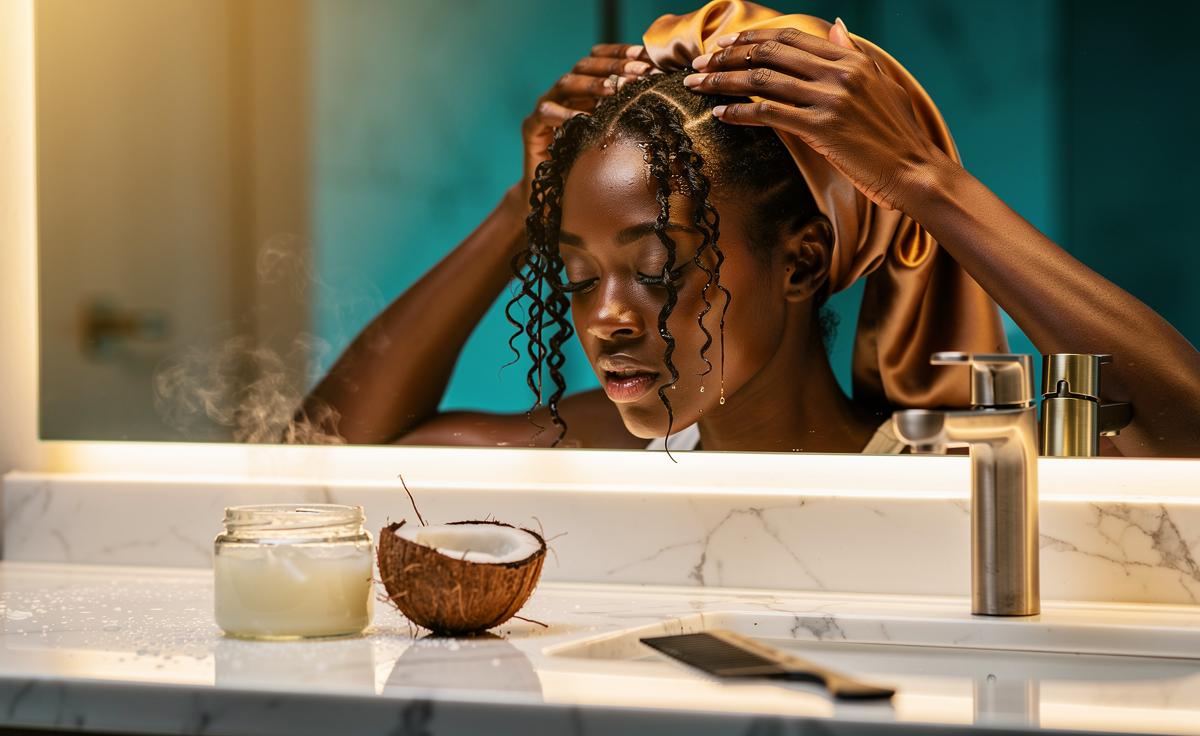
Start with dry or slightly damp hair. Warm 1–2 teaspoons of coconut oil between your palms (shoulder-length; double for very long or coily hair). Optionally, place the jar in a mug of hot water to reach skin temperature—about bath-warm, not hot. Focus first on the mid-lengths and ends where mechanical wear shows, then sparingly tap what’s left onto the scalp if dryness warrants it. A deliberate five-minute fingertip massage helps distribute oil and soothes the skin.
Comb gently with a wide-tooth tool, twist into a loose bun, and cover with a shower cap or silk scarf. Leave on for 30–90 minutes as a pre-wash, or overnight if your scalp tolerates occlusion. To remove, emulsify with conditioner before shampooing; this “con-poo” trick lifts oil without over-stripping. Wash once for fine hair, twice for thicker textures. Repeat 1–2 times weekly. If hair feels stiff or overloaded, dial back quantity or switch to fractionated oil. The golden rule: less than you think—shine, not slick. For colour-treated hair, keep wraps pre-wash to protect pigment while avoiding buildup.
Pros vs. Cons: Why More Isn’t Always Better
The headline benefit is robust, glossy hair that resists breakage. Pre-wash wraps can curb hygral swelling, helping the cuticle lie flatter; post-wash smidges tame frizz. Some readers report fewer flakes after consistent, gentle scalp work. In my own notebook trial—two months of weekly wraps during a London winter—shedding stayed typical, but snapped ends fell noticeably, and styles held their shape longer. Length looked to “grow” faster because less broke off, not because follicles sped up.
But there are caveats. Overuse on low-porosity or fine hair can cause dullness, limp roots, or scalp congestion. Coconut oil isn’t a protein, but by limiting protein loss it can mimic a “stiff” feel—especially if combined with hard water and heavy stylers. If you experience crunch or tangles, rotate in lighter lipids (squalane, grapeseed) or swap to babassu oil, which offers a similar saturated profile with a silkier afterfeel for some. Crucially, no oil reverses genetic thinning or scarring alopecias—seek a GP or trichologist for those concerns. Think of the wrap as a maintenance tool, not a miracle: protective, cost-effective, and brilliantly simple when tailored with restraint.
Used wisely, the coconut oil hair wrap is a classic that earns its place: a minimal-steps habit that reinforces the cuticle, comforts the scalp, and helps you keep more of the centimetres you grow each month. Consistency beats intensity—measured amounts, regular massages, and thoughtful rinsing deliver the best pay-off. If you try it, document your routine for four wash cycles and compare breakage at the comb and feel at day three. What tweaks—oil type, timing, or quantity—do you think would make the biggest difference for your hair’s personality?
Did you like it?4.6/5 (25)