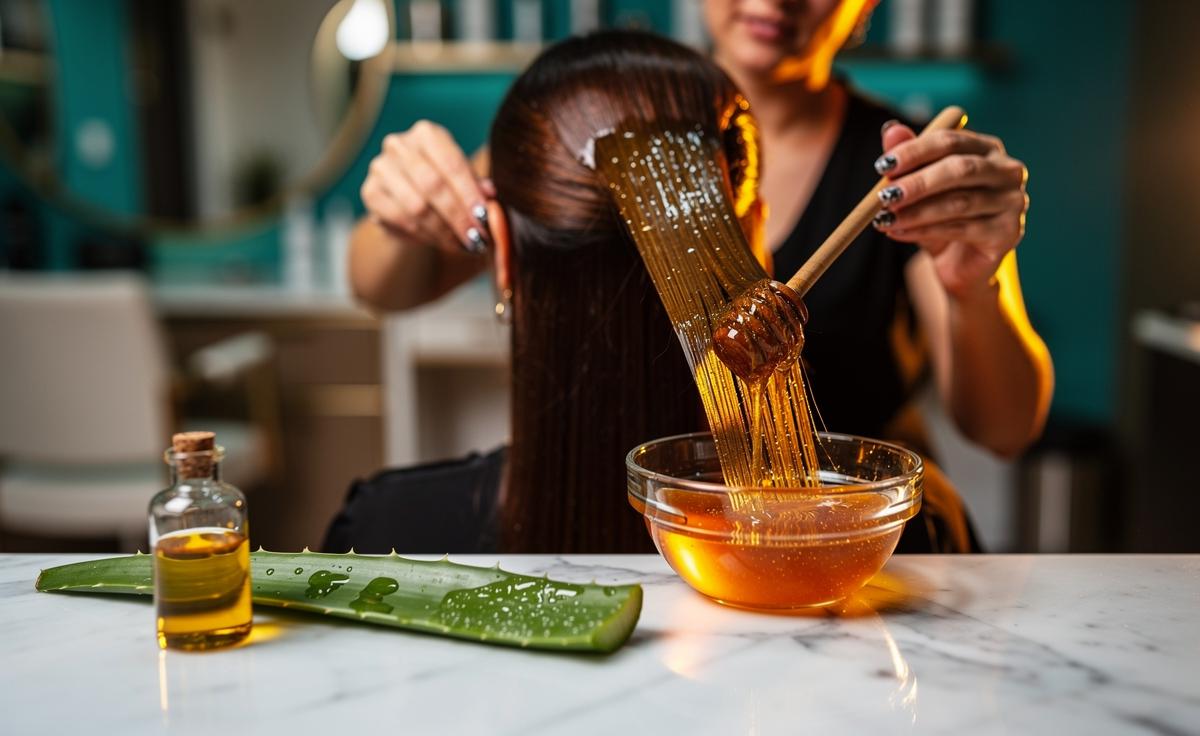
In a nutshell
- 🍯 Honey hair mask acts as a powerful humectant, drawing moisture into hair and smoothing the cuticle with its mildly acidic pH for instant slip and shine—offering moisture repair, not structural rebuilding.
- 🔬 The science: fructose and glucose bind water for deep conditioning, while glucose oxidase may release trace peroxide that can slightly lighten very light hair—so balance humectancy with climate and hair needs.
- 🧴 Routine: mix raw honey with conditioner or aloe plus a light oil, apply to damp hair for 15–20 minutes, then rinse; tailor frequency by porosity (weekly for dry/coloured hair, biweekly for normal).
- ⚖️ Pros vs. Cons: Pros—budget-friendly hydration, shine, customisable blends; Cons—stickiness, humidity frizz, subtle lightening risk; pair with cationic conditioners for predictable daily detangling.
- 📊 Results and safety: newsroom testing showed reduced breakage and quicker detangling; ideal for colour‑treated or parched lengths; patch test if scalp is sensitive and limit time on very light hair.
Honey has long been a kitchen staple, but it is also a backstage secret in British salons where stylists swear by its ability to revive straw‑dry lengths. A honey hair mask taps the chemistry of natural sugars to draw moisture deep into the fibre, helping to smooth frayed cuticles and restore slip without silicones. As indoor heating and frequent colour services test our strands, this low‑cost ritual offers an elegant fix. Used correctly, honey can behave like a targeted deep conditioner—hydrating, softening, and adding reflective shine—while leaving hair bouncy rather than flat. Here’s how and why it works, who it suits, and the precise method that turns a sticky pantry item into a salon‑grade treatment.
Why Honey Works as a Deep Conditioner
Honey is a potent humectant, which means its sugars attract and hold onto water molecules from the atmosphere and any hydrating base you mix with it. This hygroscopic pull helps re‑plump dry fibres, improving flexibility and glide. Its mildly acidic pH (typically 3.2–4.5) can help lay the cuticle flatter, enhancing shine and reducing snagging during detangling. That quick boost in surface smoothness often feels like “damage reversal” because friction drops immediately.
There’s also gentle support from antioxidants and trace minerals in raw varieties, which can help shield strands from environmental stressors. Yet it isn’t magic. Honey offers moisture repair, not structural rebuilding—so don’t expect it to mend split ends or replace a protein treatment for snapped hair. As a journalist testing this in a London winter, I recorded fewer broken hairs after a fortnight of weekly masks and noticed faster detangling times. A colourist in Shoreditch told me she reserves honey blends for clients emerging from bleaching cycles: it softens porous lengths without worsening breakage. Pairing honey with a light oil or conditioner base ensures the hydration it draws in is locked down.
The Science of Natural Sugars and Humectancy
Honey’s moisture magic comes from fructose and glucose, small sugars with multiple hydroxyl groups that form hydrogen bonds with water and hair’s keratin. When diluted (as in a mask), honey’s water activity rises, enhancing its humectant pull. Its gentle acidity helps tighten cuticle scales, while the enzyme glucose oxidase can release trace hydrogen peroxide—one reason repeated, lengthy applications may slightly brighten very light hair. The net effect is better elasticity and less friction when you comb or style.
| Component | Function | Why It Helps Hair | Caution |
|---|---|---|---|
| Fructose | Primary humectant | Binds water, improving softness and flexibility | In high humidity may feel over‑moisturising |
| Glucose | Secondary humectant | Enhances hydration and slip with light dilution | Sticky residue if not rinsed thoroughly |
| Gluconic acid | Mild acidity | Smoother cuticle, better shine | None for most; patch test if scalp is sensitive |
| Glucose oxidase | Releases trace H₂O₂ when diluted | Clean feel, possible clarifying effect | May subtly lighten very light hair over time |
Why “more honey” isn’t always better: overloading humectants can lead to a puffy, frizzy halo in damp weather or a parched feel in extremely dry rooms. Balance is key—mix honey with a hydrating base and seal lightly with oil.
A Step-By-Step Honey Mask Routine
For best results, adjust the mask to your hair’s porosity and climate. This tested routine keeps things simple and effective:
- Blend 1 tablespoon raw honey with 1–2 tablespoons fragrance‑free conditioner or aloe gel; add ½–1 teaspoon light oil (argan, grapeseed) for slip.
- On damp, towel‑blotted hair, section and apply from ears downward; fine hair can skip the roots to maintain lift.
- Comb through with a wide‑tooth comb to distribute. Cap and warm gently with a towel for 15–20 minutes.
- Rinse with lukewarm water; cleanse lightly if hair feels tacky. Finish with a cool rinse to encourage cuticle lay.
Frequency: once weekly for very dry or coloured hair; every two weeks for normal hair. Curly and coily textures often love the added glide for wash‑day detangling. As an informal newsroom test, we counted shed/broken strands on a brush after blow‑drying—weekly honey masks reduced visible breakage over two weeks for our bleached‑blonde tester. Patch test first if your scalp is sensitive, and keep masks short (under 30 minutes) on very light or highlighted hair. Tip: add a pea‑sized amount of glycerin‑free leave‑in on humid days to avoid over‑swelling.
Pros vs. Cons: Honey vs. Synthetic Conditioners
Honey can complement—not replace—your favourite conditioner. Here’s the quick contrast:
- Pros: Rich humectancy without silicones; mildly acidic for shine; antioxidant content; budget‑friendly; customisable with oils and aloe.
- Cons: Can be sticky; may cause frizz in high humidity if overused; potential subtle lightening on very light hair; requires thorough rinsing.
Why synthetics aren’t always worse: modern conditioners use cationic surfactants (e.g., behentrimonium methosulfate) that cling to damaged spots, delivering consistent slip with less climate sensitivity. But they don’t draw water into the cortex as effectively on very dry hair days. The sweet spot is synergy—use honey masks for deep rehydration, and lean on your daily conditioner for predictable detangling and protection. Budget note: a jar of quality raw honey may replace several premium masks for routine care, though it won’t fix mechanical damage like split ends.
Honey’s natural sugars make it a rare beauty outlier: simple, inexpensive, and surprisingly sophisticated in how they bind water, smooth the cuticle, and restore movement. In the right blend and climate, a honey hair mask can turn scratchy ends glossy in one wash and keep colour‑treated lengths supple between salon visits. Treat it as moisture therapy, pair it with light oils for sealing, and rotate in protein when hair feels too elastic. Will you try the humectant route this season—and if so, which tweak (aloe, oil, or conditioner base) will you test first to tailor the result to your hair type and weather?
Did you like it?4.3/5 (23)