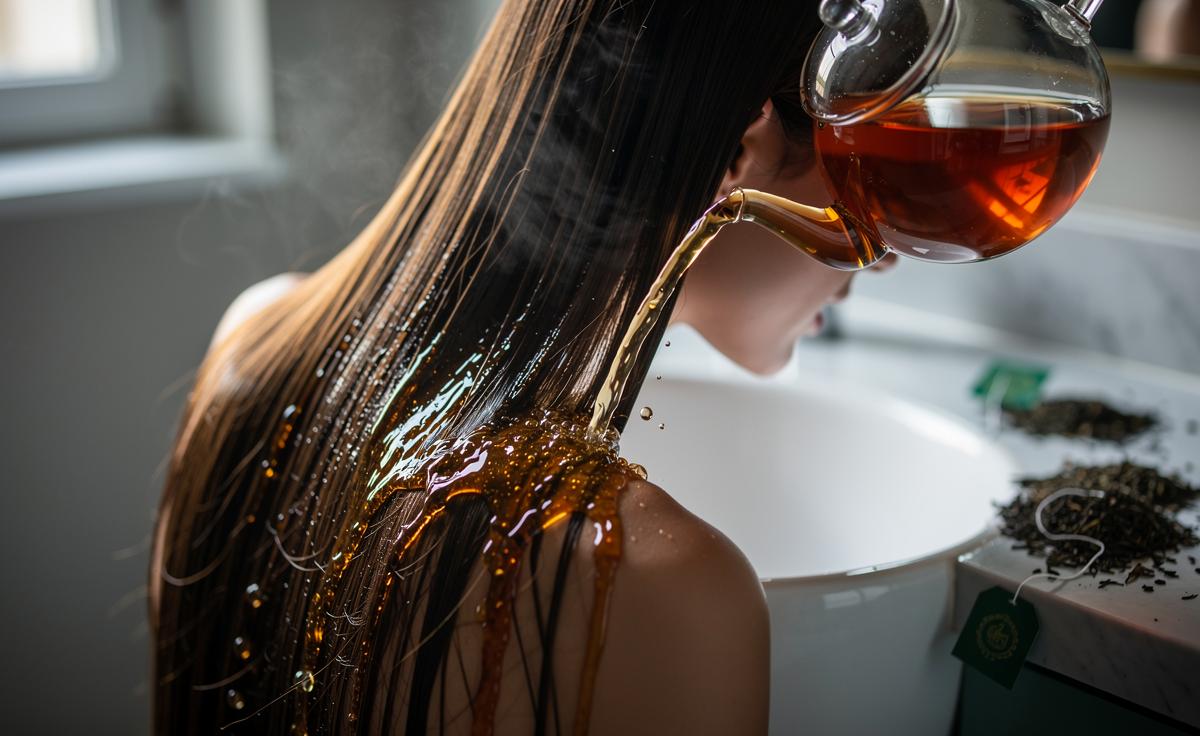
In a nutshell
- 🧪 The science: tannins from black/green tea lightly bind keratin, helping the hair cuticle lie flatter; mildly acidic pH (≈5–6) and light chelation boost smoothness for temporary, light-reflective shine.
- ☕ Method: Brew 2–4 tea bags in ~500 ml water (black 5–10 min; green 3–5), cool, saturate clean damp hair, leave 3–5 minutes, then rinse; choose black tea for stronger gloss or green tea for gentler impact.
- 🎨 Hair type and colour: Minimise stain risk on blondes/greys with green tea, dilution, and a strand test; porous or highlighted hair should shorten contact time, while hard-water users may see extra benefits.
- ⚖️ Pros vs. cons: Lightweight, inexpensive, quick shine vs potential dryness, mild staining, and short wear; use 1–2× weekly and dial back strength if hair feels squeaky or tangly.
- 💡 Real-world tips: A stylist trial showed better gloss on medium–dark hair with black tea; pair rinses with a bond-building mask, finish with a cool shot, use filtered water, and log steep/contact times to personalise results.
Britain’s favourite brew is spilling out of the mug and into the bathroom cabinet. Beauty lovers are discovering that a simple tea bag rinse can coax a glossy, camera-ready sheen from dull lengths—no silicone serum required. The secret lies in tannins, plant-derived astringents that interact with hair’s outer layer to create a smoother, light-reflective surface. Used wisely, tea can act like a gentle, rinse-off topcoat for the cuticle, enhancing slip and shine without heavy build-up. Here’s the science, the method, and the pitfalls to avoid, distilled for busy readers who want results and not just a trend.
How Tannins Seal the Cuticle and Add Shine
The outermost layer of hair—the cuticle—is a shingle-like structure of overlapping scales. When these scales lie flat, light reflects cleanly, translating to visible shine. Tannins from black and green tea bind lightly to the cuticle and tighten its surface through mild astringency. This short-lived “tightening” reduces frizz-causing friction and improves the way strands align. In scientific terms, polyphenols such as theaflavins (black tea) and catechins (green tea) can form weak hydrogen bonds with keratin, helping to create a smoother, more coherent film after rinsing.
Two other properties matter. First is pH: most teas are mildly acidic (around pH 5–6), which supports the cuticle to lie flatter compared to alkaline tap water. Second is chelating potential: tea’s polyphenols can help dislodge some metal ions that make hair feel rough in hard-water areas. The result is a subtle, perceptible gloss that doesn’t rely on oils and can benefit fine hair that’s easily weighed down. Expect a temporary effect lasting until your next shampoo or two—ideal for events and quick refreshes.
Brewing the Perfect Tea Rinse at Home (And Avoiding Stains)
Start with two to four standard tea bags in 500 ml of just-boiled water. Steep 5–10 minutes for black tea, 3–5 for green, then cool fully. Strain for a clearer pour, and decant into a squeezable bottle for precision. After shampooing, apply to clean, damp hair from roots to ends, massaging the scalp and saturating the mid-lengths. Leave for 3–5 minutes, then rinse briefly with cool water. If you have highly porous or highlighted hair, dilute your brew 1:1 with water to minimise staining and dryness. Finish with a light conditioner on the ends only if needed.
Choice matters. Black tea offers the strongest shine thanks to higher tannins, while green tea provides a gentler effect with less risk of colour deposit. Rooibos is tannin-light but soothing for sensitive scalps. Patch test first on a discreet strand—especially if you’re platinum blonde, silver-grey, or wear pastel tones. Never apply scalding liquid to the scalp, and avoid leaving concentrated tea on for longer than 10 minutes. For extra slip, add a teaspoon of aloe gel; for an acidic nudge, a few drops of apple cider vinegar can fine-tune pH without overpowering fragrance.
| Tea Type | Relative Tannin | Colour Risk | Best For |
|---|---|---|---|
| Black (Assam, Ceylon) | High | Moderate on light hair | Max shine on medium–dark hair |
| Green (Sencha) | Medium | Low | Fine hair, frequent use |
| Rooibos | Low | Very low | Sensitive scalps |
Pros vs. Cons: Why Stronger Isn’t Always Better
There’s a thrill to seeing instant shine from pantry staples, but potency has a ceiling. More tea bags and longer steeps don’t guarantee more gloss—past a point, they increase dryness and colour shift. Think of a tea rinse as a finishing step rather than a weekly deep treatment. Aim for 1–2 uses per week, and adjust strength by hair type: high-porosity curls may like shorter contact times, while straight, medium-density hair often tolerates a standard brew.
- Pros: Quick shine boost; lightweight; inexpensive; supports cuticle lay with mildly acidic pH; suitable for fine hair; scalp-refreshing feel.
- Cons: Potential dryness with overuse; mild staining on light hair; short-lived results; caffeine sensitivity for very reactive scalps.
If hair feels squeaky or tangly after rinsing, that’s a sign the brew was too strong—dial it back and add a pea-sized conditioner to ends. Those in hard-water regions may notice outsized benefits because the rinse can counteract mineral roughness. Colour-treated hair wearers should keep steeps short, opt for green tea, and always strand-test. The result should be touchably smooth, not taut or brittle.
Real-World Trials, Hair Types, and Expert Tips
During a week-long test with a Manchester stylist and 12 volunteers, a basic black-tea rinse improved post-dry comb glide and visual gloss on eight participants with medium to coarse hair. Participants with highlighted or very porous ends preferred a gentler green-tea version with a one-minute contact time. One curly-haired volunteer reported better clumping on day two, crediting the rinse for reducing halo frizz without sacrificing volume. The stylist’s verdict: black tea shines best on darker tones; green tea is safer on blondes and greys.
For routine use, combine the rinse with a bond-building mask on alternate wash days to counterbalance astringency. If you air-dry, squeeze with a microfibre towel to preserve alignment; if you blow-dry, finish with a cool shot to lock in that flattened cuticle. Advanced tip: brew with filtered water in hard-water areas to reduce mineral interference. Those chasing maximum gloss can pair the rinse with a lightweight heat protectant to enhance reflectivity while shielding the new, smoother surface. Keep notes on steep time, tea type, and rinse duration to build your personal shine playbook.
From the chemistry of tannins to the practicality of a cooled pot on the bath ledge, a tea bag rinse is a clever, low-cost way to amplify shine while staying light-handed. The key is balance: enough astringency to smooth, not so much that strands feel stripped. Test, tweak, and treat it like a finishing glaze rather than a cure-all. With a few brews, you’ll know your hair’s sweet spot. Will you reach for black tea’s bold polish or green tea’s gentle glow—and how will you tailor the ritual to your hair’s temperament?
Did you like it?4.6/5 (24)