In a nutshell
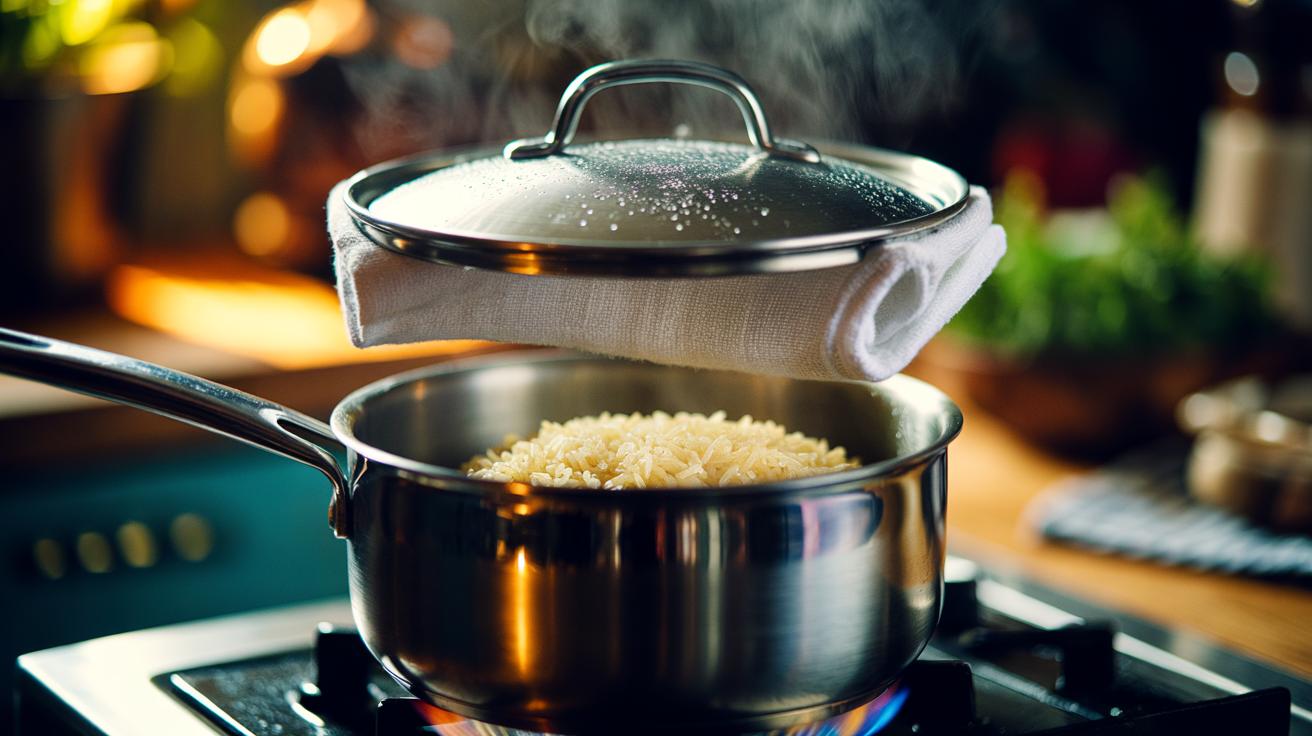
- 🧺 Use a tea towel under the lid to wick condensation, stopping drip-back and yielding consistently fluffy rice.
- 🌫️ Shows how trapped steam and starch behaviour (amylose vs. amylopectin) drive sogginess without proper moisture control.
- 🧭 Step-by-step: rinse, correct water-to-rice ratio, gentle simmer, then off-heat rest with the towel for 10–15 minutes; includes vital safety guidance to keep fabric from heat sources.
- 🔬 The absorbent layer acts as a wick, stabilises temperature, and creates a gentle vapour gradient so grains stay distinct, not sticky.
- 📊 Handy table summarises rice types, ratios, simmer times, and towel-rest durations to standardise results across varieties.
Perfectly cooked rice should be feather-light, never claggy. Yet many home cooks lift the lid to find damp grains glued together by runaway condensation. The solution is as old as the stovetop: a simple tea towel tucked beneath the lid to trap and wick moisture before it drips back. By giving excess steam somewhere to go, this absorbent layer turns the final minutes of cooking and resting into a controlled drying phase. The result is consistently fluffy rice, with distinct, tender grains that stand up on the fork rather than slump on the plate. It feels like a trick. It’s really just good kitchen physics.
Why Steam Makes Rice Soggy
When rice cooks, the grains swell as they absorb hot water and gelatinise starch. That’s desirable. The mischief starts after the heat is lowered and the lid goes on. Inside a sealed pan, steam saturates the air, then cools against the lid and condenses. Those droplets fall straight back, raising the surface moisture beyond what the grains can hold. The top layer turns tacky; the bottom layer compacts under its own weight. Left unchecked, this closed-loop of evaporation and drip-down guarantees mushy rice, even if your water ratio was perfect.
Two starches are central: amylose, which helps grains stay separate, and amylopectin, which makes them cling. Aromatic long-grain varieties like basmati tend to be higher in amylose, so they’re forgiving but still vulnerable to wet tops. Short-grain rice, rich in amylopectin, loves to cuddle and needs strict moisture control. The problem isn’t heat alone; it’s humidity without escape. You need a way to stop the condensation rain while keeping the pot hot. That’s where an absorbent barrier earns its keep.
The Tea Towel Method, Step by Step
Cook your rice as usual: rinse until the water runs clear, measure a sensible water-to-rice ratio, bring to a gentle boil, then drop to a low simmer. When the water has mostly absorbed and you see small steam vents poking through the surface, turn off the heat. Quickly lay a clean, dry tea towel over the saucepan, then press the lid on firmly to sandwich the fabric. Fold or clip any loose corners up and away from the hob. Do not let the towel drape near a flame or electric element at any time.
Now wait. Ten minutes is typical for white rice; brown may want 15. In this quiet interval the towel becomes a controlled moisture sink, catching condensation and holding it. The trapped fabric also stabilises the microclimate in the pot, smoothing out temperature drops that can shock the grains. When you lift the lid, the towel will be warm and slightly damp. The rice will be dry on the surface yet supple within. Fluff with a fork and watch the grains separate. Simple. Reliable. Repeatable.
How the Absorbent Layer Prevents Sogginess
The tea towel does three jobs at once. First, it acts as a wick, pulling vapour into fibres where it condenses harmlessly rather than raining back onto the rice. Second, it dampens pressure pulses, so you avoid the lid rattling that knocks droplets loose. Third, it creates a gentle vapour gradient: steam migrates towards the cooler fabric instead of condensing over the grains. By removing just a thin film of surface water, you restore the delicate balance between tenderness and separation.
Think of it as a breathable barrier. Unlike a rigid lid, a towel can absorb and hold micro-amounts of water without dripping, while still keeping enough heat inside to finish cooking. That small drying action matters because freshly gelatinised starch is like soft glue; a little extra moisture makes it smear. By holding back the drip, the towel prevents smearing, preserves the shape of each grain, and encourages modest retrogradation as the rice cools, which firms texture. The payoff is mouthfeel. Clean, distinct, aromatic. No oil required, no stirring, no theatrics—just physics and cotton.
Rice Types, Ratios, and Timing at a Glance
Different grains welcome the tea towel for different reasons: basmati wants lift and perfume, jasmine needs a drier surface to showcase its soft chew, brown rice benefits from a tidier finish after its longer simmer. Use the towel during the off-heat rest for all varieties. The ratios and times below are starting points for a lidded saucepan on a standard hob; your pan and heat will nudge the details. The towel adds consistency across the board, especially if your lid tends to drip.
| Rice Type | Water Ratio (cup:cup) | Simmer Time | Rest With Towel | Notes |
|---|---|---|---|---|
| Basmati (white) | 1:1.25 | 10–12 min | 10 min | Rinse well; don’t stir. |
| Jasmine (white) | 1:1.1–1.2 | 9–11 min | 10 min | Less water preserves fragrance. |
| Long-Grain (US/Euro) | 1:1.5 | 12–14 min | 10 min | Great everyday side. |
| Short-Grain (sushi) | 1:1.1–1.3 | 11–13 min | 10 min | Still tacky by design; towel helps gloss. |
| Brown (long-grain) | 1:1.8–2.0 | 25–30 min | 15 min | Longer rest evens moisture. |
Adjust seasonings and aromatics as you like—whole spices, a bay leaf, a knob of butter. The towel technique doesn’t mute flavour; it refines texture. If your lids run loose or your hob runs hot, expect a bigger improvement. The hallmark of success is a pot that smells fragrant the moment you lift the lid and shows dry, distinct grains from edge to centre. Once you’ve tasted the difference, it’s hard to go back. Keep a clean, dedicated tea towel in the drawer and you’ve instantly upgraded your rice game.
This small intervention turns an everyday staple into something quietly excellent. It wastes nothing, costs pennies, and gives you chef-level control without specialist kit. From weeknight curries to crisp fried rice the day after, fluffy, separate grains change the dish and the mood at the table. Put simply, the tea towel prevents sogginess by catching condensation and stabilising heat where it matters most—right over the rice. Will you try the absorbent-layer trick tonight, and if you do, which rice will you elevate first?
Did you like it?4.5/5 (30)