In a nutshell
- 🍃 Why it works: Vinegar’s acetic acid softens basil’s cell walls, releasing aromatic compounds like linalool and eugenol, while acidity boosts salivation, brightens freshness, and tempers bitterness.
- ⏱️ Fast techniques: Do a brief maceration (0.5% salt, 0.3–0.5% sugar, 0.5–1% vinegar) for 45–90 minutes, or make a 3–6 hour basil vinegar infusion; keep it cool to protect colour and perfume.
- 🥂 Best vinegars: Choose rice or white wine vinegar for clean lift, apple cider for fruity roundness, and balsamic sparingly for depth; start mild and short, then adjust.
- 🍅 Where to use: Caprese, bright vinaigrettes for burrata or roast chicken, warm pasta with lemon and nuts, green salsa with capers and anchovy, and noodle salads with sesame and soy.
- 🧊 Pro tips: Aim for 30 minutes to 3 hours at 4–5% acidity, keep infusions cold, balance acid with a pinch of salt and a touch of sugar, and treat acidity as focus, not force.
There’s a simple trick chefs quietly use to make basil taste fresher, fuller, and more defined without drowning it in oil or heat: they add vinegar. Not a flood, just a quiet splash or a short maceration. In a few hours, this zingy liquid can brighten the herb’s aroma, sharpen its herbal sweetness, and round off bitterness, all while keeping your dish clean and lively. The science is straightforward, the technique low effort, and the results surprisingly dramatic. A short, cool soak or a judicious drizzle can deliver a noticeable lift. Here’s how and why it works, plus the best vinegars to choose and when to use them.
Why Vinegar Wakes Up Basil’s Flavour
Vinegar’s edge comes from acetic acid, which nudges basil’s tissues and your palate at the same time. On the leaf side, mild acidity weakens parts of the plant’s cell walls and pectin network, encouraging the release of volatile compounds such as linalool and eugenol. A brief maceration draws these aromas to the surface, where they’re easier to smell. On the palate, acids increase salivation and amplify perceived freshness, while tempering bitterness so basil’s floral and anise notes ring clearer. The result feels “cleaner” and more vivid.
There’s a limit. Basil’s chlorophyll turns dull in strong acid over long periods, so time and temperature matter. Keep the contact short and cool for colour and perfume. Aim for a gentle vinegar (4–5% acidity) and a window of 30 minutes to 3 hours, depending on cut size and desired punch. Pair the acid with a pinch of salt and a touch of sugar to round edges; this trio boosts flavour synergy. Most home vinegars sit around pH 2.8–3.2, so you don’t need much to tilt a sauce or marinade into an ideal, refreshing range.
Quick Methods To Amplify Basil With Vinegar
For a fast lift, try a brief maceration: toss whole leaves or torn pieces with 0.5% fine salt, 0.3–0.5% sugar, and 0.5–1% mild vinegar by weight. Chill for 45–90 minutes in a covered bowl. The salt draws moisture, the sugar softens edges, and the acid brightens and unlocks aroma. Drain lightly, then fold through salads, pasta, or grain bowls. The basil tastes more “basil” with less quantity.
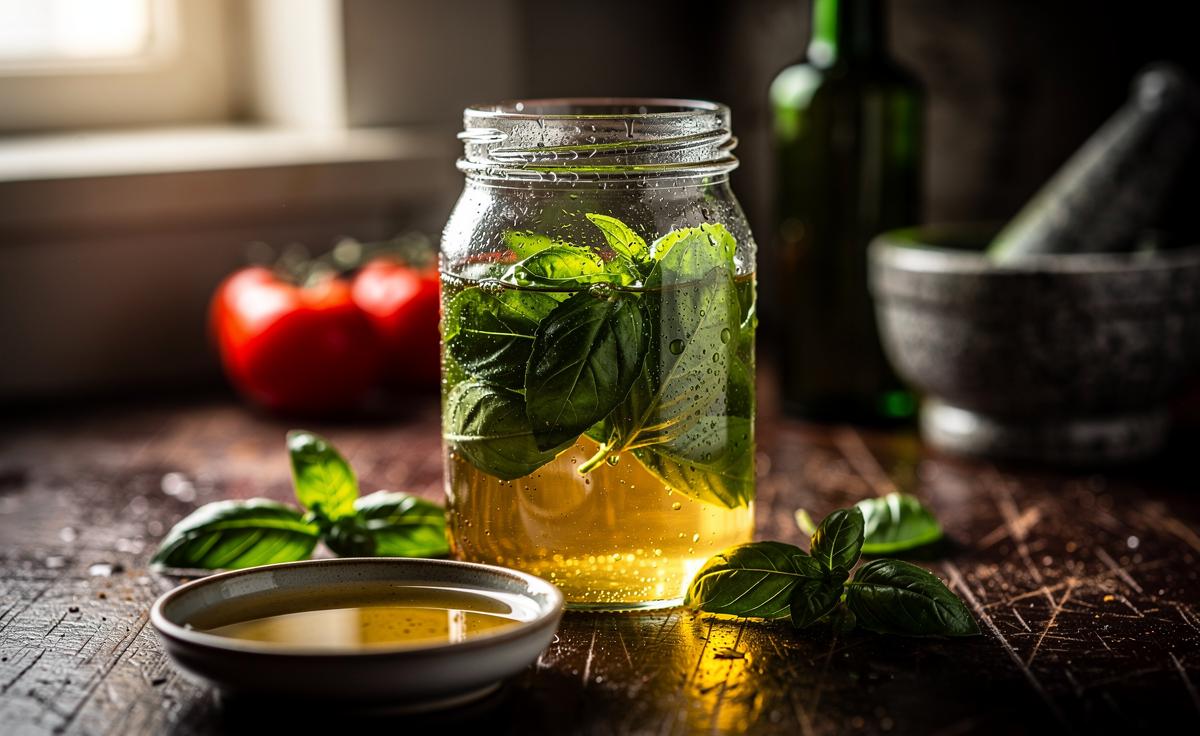
Make a three-hour basil vinegar for drizzling: bruise 25g basil with the back of a spoon, submerge in 250ml white wine or rice vinegar, cover, and steep 3–6 hours in the fridge. Strain gently. This quick infusion captures top notes without the heavy greenness that longer extractions can bring. Use in dressings, to wake up tomatoes, or to finish grilled fish. A few hours are enough to capture the lift without muddying the profile. If you prefer more punch, repeat with fresh basil rather than extending the time, which risks dull colour and harsher edges.
Choosing The Right Vinegar For Basil
Selecting vinegar is about harmony. White wine vinegar and rice vinegar are reliable for a clear, garden-fresh lift because they’re gentle and clean. Apple cider vinegar adds orchard fruit notes that flatter basil’s sweetness, handy for salads and slaws. Balsamic gives richness and depth but can overshadow delicate leaves; use in restrained amounts or as a finishing glaze. Champagne vinegar sits between white wine and rice vinegar, elegant and crisp. The choice should match the dish’s weight and sweetness.
| Vinegar Type | Typical Acidity | Steep Time | Flavour Effect on Basil |
|---|---|---|---|
| Rice | 4.0–4.5% | 1–4 hours | Soft, fresh lift; minimal harshness |
| White Wine | 5% | 2–6 hours | Bright, clean, herb-forward |
| Apple Cider | 5% | 1–3 hours | Fruity accent, rounder finish |
| Balsamic | 5–6% | 30–90 mins | Sweet depth; risk of overshadowing |
When in doubt, start milder and shorter, then adjust. You can always add brightness; you can’t take it away. Keep infusions cold to preserve perfume and colour.
Food Pairings And Recipes That Benefit
Use vinegar-boosted basil where freshness counts. In a caprese, a few leaves gently macerated in rice vinegar make the tomatoes sing while retaining their own perfume. Whisk a basil vinegar into a vinaigrette with good olive oil, a touch of honey, and crushed black pepper; it cuts through rich burrata, roast chicken skin, or oily fish. For pasta, fold macerated leaves into warm spaghetti with lemon zest, toasted pine nuts, and Parmesan—no heavy sauce, just clarity and lift.
Try a quick green salsa: basil, parsley, a spoon of basil vinegar, capers, and anchovy. Spoon over grilled courgettes or steak. For noodle salads, pair apple cider vinegar–brightened basil with sesame oil and soy; the acid sharpens savoury depth. Finally, transform leftovers: a drizzle of basil vinegar on day-old grains or roasted veg wakes them up instantly. Small doses deliver outsized impact, especially on rich or sweet elements, keeping dishes lively without resorting to heat or excess salt.
Handled with care, vinegar turns basil from a background herb into the headline act. The key is balance: the right acid, short timing, cool temperatures, and a pinch of salt to knit it together. You’ll taste more herb with fewer leaves, and your dressings, salads, and simple pastas will pop. Think of acidity as focus, not force. Ready to experiment—perhaps start with rice vinegar on a handful of leaves, then adjust to your taste and dish? What combinations will you try first to discover your own sweet spot of brightness and basil?
Did you like it?4.5/5 (20)