In a nutshell
- 🧪 The science: vinegar reacts with bicarbonate of soda to release carbon dioxide, lifting batter, lowering pH, and gently tenderising gluten for a softer crumb.
- 🍎 Best types: choose white distilled vinegar for neutrality, apple cider vinegar for warm bakes, or rice vinegar for delicate sponges; avoid strong, dark vinegars. Aim for 1–2 tsp per 20–23 cm cake, less if using buttermilk or yoghurt.
- 🎯 Key technique: add vinegar last, fold briefly, and bake immediately to capture the gas burst; use room‑temperature ingredients, prepared tins, and minimal mixing for a tall, even rise.
- 🛠️ Troubleshooting: if doming, drop the oven by 10–15°C; if sinking, reduce liquid/acid. Balance soda to prevent a soapy aftertaste—about 1/2 tsp bicarbonate per cup (120 g) flour when sufficient acid is present.
- 🥛 Smart swaps: make a quick buttermilk substitute with 1 tbsp vinegar per 240 ml milk; vinegar shines in carrot, red velvet, and natural cocoa cakes for reliable, fluffy texture.
Home bakers talk about magic touches—secret syrups, special tins, family whispers passed down with the flour scoop. One trick, though, is hiding in plain sight: vinegar. A few measured drops can transform a heavy crumb into a buoyant, delicate sponge. It’s not culinary witchcraft; it’s chemistry meeting good method. Add the right acid to the right leavener and you create a surge of carbon dioxide that lifts batter before structure sets. Used well, vinegar gives cakes a dependable, fluffy rise without altering the flavour. The key is choosing the correct type, matching it to your recipe, and timing the mix so the lift happens when you need it most—inside the oven.
Why Vinegar Helps Cakes Rise
At the heart of the trick is a simple reaction: an acid meets a base. In cake terms, vinegar (acid) reacts with bicarbonate of soda (base) to release bubbles of carbon dioxide. Those bubbles expand rapidly in the heat, aerating the batter and giving you a taller, lighter crumb. That quick burst is crucial—the gas must be captured by the batter’s network of eggs, flour proteins and starches before it escapes. Vinegar also nudges the batter’s pH slightly lower, which can tame soapy notes from overused soda, sharpen flavours in chocolate or spice cakes, and subtly tenderise gluten for a softer bite.
It’s useful to know where vinegar shines. Recipes using bicarbonate of soda—think carrot, red velvet, chocolate with natural cocoa—benefit most. Cakes relying solely on baking powder already carry their own acid, so vinegar offers a gentler assist rather than a dramatic lift. Too much acid, however, weakens structure and can collapse a sponge. As a rule of thumb for a standard 20–23 cm layer cake, start with 1–2 teaspoons (5–10 ml) and taste-test your batter style; it should smell neutral, never sharp or vinegary.
Choosing the Right Vinegar and How Much to Use
The best option is white distilled vinegar: clean flavour, consistent 5% acidity, and no colour to tint your crumb. Apple cider vinegar also works well in autumnal bakes with spices or fruit, bringing a soft apple note. Rice vinegar is milder and useful for delicate sponges. Strongly flavoured vinegars, such as balsamic or malt, can overwhelm and darken batter—save them for savoury cooking. Quantity hinges on your recipe’s other acids (buttermilk, yoghurt, natural cocoa, brown sugar). If those are present, you’ll need less added vinegar; if your batter is neutral, you’ll need a touch more to wake the soda.
| Vinegar | Typical Acidity | Flavour Impact | Best Use | Suggested Quantity* |
|---|---|---|---|---|
| White Distilled | 5% | Neutral | Most cakes; clean crumb | 1–2 tsp per 20–23 cm cake |
| Apple Cider | 5% | Light fruity | Carrot, spice, apple bakes | 1–2 tsp per 20–23 cm cake |
| Rice Vinegar | ~4% | Very mild | Delicate sponges | 1.5–2.5 tsp per cake |
| Malt/Balsamic | 5–6% / variable | Strong, dark | Generally avoid for cakes | Not recommended |
*If using buttermilk or yoghurt, reduce vinegar to 0.5–1 tsp. For a quick buttermilk substitute, use 1 tbsp (15 ml) vinegar per 240 ml milk and rest for 5 minutes. Balance vinegar with the amount of bicarbonate of soda to avoid a soapy aftertaste; many reliable formulas pair roughly 1/2 tsp soda per cup (120 g) flour when adequate acid is present.
Step-by-Step Method and Pro Tips
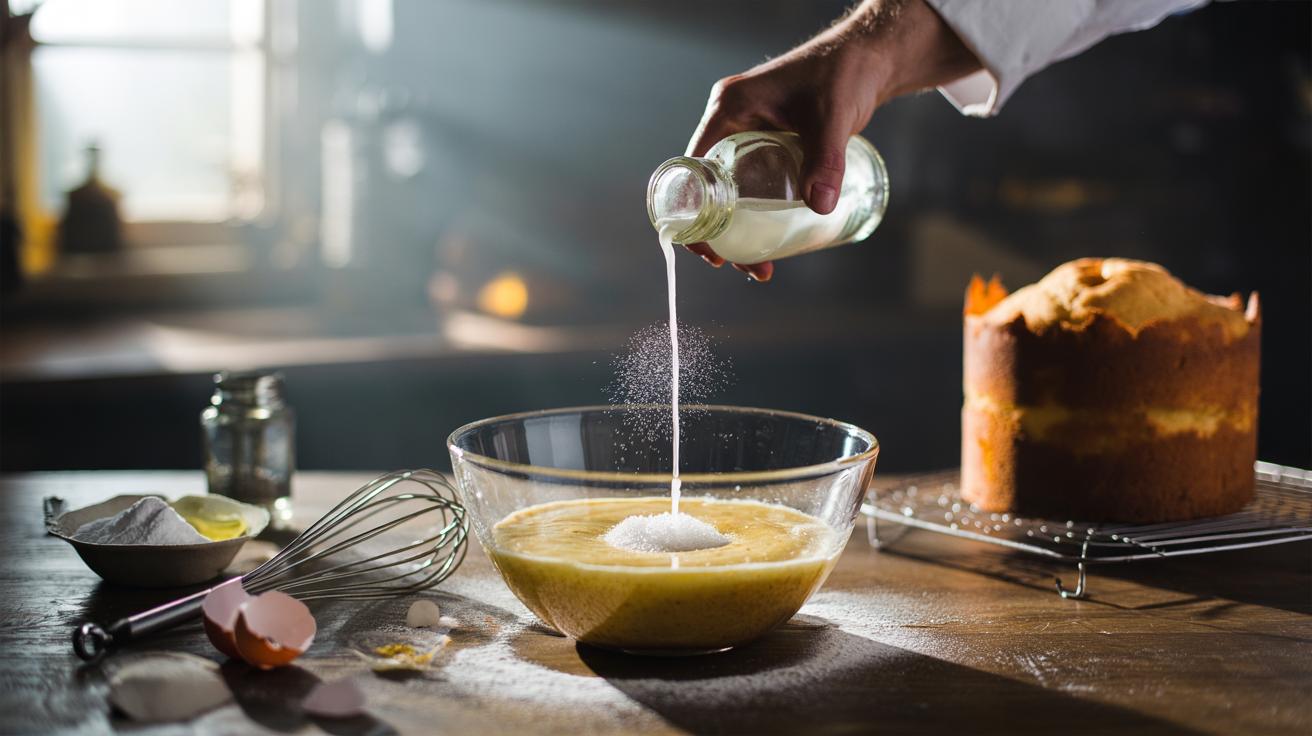
Start with room-temperature ingredients. Heat the oven and prepare tins so the batter doesn’t wait. Whisk dry ingredients together, including bicarbonate of soda, to disperse it evenly. Cream butter and sugar until pale and fluffy, then beat in eggs. Alternate dry mix with your dairy (milk, buttermilk, or yoghurt). Now the key move: stir in the measured vinegar at the very end, fold just until combined, and get the batter into tins immediately. The reaction begins on contact; your job is to capture it in the oven, not on the worktop.
For a fine crumb, fold rather than beat once vinegar is added, stopping as soon as streaks vanish. Use light-coloured tins for even rise and check doneness with a skewer—look for a few moist crumbs. If your cake domes aggressively, lower the oven by 10–15°C; if it sinks, you may have too much liquid or acid. Remember: small, precise amounts of acid and minimal mixing equal a tall, tender cake. Store the baked layers wrapped while still slightly warm to lock in moisture and keep that newfound fluffiness.
Used thoughtfully, vinegar is less a hack and more a reliable tool—one that pairs elegant science with everyday baking. It lightens the crumb, polishes flavours, and steadies the rise in recipes that sometimes misbehave. The technique is simple, the ingredients everyday, and the results delightfully repeatable. Measure modestly, mix swiftly, bake promptly. Now the fun part begins: which of your favourite cakes—carrot, chocolate, or a classic sponge with a twist—will you lift with a teaspoon of acid-powered confidence, and how will you tweak the amount to suit your own oven and taste?
Did you like it?4.5/5 (27)