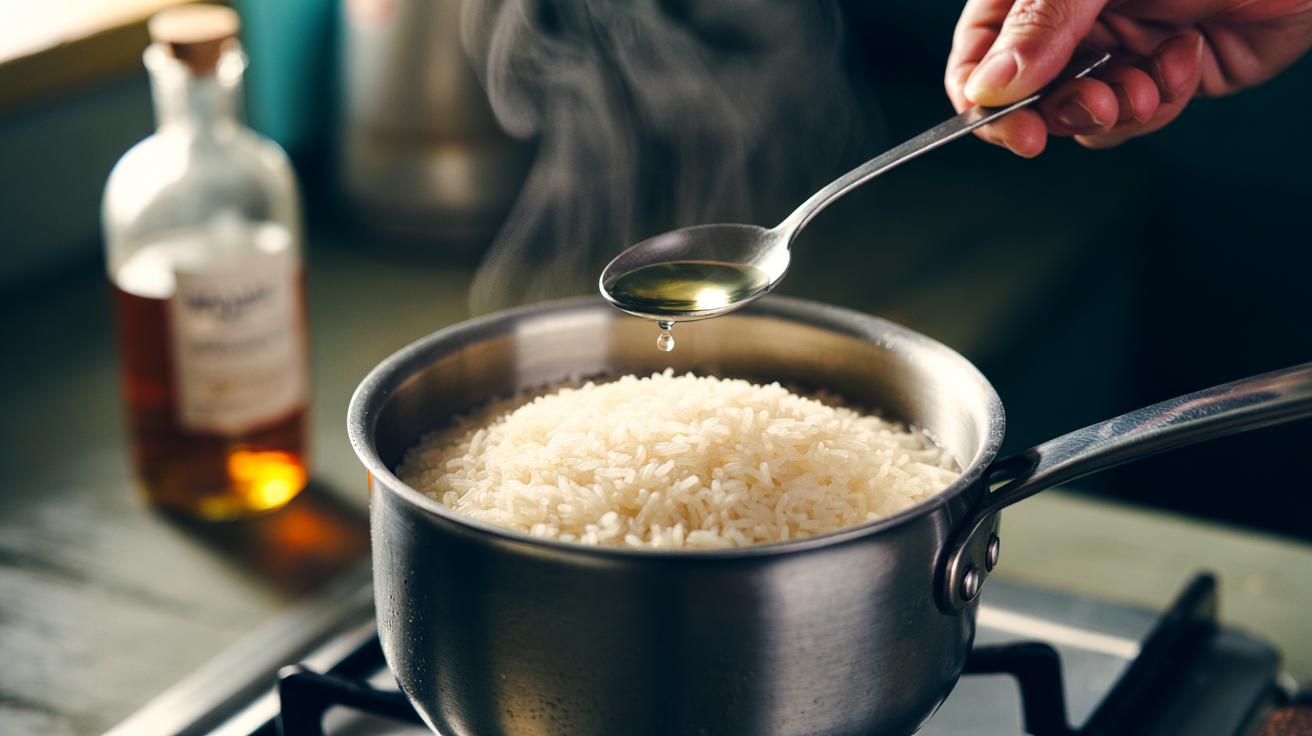
In a nutshell
- 🧪 The science: acetic acid lowers pH, taming surface amylose/amylopectin so grains stay separate and fluffier; it also offsets UK hard water for consistent texture.
- ⚖️ Best vinegar and ratio: choose distilled white or rice vinegar; use 1 tsp (5 ml) per 180–240 ml water; avoid strong-flavoured vinegars (balsamic, malt) to keep taste neutral.
- 🍳 Method that works: rinse well (soak basmati 15–20 mins), measure precisely (200 g rice : 250–300 ml water), add vinegar before boiling, simmer low, rest 10 mins, then fluff for light, separate grains.
- 🍚 Smart applications: add vinegar directly in rice cookers or marginally reduce water in pressure cookers; produces springy grains ideal for fried rice and improves chew in brown rice.
- 🔧 Troubleshooting: sharp taste means too much or assertive vinegar; sticky rice needs better rinsing or less water; chalky grains need a splash more water and 3 minutes gentle steaming—adjust for local water hardness.
Rice that stands tall and separate is more than a visual flourish; it’s a sign of technique. One tiny tweak delivers it consistently: a splash of vinegar. In British kitchens, where water hardness varies wildly and weeknights demand reliability, this trick earns its keep. The idea sounds counterintuitive, yet the chemistry is sound and the flavour footprint, when measured sensibly, is almost imperceptible. Used in moderation, vinegar doesn’t make rice sour; it makes it fluffier, silkier, and far less sticky. Here’s how and why it works, which vinegar to choose, and the precise ratios that keep grains distinct without tipping into tang.
The Science: How Vinegar Transforms Rice Texture
At the heart of the method is acetic acid, the active component in vinegar. When a small amount meets hot water and rice, it subtly lowers the cooking water’s pH. That shift influences the behaviour of surface starches—especially amylose and amylopectin—so they swell less aggressively and disperse more cleanly. Less surface sludge means fewer clumps. The grains hold their edges. The pot smells clean rather than starchy.
There’s also a practical UK angle. Much of Britain lives with hard water. The minerals that cloud kettles can toughen grain exteriors and complicate hydration. A touch of acid helps counter the mineral load, encouraging more even water penetration. This is why the same rice, same brand, can behave differently in Cornwall versus Kent—and why vinegar normalises the result. Crucially, the amount is tiny. You’re adding a nudge, not a marinade. The heat drives off volatile aromas, leaving structure behind. The outcome is rice that feels light, steams beautifully, and resists the gummy fate that ruins pilafs and weekday stir-fries.
Choosing the Right Vinegar and Ratio
Not all vinegars read the same on the palate. For neutral results, favour distilled white or rice vinegar. Apple cider vinegar adds a whisper of fruit, pleasant with brown rice and pilafs. Strong, woodsy vinegars (balsamic, malt) are for bold dishes or reductions, not for stealth texture work. The keystone is dose. As a rule: use 1 teaspoon (5 ml) vinegar per 180–240 ml water, scaled to your pot or rice cooker. That’s enough to modify starch behaviour without advertising itself in the flavour.
| Vinegar | Typical Acidity | Flavour Impact | Recommended Dose | Best For |
|---|---|---|---|---|
| Distilled White | 5% | Very neutral | 1 tsp per 180–240 ml water | Basmati, jasmine, long-grain |
| Rice Vinegar | 4–4.5% | Soft, slightly sweet | 1–1.5 tsp per 180–240 ml water | Jasmine, sushi-adjacent plain rice |
| Apple Cider | 5% | Fruity, mild | 0.5–1 tsp per 180–240 ml water | Brown rice, pilaf |
If you cook with very soft water, stay on the lower end. With very hard water, nudge up by 0.5 tsp and reassess. You should not taste vinegar; you should taste cleaner, more distinct grains. For sticky rice styles where clumping is desired, keep the dose minimal or skip entirely.
Step-by-Step Method for Fluffier Rice
Rinse first. Swish the rice in cold water until it runs mostly clear; two or three changes will do. This removes excess surface starch that turns to glue and prepares the grains for even hydration. If using basmati, soak for 15–20 minutes to elongate the grains and enhance fragrance.
Measure precisely. For 200 g long-grain rice, use 250–300 ml water in a pan with a tight-fitting lid, depending on the variety and your preferred bite. Add 5 ml vinegar per 180–240 ml water, along with a small pinch of salt and, if you like, a teaspoon of oil or butter to lubricate the surface. Add the vinegar to the cooking water before the boil to distribute the acidity evenly.
Bring to a lively simmer, then immediately reduce to low. Lid on. Don’t stir—agitation smears starch and encourages clumps. Cook until the water is absorbed and steam tunnels appear, typically 10–12 minutes for white long-grain, longer for brown. Turn off the heat and rest, covered, for 10 minutes. This pause finishes gelatinisation gently and redistributes moisture. Fluff with a fork in broad, lifting strokes. The grains should glint, separate, and fall like light snow—ready for curries or a fast stir-fry.
Troubleshooting and Smart Uses in the Kitchen
If the rice tastes sharp, you used too much vinegar or an assertive type. Switch to rice vinegar and measure with a spoon next time. If it’s still sticky, rinse more thoroughly or reduce the water by a tablespoon. Hard or chalky? Add a splash more water, cover, and steam on low for 3 minutes, then rest again. The goal is balance: just enough acidity to refine texture, never enough to rewrite flavour.
In rice cookers, add vinegar directly to the measured water and let the machine handle the rest. For pressure cookers, keep the ratio the same but shorten the water slightly (by a tablespoon) to account for reduced evaporation. This tweak shines in fried rice prep: the day-old grains stay springy and resist clumping in a hot wok. It also helps with brown rice, coaxing a tender chew without mush. Sprinkle in aromatics—bay, cardamom, a strip of lemon peel—safe in the knowledge the structure will hold because the starch is under control.
In a world of kitchen hacks, vinegar-in-rice is that rare thing: a tiny change with disproportionate payoff. It addresses water chemistry, tames starch, and delivers reliable, restaurant-grade fluff at home, week after week. Once you’ve dialled in your preferred vinegar and dose, the method runs on autopilot. The flavour stays neutral; the texture levels up. Ready to test it at dinner—perhaps with your favourite curry or a clean, citrusy stir-fry—and see how far a teaspoon can take your rice game?
Did you like it?4.5/5 (22)