In a nutshell
- 🍗 Vinegar science: A thin brush of acetic acid tightens skin proteins, speeds drying, and encourages fat rendering—but keep it light to avoid muting browning.
- ⏱️ 20-minute method: Preheat to 230°C, brush 1–2 tsp vinegar per piece, season, space well, roast skin-side up to 74°C, then rest briefly on a rack for lasting crunch.
- 🧰 Right cuts and kit: Choose wings, boneless skin-on thighs, or drumsticks; use a hot tray or a wire rack (best airflow), and fan-assisted heat for faster blistering.
- 🧂 Smart seasoning: Opt for white wine, cider, or malt vinegar; keep balsamic for after cooking; add salt, pepper, light paprika/garlic, and apply wet glazes only in the final 2 minutes.
- 🛠️ Troubleshooting: Beat sogginess by patting dry and avoiding crowding; control splatter with deep trays; re-crisp at 230°C for 3–5 minutes; save rendered schmaltz for future flavour.
Weeknights beg for shortcuts, and few are as satisfying as turning chicken skin glassy-crisp in minutes. The trick? A quick brush of vinegar that turbocharges drying and rendering, then high heat that finishes the job. No batter. No brine. Just a swift, deliberate swipe that transforms flabby skin into a crackling lid. Think pub-level crunch without the fryers or faff. The approach rides on smart chemistry and attentive heat, not complicated kit. Keep the coat thin, the pan hot, and the timing tight. In 20 minutes, your table gets the sound of shatter and the aroma of roast, with the chicken still juicy beneath.
The Science Behind Vinegar-Crisp Chicken Skin
Vinegar’s power lies in acetic acid. A light brush lowers surface pH and causes skin proteins to tighten, squeezing out superficial moisture. Less water means faster evaporation in the oven, so the skin dries before the meat overcooks. At the same time, the acid helps loosen the emulsion of fat under the skin, encouraging steadier rendering. The result is a drier, tighter membrane that can blister and crisp beautifully when exposed to fierce heat.
There’s a catch: heavy acidity can mute browning if you drown the surface. That’s why the method is a brush, not a soak. A thin, even coat is everything. Salt partners with the acid by drawing out surface moisture, then dissolving back to season the crust. For speed, choose cuts with more exposed skin and moderate thickness—wings, drumsticks, or boneless, skin-on thighs. They yield quickly, allowing the vinegar’s drying boost to show up as audible crunch without long oven time or messy stovetop frying.
One more nuance. Browning thrives in drier, slightly alkaline environments, yet you’ll still get lovely color because high heat, rendered fat, and rapid evaporation drive caramelisation on the skin’s surface. The vinegar’s main job is priming the canvas; the oven paints the crackle.
The 20-Minute Method: Timing, Heat, and Tools
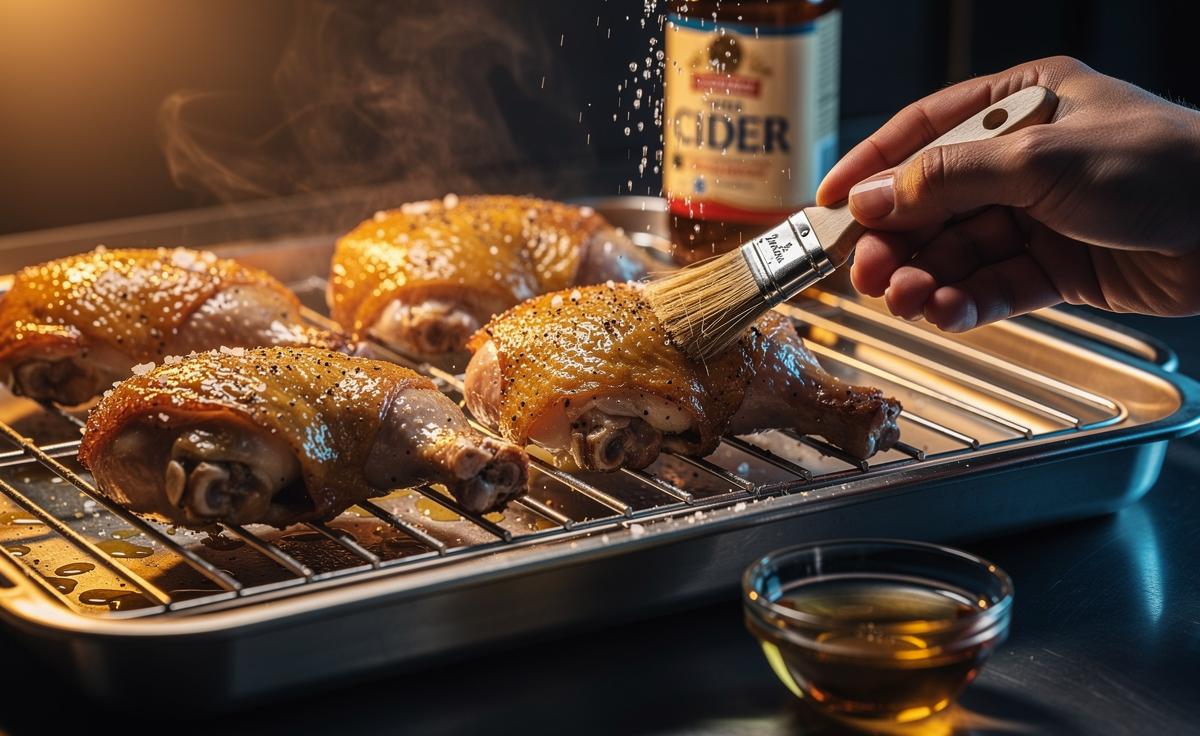
Preheat hard. Go 230°C (210°C fan), or 450°F, with a heavy tray inside so it’s scorching when the chicken lands. Pat the chicken absolutely dry. Brush the skin only with 1–2 teaspoons of cider or white vinegar per portion, then season with fine salt and pepper. Lightly oil the tray, or better, set a wire rack over the tray to keep air moving and fat draining. Rack equals crisp. Tray equals extra sizzling and deeper browning. Both work; choose your finish.
Arrange pieces skin-side up with space between them. Do not crowd; steam kills crunch. Roast 15–20 minutes, turning the tray once. Smaller wings will hit temperature faster; boneless, skin-on thighs flatten and crisp predictably. Aim for 74°C (165°F) internal, but judge with your eyes and ears too—skin should look blistered, sound crackly when tapped, and feel rigid. Do not baste; moisture softens the crust. Rest 3–4 minutes on a rack so steam escapes instead of rehydrating the skin.
| Cut (Skin-On) | Heat & Time | Notes |
|---|---|---|
| Wings (whole) | 230°C, 18–20 min | Fastest crisp; brush with white or cider vinegar. |
| Boneless thighs | 230°C, 16–20 min | Flatten slightly; even heat, reliable crunch. |
| Drumsticks | 230°C, 20–24 min | Go to 22 min if meaty; check 74°C. |
Choosing Vinegar and Seasoning for Maximum Snap
Use clean, bright acidity. White wine vinegar and cider vinegar bring a neutral, fruity tang that vanishes behind the roastiness but sharpens the finish. Malt vinegar (the chippy classic) adds a toasty, malty note that loves chicken fat. Rice vinegar is gentle and forgiving if you’re nervous about over-acidifying. Save balsamic for after cooking; its sugars scorch at high heat. As a base ratio, think 1 tsp vinegar per small piece or 2 tsp per thigh—just enough to sheen the skin.
Season simply for speed: fine salt for even coverage, cracked pepper for warmth. Then layer. Garlic powder clings and browns. Smoked paprika deepens color; go light to avoid burning. For a pub-night echo, dust with salt-and-vinegar seasoning after the roast, when the fat has set; it grabs like a crisp packet’s magic. Prefer a glaze? Brush with honey and extra vinegar in the last 2 minutes only, so the skin keeps its snap while sugars gloss instead of blacken. Anything wet goes on late, or not at all. That’s the crisp covenant.
Troubleshooting Soggy Skin and Splatter
If the skin won’t crisp, diagnose moisture and crowding first. Was the chicken patted bone-dry? Did pieces touch or the tray pool with juices? Space matters; steam softens the crust you’re trying to build. Switch to a wire rack over a hot tray to lift the skin into moving air and let fat drip away. Use fan-assisted heat if you’ve got it—convection accelerates evaporation and blisters the surface faster than static heat. For very fatty cuts, preheat the tray longer so the initial sear pushes out liquid quickly.
Splatter is the other complaint. Choose a deep-sided tray, and keep the vinegar coat measured, not dripping. A silicone mat dampens noise but can blunt browning; metal and racks win for hard crackle. If timing slips and the skin softens as it rests, a 3–5 minute blast at 230°C revives it—no foil, no basting. Store leftovers uncovered in the fridge to prevent condensation, then re-crisp hot and fast. And always pour the rendered fat into a jar. That golden schmaltz is flavour insurance for roast potatoes, greens, or tomorrow’s omelette.
The joy of this method is its reliability: a quick vinegar brush, hot oven, disciplined spacing, and patience for those final blistering minutes. You get crackle without frying, character without a marinade, and dinner without delay. It suits game-day wings, date-night thighs, even a tray of drumsticks for the kids. Next time, finish with a spritz of malt vinegar and flaky salt for a chip-shop wink, or whisk the pan fat into a tangy gravy. How will you tailor your brush, heat, and finish to build your perfect crunch tonight?
Did you like it?4.6/5 (20)