In a nutshell
- ⚡️ Restore crunch to soggy cereal with a quick microwave zap in about 30 seconds, using short bursts and a brief rest.
- 🔬 Science: microwaves drive off surface moisture, nudging starch back toward a brittle glass transition; the rest phase lets steam escape and texture reset.
- ⏱️ Method: medium–high power, 10–15s bursts, stir between zaps, then rest 20–40s; add a splash of cold milk to rebalance temperature if needed.
- 🥣 Safety & setup: use microwave-safe bowls, avoid full-power blasts, watch for scalding milk; reduce power for sugary or chocolate-coated cereals.
- 🔧 Optimise by cereal type: cornflakes, bran, puffed rice, and granola each get tailored power and timing, aiming for “little and often.”
There’s a familiar moment of disappointment: you’ve poured milk, answered the door, and returned to a bowl of limp cereal. Don’t bin it. A home hack using the microwave can restore snap in as little as 30 seconds, reviving flakes that seemed past saving. The science is simple, the technique forgiving, and the results surprisingly good for most brands. Short, controlled bursts drive off surface moisture without cooking the milk or scorching sugars. Done right, you’ll have crunch without starting over or wasting food. It’s quick. It’s tidy. And it’s the kind of kitchen trick that turns a lost breakfast into a small victory.
Why Microwaves Bring Back Crunch
Crunch lives or dies by water. Cereal flakes are baked into a brittle, glassy matrix; once milk floods the pores, moisture migration softens the structure, collapsing audible crispness. Enter the microwave. Microwaves excite water molecules directly, warming them first and fastest. That rapid heating generates a wisp of vapour at the cereal’s surface, nudging off free water and nudging the starch back towards a starch glass transition—a fancy way of saying “brittle again”.
Two details matter. Time and rest. A short burst at medium-high power energises water without cooking the whole bowl. Then a pause allows steam to escape and internal moisture to redistribute, reducing sogginess. The rest phase is as important as the zap; without it, you get hot, chewy flakes, not crisp ones. Ventilation helps too: a slightly open bowl or a plate gives steam somewhere to go, rather than re-condensing on your breakfast. The result isn’t oven-dry, but it restores bite. On everyday cornflakes, it’s startlingly effective.
The 30-Second Rescue, Step by Step
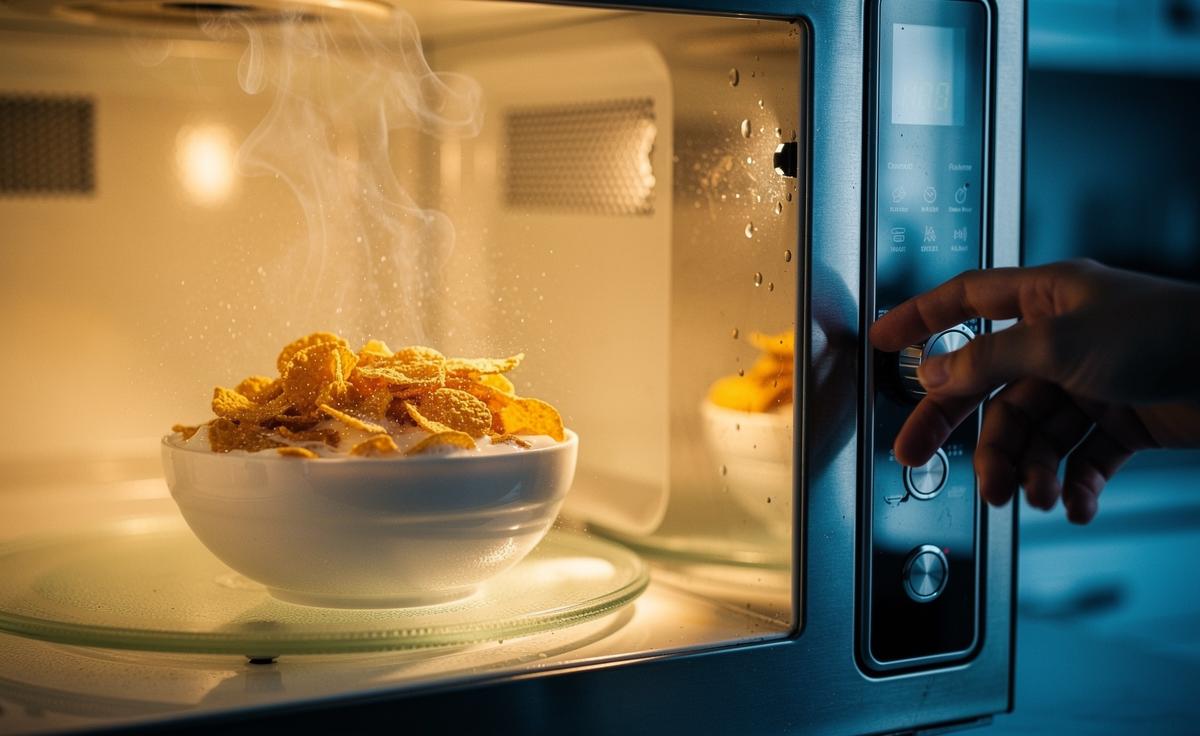
Start by assessing the bowl. If your cereal is submerged, spoon off a splash or push flakes above the milk line; you want wet, not drowning. Place the bowl slightly off-centre in the microwave—this encourages more even energy exposure on turntable models. Use medium-high power on a typical UK unit (800–900W). Zap for 10–15 seconds. Stop. Stir or gently fold from the edges to the centre to expose damp zones. Zap again for 10–15 seconds. Total time: roughly 30 seconds.
Now wait. Give it 20–40 seconds on the counter. This pause is where crunch returns, as steam vents and the surface dries. Taste a spoonful and decide if it needs one final 5–10 second nudge. If the milk got too warm, correct with a teaspoon of cold milk to restore contrast without re-sogging the lot. For heavily sogged bowls, decant the cereal with a slotted spoon onto a plate, microwave 20–30 seconds, then return to fresh, chilled milk—crunch guaranteed, and still faster than grilling or oven-drying.
Milk, Bowls, and Safety: What to Watch
Milk is both friend and foe. It carries flavour and coolness, yet it also soaks flakes. In the microwave, milk heats from within and can form hot spots. Keep bursts short and watch for a simmering ring; if you see bubbles, stop. Never run a single, unbroken 30-second blast on full power with a full bowl. You’ll risk scalded milk, droopy flakes, and a sticky clean-up.
Choose a microwave-safe ceramic or glass bowl. Plastics can soften or hold smells, dulling the result. Sugar-glazed cereals and chocolate pieces can scorch fast; reduce power to 60–70% and shorten bursts. Dried fruit traps heat—keep it towards the centre where energy density is lower. If you’re rescuing cereal without milk, line a plate with kitchen paper to catch condensate, then tip back into cold milk after a brief rest. Finally, scent matters: brief heating amplifies aroma, so finish with a cool topper—fresh milk, yoghurt, or berries—to restore temperature contrast and keep the experience bright.
Optimising for Different Cereals
Not all flakes are created equal. Thin cornflakes bounce back quickly. Bran’s denser lattice needs a whisker longer. Puffed rice is airy and delicate; it re-crisps fast but can go leathery if overheated. Granola clusters behave differently again: oil and sugar matrices firm as they cool, so the rest phase is critical. Use these guidelines as a starting point, then adjust to taste and microwave power.
| Cereal Type | Power (UK 800–900W) | Time Window | Tip |
|---|---|---|---|
| Cornflakes | Medium-High | 2 x 10–12s bursts | Rest 30s; add a splash of cold milk after |
| Bran Flakes | Medium-High | 3 x 10s bursts | Stir between bursts; longer rest for dryness |
| Puffed Rice | Medium | 1–2 x 8–10s bursts | Go gentle; overheats to chewiness |
| Granola/Clusters | Medium | 2 x 12–15s bursts | Best rescued dry on a plate, then return to cold milk |
| Chocolate-Coated | Medium-Low | 2 x 8–10s bursts | Watch for melting; cool briefly before eating |
As a rule, think “little and often”. Small bursts, short stirs, and patience on the rest. Crunch is a texture of contrasts—dry meets wet, hot meets cold, brittle meets creamy. Your microwave is simply a tool to swing the balance back towards dry, then let time seal the deal.
The trick sounds cheeky, but it earns a permanent place in the weekday toolkit. It cuts waste, rescues rushed mornings, and gives you control over texture instead of surrendering to the clock. Use it on leftovers, too: cereal-topped bakes, crumble granola, even nutty clusters that lost their bite in a humid kitchen. Thirty seconds and a short rest can turn defeat into a respectable breakfast. Now that you’ve got the method and the science, which cereal will you rescue first—and how will you tweak the zap-and-rest to suit your perfect crunch?
Did you like it?4.6/5 (29)