In a nutshell
- 🔬 The crisping effect comes from restoring turgor pressure; a weakly alkaline bath with baking soda speeds water back into wilted cells for rapid snap.
- ⏱️ Use the 30-second method: ice-cold water + about 1/4 tsp baking soda per litre, gentle agitation, then immediate rinse and thorough drying.
- 🥗 Best for leafy greens, soft herbs, cucumbers, celery, radishes; avoid mushrooms, berries, and pre-cooked veg that won’t regain crispness.
- 🎨 Manage taste and colour: brief alkalinity can mute acidity and shift anthocyanins; rinse well and finish with lemon or vinegar to brighten.
- 💡 Safe, frugal, and fast: improves texture without extending shelf life; use same day and keep the solution weak to prevent mushiness.
Open the crisper drawer and you’ll often find greens that have lost their bite: limp lettuce, flagging herbs, cucumber slices gone soft around the edges. Before you toss them, try a quick, clever trick. A brief soak in cold water with a whisper of baking soda can restore turgor and snap in as little as half a minute. It’s simple kitchen chemistry, costs pennies, and wastes nothing. The key is a tiny amount of bicarbonate and a very short contact time. Do it right and you’ll rescue salads, garnish plates, and packed-lunch crunch, all without masking flavour or perfuming your fridge with anything odd.
Why Baking Soda Revives Limp Produce
Vegetables feel crisp because water inside their cells presses firmly against the cell walls, a state known as turgor pressure. When produce sits uncovered or spends days in the fridge, it loses moisture; the cells slacken and textures turn bendy. Cold water alone can plump them back up, but it can be slow. A pinch of sodium bicarbonate elevates the pH, creating a mildly alkaline bath that helps loosen surface films and speeds water movement across damaged cell membranes. The effect isn’t magic; it’s micro. In around 30 seconds, enough water can rush back to make leaves feel perky and stalks taste snappy again.
There’s also a flavour benefit. Wilted greens often taste a touch sour or stale because organic acids concentrate as water evaporates. The gentle alkalinity of baking soda nudges those acids toward neutrality. Used sparingly, that yields a cleaner, fresher impression without leaving a soapy note. Crucially, timing is everything. Extended exposure to high alkalinity weakens hemicellulose in cell walls and can turn vegetables mushy when cooked. That’s why the soak should be brief, the solution weak, and a fresh-water rinse mandatory. Done carefully, you reclaim crunch without compromising colour or nutrition.
The 30-Second Soak: Step-by-Step Method
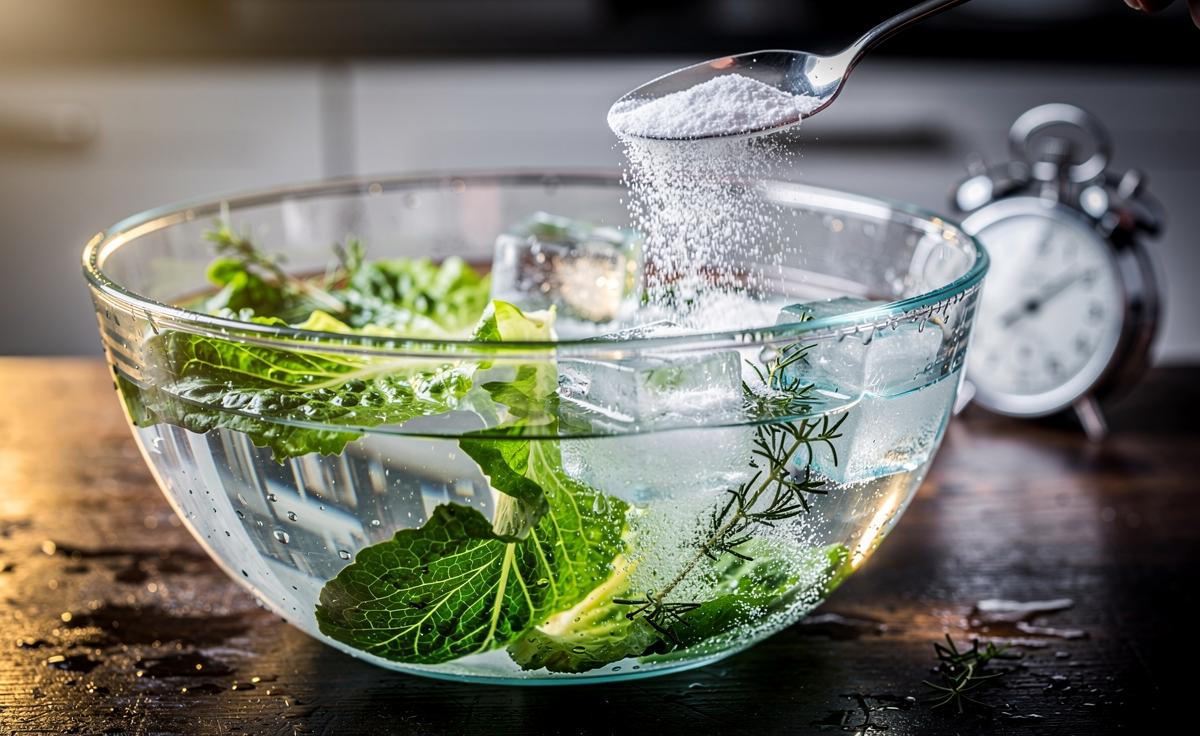
Fill a large bowl with very cold water—ice water if possible. For each litre, dissolve about 1/4 teaspoon of baking soda; stir until clear. Submerge the vegetables fully, separating leaves or slices so the liquid reaches every surface. Agitate gently with your fingers for even contact. Time it: 30 seconds is the target window for most tender items. Drain immediately, rinse under cold running water to wash away bicarbonate and lifted debris, then dry thoroughly—spin in a salad spinner or pat with a clean tea towel. Chill for five minutes and serve.
That’s the core protocol. Adjust the cut and contact to the veg. Soft lettuce and herbs are the fastest to respond. Firmer items—celery sticks, cucumber slices, radishes—may prefer the same time but benefit most from an icy bath. Avoid piling; single layers revive more evenly. If you taste any alkaline note, you used too much soda or soaked too long. Keep the solution weak, the soak brief, and the rinse generous. Below is a quick reference for common produce.
| Vegetable | Cut Size | Water Temperature | Baking Soda per Litre | Soak Time | Rinse | Expected Result |
|---|---|---|---|---|---|---|
| Lettuce leaves | Torn, single layer | Ice-cold | 1/4 tsp | 30 seconds | Yes | Crisper ribs, fresher bite |
| Soft herbs (parsley, coriander) | Whole sprigs | Ice-cold | 1/4 tsp | 30–45 seconds | Yes | Lively leaves, brighter aroma |
| Celery sticks | 2–3 cm lengths | Very cold | 1/4 tsp | 30 seconds | Yes | Crunchier snap |
| Cucumber | Thin slices | Very cold | 1/4 tsp | 30 seconds | Yes | Firmer texture, cleaner taste |
| Radish | Coins or matchsticks | Very cold | 1/4 tsp | 30–45 seconds | Yes | Extra crunch, mild spice |
| Sugar snaps | Whole, trimmed | Very cold | 1/4 tsp | 30 seconds | Yes | Snappier pods |
When to Use It—and When Not To
This is a smart rescue for fresh, raw vegetables that have wilted in storage: salads, crudités, lunchbox staples. It shines with leafy greens, tender herbs, watery slices, and snappy pods. It also doubles as a hygienic refresh; bicarbonate can help dislodge soil and reduce surface microbes before a thorough rinse. It is not a cure-all. Mushrooms soak up water and turn spongy. Berries bruise and leak. Pre-cooked vegetables already have altered cell walls; they won’t regain crispness from a cold alkaline bath.
Be mindful of colour. Purple leaves and red cabbage contain anthocyanins that shift blue-green in alkaline water. A quick rinse and a squeeze of lemon or a splash of vinegar in the dressing will push them back toward ruby. If you’re sodium-sensitive, remember that bicarbonate is a sodium salt; proper rinsing leaves negligible residue, but don’t be heavy-handed. And don’t soak for minutes out of curiosity. Prolonged alkaline exposure can soften pectin and hemicellulose, the very scaffolding that holds vegetables crisp. Respect the clock, and you’ll feel the difference with every bite.
Taste, Safety, and Pairing Tips
The best results marry texture with flavour. After the 30-second soak and rinse, dry thoroughly so dressings cling rather than dilute. Then steer the palate. A light acid—lemon juice, cider vinegar, pickling liquor—brightens and balances any remaining alkalinity. A pinch of salt at the table wakes up sweetness; a gloss of good oil carries aroma. Always taste before plating. If there’s the faintest baking-soda echo, rinse again and blot dry. You should only notice clean, cool crunch and the vegetable’s own character.
From a safety standpoint, bicarbonate is a common food ingredient used in baking and washing produce. The quantities here are tiny, the contact brief, and the rinse thorough. Store revived vegetables chilled and use the same day; you’ve improved texture, not extended shelf life. For meal prep, soak just before serving or packing. And if you crave even more snap, pair revived leaves with crisp elements—toast shards, nuts, shaved raw fennel—to amplify contrast. The trick is a tool, not a crutch; good produce still matters.
For home cooks and busy lunch-packers, this technique is a quiet revolution: fast, frugal, and rooted in simple science. A scant pinch of baking soda, icy water, half a minute on the clock, a cold rinse, and you’re rewarded with fresher textures and happier plates. It won’t resurrect everything, and it won’t replace careful shopping or storage, but it will save you from throwing away edible food and dull salad days. Will you try the 30-second alkaline soak on your next wilted bunch and see which vegetables in your kitchen spring back best?
Did you like it?4.2/5 (25)