In a nutshell
- 🧪 Salt triggers natural preservation in hours by drawing water via osmosis, feeding lactic acid bacteria (LAB) that lower pH and make a safe, sour environment.
- ⚖️ Use 2–3% salt: dry-salt for shredded veg like cabbage, brine for batons and whole pieces; speed depends on cut size and a steady 18–22°C.
- 🥫 Choose fresh produce, non-iodised salt, and wide-mouth glass jars; keep veg submerged under brine with a weight—airlocks help but aren’t essential.
- 🛡️ Safety first: skim harmless kahm yeast, bin mouldy ferments, use chlorine-free water, and refrigerate when flavour balances tang and sweetness for lasting crunch.
- 🌱 Results and refinement: expect crisp, tangy jars within days; tune texture and flavour with time, spices, and cooler rooms—label batches to build brine, bacteria, and balance mastery.
In kitchens from Bristol to Belfast, a quiet revolution sits in jars on the counter. Vegetables, a pinch of salt, and time. That’s it. Within hours, something remarkable begins: natural preservation sparked by salt’s steady chemistry. Brine draws moisture from cabbage, carrots, and chillies, setting the scene for friendly microbes to thrive while spoilers retreat. You can hear it, sometimes—tiny bubbles, a faint fizz—signalling a living process. This is not witchcraft; it’s lactic acid fermentation, the same principle that gives sauerkraut its tang and kimchi its fire. You don’t need specialist kit, only clean jars and accurate salt. The result? Bright flavours, enhanced nutrients, longer shelf life, and a deeper connection to what you eat.
The Science: How Salt Starts Preservation in Hours
Salt is the quiet conductor of fermentation. Add 2–3% by weight and it draws water from plant cells through osmosis, creating a self-made brine. That brine solves three problems at once: it limits oxygen, slows unwanted microbes, and concentrates sugars for the heroes of the story—lactic acid bacteria (LAB) living on the vegetables. Within hours, LAB wake, feed, and start producing lactic acid, lowering pH and nudging the jar into a safe, sour zone. Acidity is your line of defence; it gets stronger day by day.
Why the speed? Temperature and cut size matter. At 18–22°C, expect subtle fizz the first evening; warmer rooms speed things further, but aim for restraint, not a sprint. Thin shreds or small batons offer more surface area, so microbes have immediate access to sugars. Salt also keeps texture crisp by firming pectin, reducing the risk of mush. In plain terms: salt sets the stage, microbes write the script, and your kitchen provides the theatre. By morning, the jar is alive, preserving itself through controlled acidity.
Choosing Vegetables, Salt, and Vessels
Pick firm, fresh produce. Dense leaves and roots—cabbage, carrot, beetroot, radish—ferment predictably. Cucumbers, green beans, and cauliflower love a brine bath. Soft items like courgette need cooler rooms and a slightly higher salt concentration to avoid mush. Wash off visible soil, trim blemishes, and mind uniform size for even fermentation. The better the produce, the cleaner the ferment.
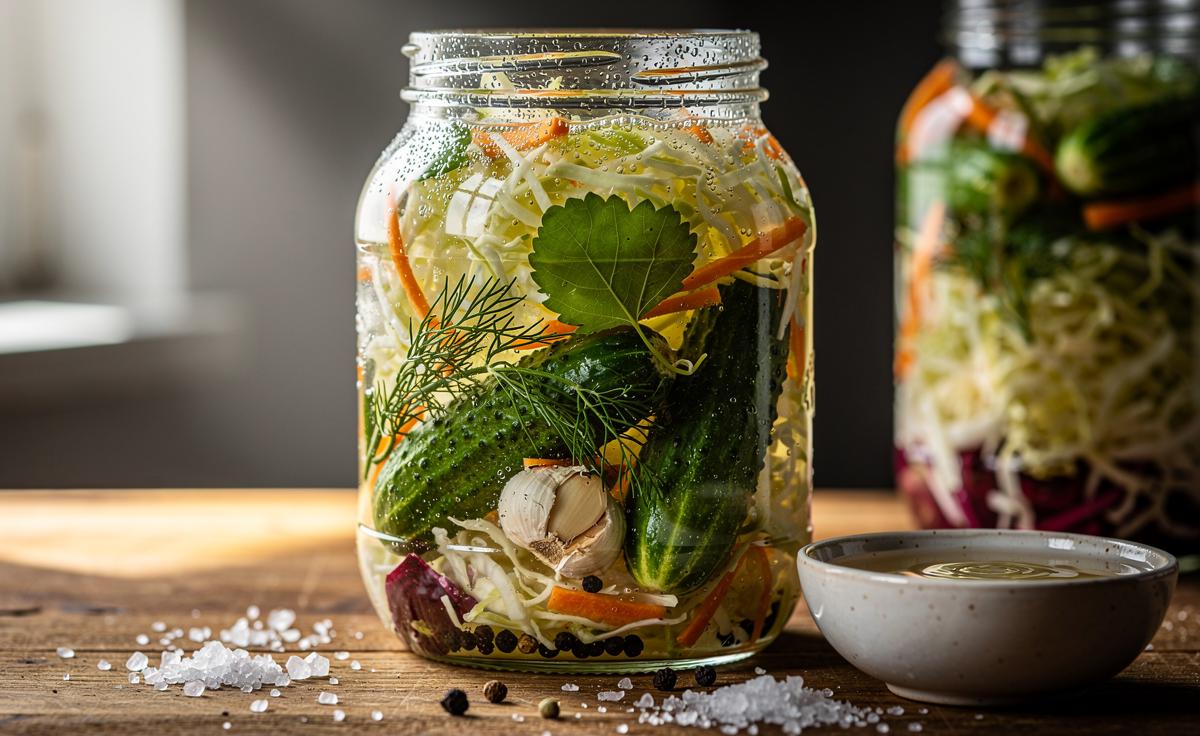
Use non-iodised salt with no anti-caking agents—sea salt or pickling salt. For dry-salted ferments like sauerkraut, aim for 2% salt by weight of shredded veg. For brined ferments, dissolve 2–3% salt in water: that’s 20–30 g per litre. Choose glass jars with a wide mouth. Submerge everything with a weight—leaf, pebble, or purpose-made weight—and keep veg under the brine. Airlocks are helpful but optional; a loosely lidded jar works if you “burp” daily early on. Oxygen out, brine up—that’s the rule.
Step-By-Step: From Crunch to Culture in a Day
1) Weigh your vegetables. For dry salting, sprinkle 2% salt, massage until a brine forms. Pack tightly into a jar, pressing to raise liquid above the veg. For brining, mix 2–3% salt in cool water, pour over trimmed veg, and weigh down. 2) Seal. Either fit an airlock or close the lid lightly to let CO₂ escape. 3) Park the jar at room temperature, out of direct sun. Within hours you’ll see tiny bubbles or a slightly cloudy brine as LAB get to work. Bubbling is a sign of success, not spoilage.
By day two, flavour pivots from raw to tangy. Taste daily with a clean utensil. Most quick ferments taste lively by day three to five; keep going for deeper sourness. When you love it, refrigerate to slow the process. Keep everything submerged; add a splash of 2% brine if levels drop. Spice blends? Add crushed garlic, mustard seed, or dill. Just avoid oily pastes early on; fat can disrupt the brine’s clarity and float weights out of place.
| Vegetable | Method | Salt % | Activity Starts | Notes |
|---|---|---|---|---|
| Cabbage | Dry salt | 2% | 6–12 hours | Crisp, reliable; press firmly |
| Carrot batons | Brine | 2.5% | 8–16 hours | Great with ginger |
| Cucumber | Brine | 3% | 4–10 hours | Cool room keeps crunch |
Safety, Troubleshooting, and Flavour Tuning
Fermentation is safe when you respect salt, temperature, and brine coverage. Keep vegetables submerged and the ferment will protect itself. If you spot white, powdery kahm yeast, skim it; it’s harmless but tastes off. Fuzzier, coloured mould signals exposure to air—remove and assess smell; when in doubt, discard and learn. Cloudy brine is normal. So is a tangy, bread-like aroma. Sharp, putrid smells mean start again.
For crunch, favour cooler temperatures (18–20°C) and calcium-rich additions like a clean grape leaf. For speed, slice thinner and keep room temperature steady. For bolder flavour, increase time rather than salt; excess salt can mute complexity. Always use chlorine-free water—boil and cool tap water if needed. Taste is your compass: when acidity balances sweetness and aroma, move to the fridge. Label jars with date, salt percentage, and contents. That record—simple but powerful—turns every batch into evidence. Precision builds confidence; confidence builds better ferments.
Salt-led fermentation rewards curiosity. It’s thrifty, delicious, and deeply sustainable, turning gluts into pantry gold while celebrating seasonal produce. Within hours, the chemistry has your back: brine, bacteria, and balance reshape texture and taste, delivering foods that brighten plates and bolster gut health. Think small jars first, then scale up. Keep notes, keep tasting, and keep the brine above the veg. The craft is forgiving, the results immense. What vegetable will you salt tonight, and how will you season its first day on the road from raw to remarkable?
Did you like it?4.6/5 (29)