In a nutshell
- 🧪 Double-acting baking powder releases CO2 twice—on mixing and heating—creating instant lift and a stable, lofty crumb.
- 🥞 Texture hinges on viscosity, fat, sugar, and eggs; use minimal mixing, tolerate small lumps, and give a brief rest to stabilise bubbles.
- 🔥 Control heat around 180–190°C; flip when bubbles set and edges matte, and never press down to avoid venting steam and CO2.
- ⚖️ Use 1½–2½ teaspoons baking powder per 150 g flour; with buttermilk, add a pinch of bicarbonate of soda; season with salt for balance.
- ✅ Keep leavening potent: test for a vigorous fizz in hot water—fresh baking powder is non-negotiable for immediate lift.
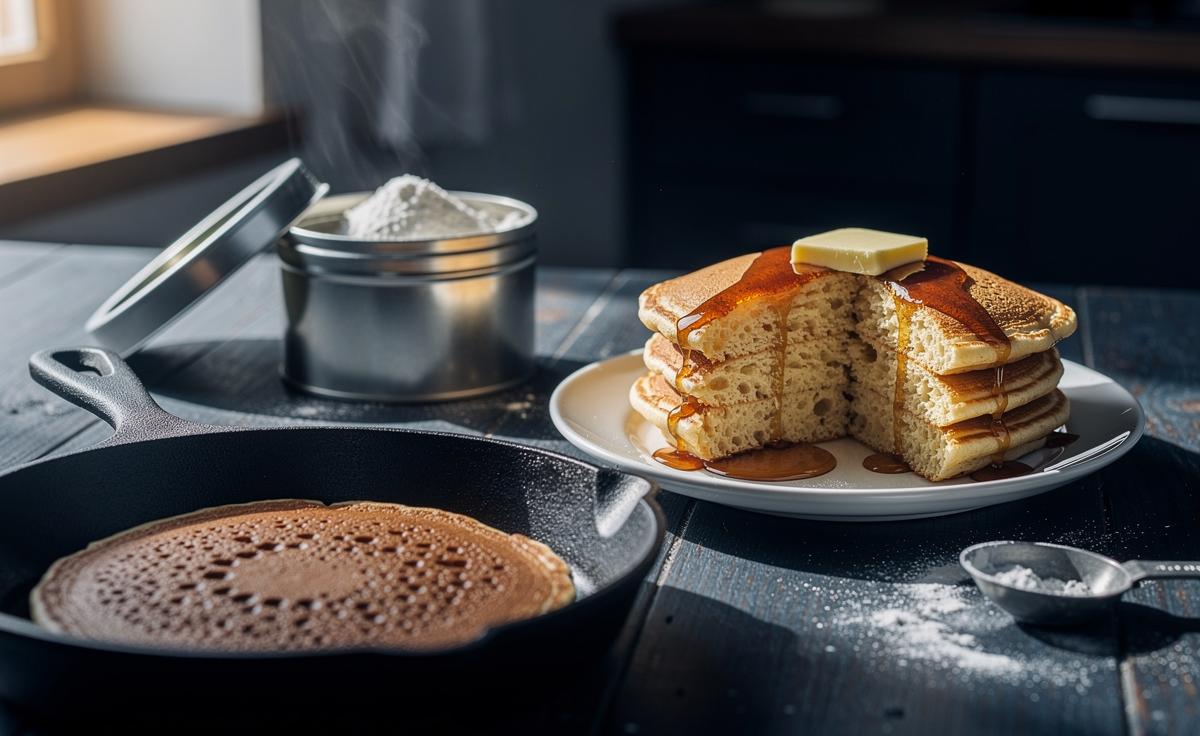
Weekend brunch has a clear hero: a cloud-light stack that yields under the fork yet springs back with bounce. The secret isn’t mystical. It’s chemistry you can buy in any corner shop. Add baking powder and you trigger a two-stage reaction that inflates batter fast and then sets it softly on the hob. That is why a good batch of fluff pancakes can happen almost instantly. No whisking eggs into stiff peaks. No hour-long rest. Just measured lift, gentle mixing, and the right heat. Here’s how this modest leavening agent delivers the perfect texture on demand—and how to make it work every time.
How Baking Powder Generates Lift
Most British bakers reach for double-acting baking powder. It contains a base (sodium bicarbonate) and two acids: one that reacts when wet, another that activates when heated. The moment batter meets milk, the first acid liberates carbon dioxide (CO2). Those bubbles create gas cells that expand as you ladle batter onto a hot pan, and again as temperature rises. This one-two punch is the “instant” in instant fluff. Unlike baking soda, which demands an external acid and precise balance, baking powder carries its own chemistry set. It leavens predictably, offers a near-neutral pH for a tender crumb, and resists the metallic aftertaste of excess alkali.
That chemistry needs structure. Proteins in egg and gluten from flour form elastic walls around expanding CO2. Starch granules swell, thickening the batter and stabilising bubbles until heat firms the network. Too little structure and bubbles burst; too much and you get chew. The sweet spot comes from minimal mixing and a batter thick enough to cradle bubbles but loose enough to flow. Below is a quick guide to the stages.
| Stage | Trigger | What Releases | Effect on Batter |
|---|---|---|---|
| Mixing | Hydration | First CO2 burst | Seeds fine bubbles; increases lightness immediately |
| Heating | Pan temperature | Second CO2 burst | Expands bubbles; raises pancakes without collapsing |
| Setting | Protein coagulation, starch gelation | — | Locks in height; tender, moist interior |
Why the Texture Feels Airy yet Tender
The best pancakes balance bubble volume with bubble stability. Viscosity determines this. A batter that ribbons slowly off the spoon retains CO2; one that’s thin leaks gas before heat can set the structure. Egg whites contribute foam stability; yolks add emulsifiers and fat for richness. Fat shortens gluten strands, directly softening the bite. Sugar increases browning and draws moisture, yielding a plush crumb. Meanwhile, baking powder’s self-contained acids keep pH in a sweet spot where gluten forms enough scaffolding but not a rubbery web. That means your pancakes rise high, then stay delicate.
Mixing matters more than many admit. Stir dry and wet just until you see no obvious flour streaks. Lumps are fine; they hydrate as the batter rests briefly. Overworking wakes up gluten, squeezing bubbles out and toughening the crumb. A short rest—five to ten minutes—lets the first CO2 stage do its job and allows starch to absorb liquid, thickening the batter without further stirring. Stop at that point; every extra motion vents precious gas. When the batter hits a properly heated pan, the second gas release inflates those primed cells, the surface dries into tiny craters, and flip timing becomes intuitive: edges matte, bubbles set, underside the colour of pale toast.
Practical Ratios, Timing, and Heat Control
Start with dependable ratios. For plain flour, use 1½ to 2½ teaspoons baking powder per 150 g flour, depending on richness. Lean batters (fewer eggs, less fat) benefit from the upper end. Rich batters need a touch less. Too much powder leaves a soapy tang and overblown holes. If using buttermilk, you can still rely on baking powder alone, but many cooks add a pinch (¼ tsp) of bicarbonate of soda to boost browning and balance acidity. Salt matters: ¼ to ½ tsp per 150 g flour sharpens flavour and reins in sweetness.
Timing is tactical. Combine dry ingredients, whisk wet separately, then marry them swiftly. Cook promptly while the “cold” reaction is alive. Allow a brief bench rest—no more than ten minutes—then ladle. Pan management turns chemistry into architecture. Aim for a medium setting: an electric griddle at about 180–190°C or a heavy skillet that browns a butter smear in 45–60 seconds without scorching. Watch cues, not the clock. When bubbles break and stay open, flip once. Avoid pressing down; you’ll force out steam and CO2. Keep batches consistent by using the same ladle and spacing to prevent steam from neighbouring pancakes softening the sides. Finally, test your baking powder monthly: a half teaspoon in hot water should fizz vigorously. Fresh baking powder is non-negotiable for immediate lift.
In an age of culinary maximalism, baking powder is a quiet marvel: a measured lever that converts simple batter into soft architecture, quickly and reliably. Respect its timing, keep your batter thick but pourable, and let moderate heat perform the set. The payoff is textural contrast—crisped rims, custardy centres, and a resilient crumb that soaks syrup without sagging. With a tin of double-acting baking powder and a light hand, you can summon that pleasure any morning. What will you tweak first—the ratio, the rest, or the heat—to dial in your ideal stack?
Did you like it?4.6/5 (21)