In a nutshell
- 🔬 The science: gentle fork fluffing vents vapour, prevents condensation on surface starch, and preserves grains as starch retrogradation sets texture—unlike spoons, which compress and smear.
- 🕒 Timing that works: after cooking, rest 5–10 minutes, then fluff for about two minutes with a lift-and-drop motion in quadrants; stop once clumps break and steam subsides.
- ⚠️ Avoid pitfalls: don’t skip the rest, overhydrate, or use the wrong tool; fix wet rice by spreading on a warm tray, or rescue dry rice with a tablespoon of hot water and a brief covered rest before fluffing.
- 📊 Match method to grain: basmati, jasmine, medium/short-grain, and brown rice need different rinses, water ratios, and rests; adjust for pot geometry and heat retention to keep grains separate.
- ✨ Finish with flavour: add a teaspoon of oil or butter, herbs, or zest mid-fluff for glossy, evenly seasoned rice that stays distinct in pilau, salads, and weeknight bowls.
Perfect rice is democratic. It costs pennies, yet it feels like a tiny luxury when every grain stands free, steaming and fragrant. The secret is not just how you cook, but what you do right after: fluff rice with a fork. In two measured minutes, gentle agitation releases trapped steam, breaks up soft clumps, and sets the texture. No smashing. No gummy paste. This small ritual decides whether dinner sings or sticks. Here’s why the technique works, how to do it with confidence, and the quick fixes that save a pan of rice when things go sideways. Your fork is about to do the lightest heavy lifting in your kitchen.
The Science Behind Gentle Fork Fluffing
When rice cooks, starch molecules—chiefly amylose and amylopectin—gelatinise as water and heat swell the grains. The moment you turn off the hob, residual heat drives steam up through the pot. If that vapour stays trapped, moisture condenses on the surface starch and turns patches gluey. Fluffing with a fork is controlled disruption. The tines slip between grains, creating air channels that let steam escape while redistributing micro-droplets evenly. A spoon or paddle compresses; a fork separates. That difference is everything. It preserves structure and lets grains firm as they cool by a few crucial degrees, a process food scientists call starch retrogradation—essential for that sought-after, separate finish.
Why two minutes? Because timing balances release and retention. Too soon and you rupture tender grains; too late and clumps set like concrete. After a short resting period (more on that in a moment), a brief, deliberate fluff lifts the rice so moisture equalises without squeezing it out. Think of it as aerating a sponge cake: quick, precise, gentle. Minimal force, maximal effect. The result is a bowl that looks and eats better—each grain glossy, distinct, and primed to take sauce without turning soggy. It’s not fussy; it’s physics deployed with a fork.
Step-by-Step: Two Minutes to Perfect Grains
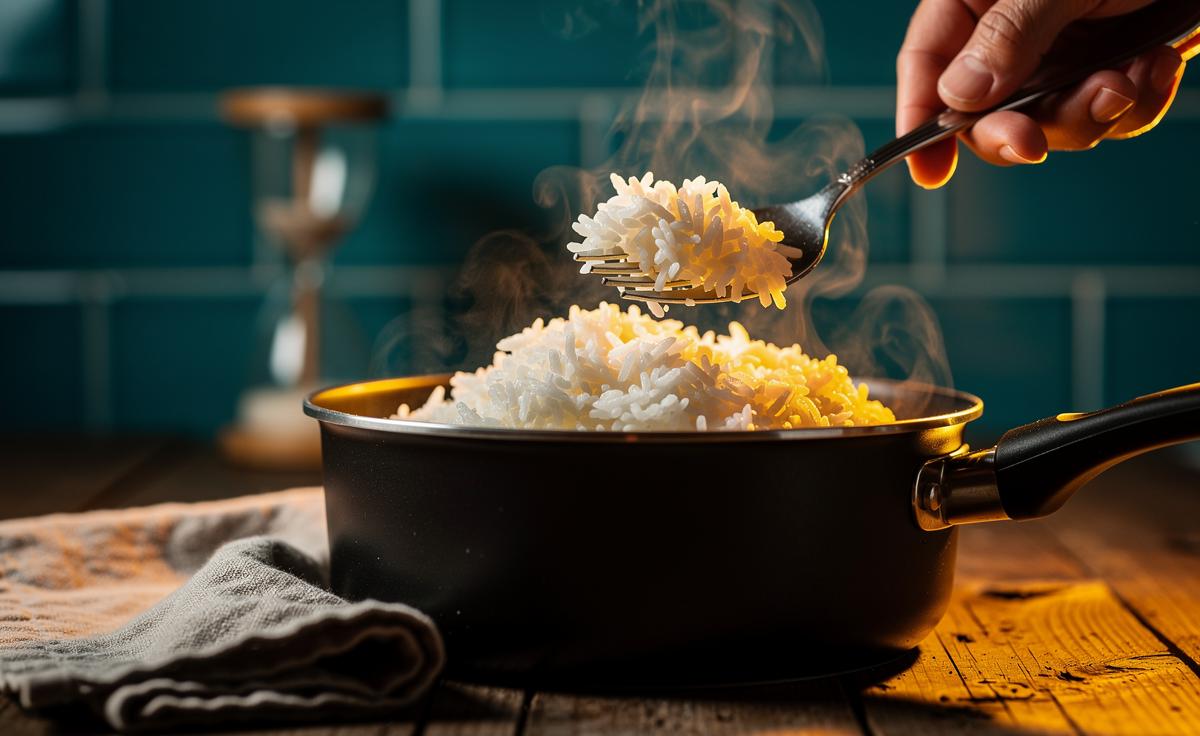
First, cook rice by your chosen method, then switch off the heat and leave the lid on. Let the pot rest. Five to ten minutes is ideal. This pause allows heat to equilibrate and surface moisture to migrate inward, so grains don’t burst under pressure. Now uncover. A burst of aromatic vapour should greet you. Slide a fork down the side, tines vertical. Lift and tilt, letting the rice fall back on itself. Work in quadrants rather than tugging the lot at once; you’re opening vents, not stirring a stew.
Continue, lifting from edges to centre, then rotate the pot and repeat. If you hit a denser patch, pause and tease it apart by nudging—not pressing—your fork through. For long-grain varieties, aim for a light, lofty mound. For shorter grains, the goal is a soft tumble with visible separation. Stop the moment the clumps break and the steam subsides. That’s typically about two minutes for a family pot, 60–90 seconds for a smaller pan. Overworking can smear starch and undo your good work.
Want glossy, seasoned grains? Add a teaspoon of neutral oil or a knob of butter halfway through fluffing, then fold with the same lift-and-drop motion. A squeeze of citrus or a pinch of salt dresses the rice without waterlogging it. Gentle fork work is compatible with herbs, lime zest, or toasted sesame—just sprinkle, lift, and let the flavours distribute as the last wisps of steam drift away.
Common Mistakes and Quick Fixes
Rushing is the classic error. Skip the rest and you create a sticky interior and wet top. Stirring with a spoon compounds it by compressing grains and smearing surface starch. Another trap is overhydration: a heavy hand with the water ratio leaves puddling in the pot that no amount of fluffing can reverse. Don’t chase clumps with force. Instead, diagnose calmly. If rice feels wet but cooked, spread it on a warm tray for 2–3 minutes, then fluff again; gentle evaporation rescues texture. If undercooked and dry, sprinkle a tablespoon or two of hot water, cover, rest five minutes, then fluff lightly.
Using the wrong tool matters. A fork’s slender tines part grains; silicone paddles and wooden spoons mash, especially with medium- and short-grain rice. Not rinsing can be fine for basmati, risky for sushi rice. With unwashed, extra-starchy grains, adjust technique: extend the rest, fluff in smaller sections, and stop early. Salt early, not after fluffing, to avoid drawing excess moisture to the surface. For next time, log what happened—hob setting, pot size, brand of rice. Rice is consistent; our habits aren’t. Small, deliberate changes make tomorrow’s pot effortless.
Rice Types, Ratios, and Fluffing Tips
Different grains demand slightly different handling, yet the principle holds: gentle fork fluffing unlocks clean texture. Long-grain basmati benefits from a thorough rinse and a longer rest to protect its signature length. Jasmine rewards restraint; its aroma is volatile and best preserved by minimal disturbance. Medium- and short-grain rice, rich in amylopectin, prefer compact pots and a lighter touch during fluffing. Match technique to grain, and texture becomes predictable. Use the guide below as a quick reference, then adapt to your pot and palate.
| Rice Type | Rinse? | Water Ratio (cup:cup) | Resting Time | Fluffing Note |
|---|---|---|---|---|
| Basmati (long-grain) | Yes, 2–3 rinses | 1 : 1.5 | 10 minutes | Lift in long strokes; stop as strands separate. |
| Jasmine (long-grain) | Light rinse | 1 : 1.25 | 8 minutes | Gentle lift to keep softness; avoid overworking. |
| Medium-grain | Optional | 1 : 1.4 | 8–10 minutes | Fluff in small sections; minimal pressure. |
| Short-grain/sushi | Yes, until clear | 1 : 1.1–1.2 | 5–7 minutes | Very light tease; expect slight stickiness. |
| Brown rice | Optional | 1 : 1.75–2 | 10 minutes | Fork deeply to vent; grains are sturdier. |
Remember, ratios shift with pot geometry and heat intensity. A heavy-lidded saucepan retains more steam, so you may need a touch less water and a slightly longer rest. Induction runs steady; gas can be spikier. Adjust, then commit to the two-minute fluff. This is the moment that turns cooked rice into great rice. Once you feel how a fork glides and lifts, you’ll never reach for a spoon again.
Two minutes with a fork is small effort for a big return. You vent vapour, settle starch, and set the stage for flavour. The technique travels—pilau, fried rice, burrito bowls, Tuesday leftovers. It makes seasoning easier too, because free-flowing grains take dressings evenly without wet clumps. Think of fluffing as plating before plating: a calm, precise finish that elevates everything you serve with it. What will you cook next to test your newly minted fork fluffing skills—aromatic basmati with spiced chickpeas, buttered jasmine under crisp-skinned salmon, or a bold, herby rice salad?
Did you like it?4.6/5 (25)