In a nutshell
- 🧪 Baking soda reacts with acid to release CO2, inflating batter instantly and boosting the Maillard reaction for deeper colour and flavour.
- 🥛 Choose tangy acids like buttermilk, yogurt, lemon juice or vinegar; aim for about 1/4 tsp soda per 120 g flour when sufficient acidity is present to avoid soapy flavours.
- 🔥 Nail the technique: mix quickly, keep batter slightly lumpy, rest 3–5 minutes, cook on a preheated pan (~190°C), flip once, and avoid excess fat; optional whipped whites add lift.
- ⚖️ Know your leaveners: baking soda is single-action and needs acid; baking powder is double-acting—use both strategically, or substitute 1 tsp powder ≈ 1/4 tsp soda + 1/2 tsp cream of tartar.
- 🥞 Results you can taste: a precise pinch of soda delivers towering stacks with a tender crumb and bronzed edges—small adjustments in ratios and heat make a big difference.
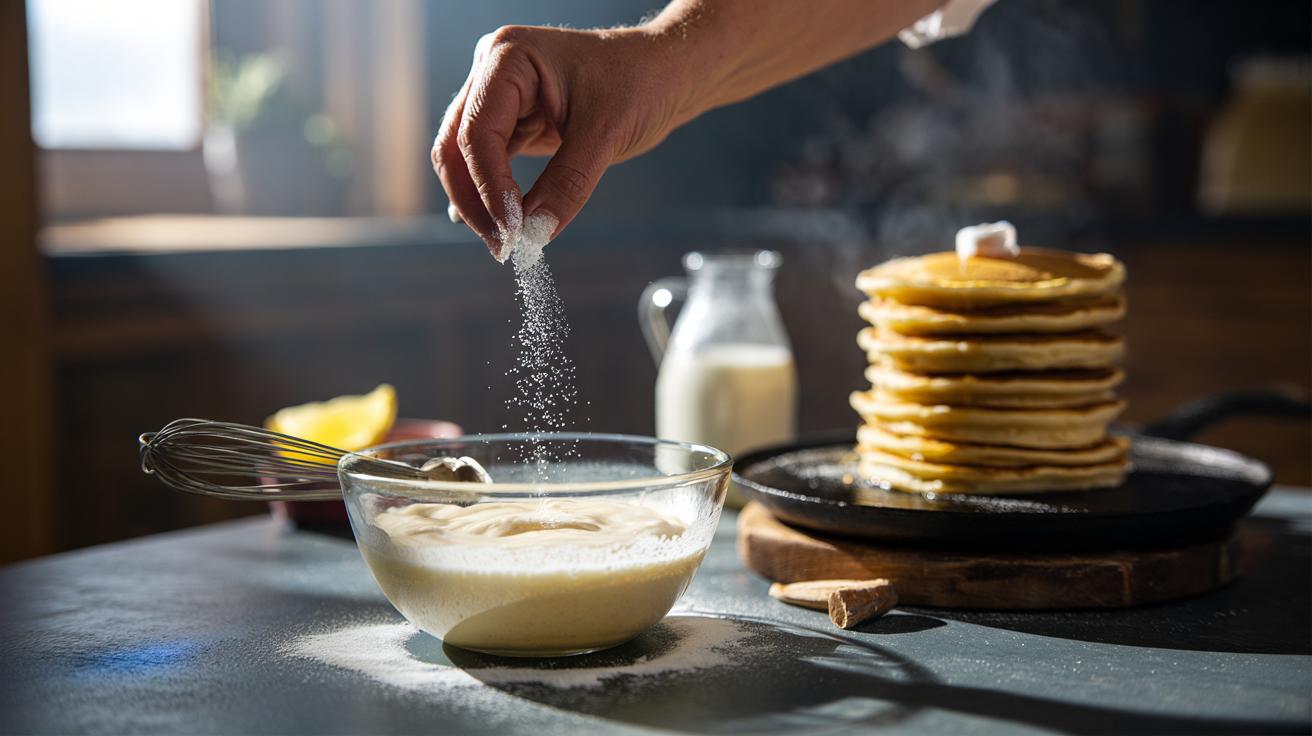
The trick sounds almost cheeky: add a pinch of baking soda and watch your pancakes climb skywards. Yet the effect isn’t culinary superstition; it’s chemistry meeting good technique. In British kitchens, where weekend stacks stand for comfort as much as indulgence, that tiny measure delivers lift, tenderness and colour in one swift move. Baking soda reacts the moment it meets acid. It releases gas. It stretches the batter. Done well, it’s instant theatre on a hot griddle. Used sparingly, baking soda turns ordinary batter into lofty, cafe-style pancakes without fuss or gadgets. Here’s why a pinch works, when to use it, and how to avoid the soapy slip-up.
The Chemistry Behind the Instant Lift
At the heart of the miracle sits sodium bicarbonate, or baking soda. It’s alkaline. When it meets an acid—buttermilk, yogurt, lemon juice, even brown sugar’s molasses—it produces CO2. Those bubbles form quickly, then expand as the batter warms. The starches in flour gelatinise and egg proteins set, trapping gas like a net. That’s the architecture of a towering pancake. A mere pinch can tip the pH just enough to supercharge browning through the Maillard reaction. Expect deeper flavour and a bakery-style crust. The science is immediate: mix, pour, rise—no waiting for yeast or lengthy rests.
Alkalinity does more than inflate. It briefly relaxes gluten, softening the crumb, which is why soda pancakes feel tender yet buoyant. But dosage matters. Too much soda overshoots the pH, leaving a soapy, metallic aftertaste and a dull, yellow crumb. The sweet spot is small: typically 1/4 teaspoon per cup (120 g) of flour when a tangible acid is present. Heat amplifies the lift—get the pan hot, keep the batter moving, and let structure set before the bubbles escape. Chemistry supplies the gas; technique decides whether it stays.
Choosing the Right Acid and Ratio
Pairing baking soda with the right acid is the difference between sprightly lift and flat regret. Buttermilk is the classic: tangy, reliable, and brimming with available acidity. Natural (not Dutch-processed) cocoa, yogurt, sour cream, lemon juice or a splash of cider vinegar do the job too. For every cup of flour, aim for about 240 ml of liquid. Then match your acid and soda with confidence. The rule of thumb: use soda only when you’ve got enough acid to neutralise it, or the flavour will stray. A short rest—three to five minutes—lets flour hydrate without exhausting the reaction.
| Acid Source | Per 240 ml Liquid | Baking Soda Pairing | Flavour/Notes |
|---|---|---|---|
| Buttermilk | 240 ml | 1/4 tsp per 120 g flour | Classic tang, generous lift |
| Yogurt (plain) | 180 ml + 60 ml milk | 1/4 tsp per 120 g flour | Rich, slightly tart |
| Lemon juice or vinegar | 1–2 tsp added to milk | 1/4 tsp per 120 g flour | Clean acidity, bright crumb |
| Brown sugar/molasses | 1–2 tbsp in batter | Pinch (1/8 tsp) booster | Subtle acidity, more browning |
If a recipe lacks sufficient acid, use baking powder instead or blend approaches: a small pinch of soda for browning plus baking powder for sustained lift. Self-raising flour (common in UK cupboards) already contains baking powder, so reduce added leavening and introduce only a pinch of soda when you add a distinct acid like yogurt. Balance is the brief; let taste, not dogma, steer your ratio.
Technique: Timing, Mixing, and Heat
Leavening power is perishable. Once soda meets acid, the clock starts. Combine wet and dry swiftly, keep the batter lumpy, and get it onto the heat within minutes. Overmixing knocks out gas and overdevelops gluten, making tough cakes that rise poorly. Aim for a ribbon-thick batter that barely flows; thickness supports bubble retention. Rest just long enough for hydration—three to five minutes—then cook. Wait too long and the fizz fades. A cool pan can sabotage lift, so preheat a non-stick or cast-iron surface to about 190°C (375°F). A drip of batter should sizzle softly, not scorch.
Grease lightly with oil or butter; excess fat undermines climb. Ladle small rounds so the edges set before bubbles burst. Watch for signals: bubbles form, their rims set, steam rises. Flip once. Don’t pat them down. The second side is shorter; you’re finishing structure, not seeking colour alone. If you’re batching, keep cooked pancakes warm in a low oven to prevent sogginess. For an extra boost, separate eggs, fold whipped whites gently into the batter, then rely on the soda’s chemistry to inflatingly lock in those micro-bubbles. Small moves, big lift.
Baking Soda vs. Baking Powder: When to Use Which
Baking soda is a single-action leavener: it needs acid immediately and largely does its work on contact. Baking powder is double-acting: it has acid built in, releasing gas when wet and again under heat. If your batter already has potent acid—think buttermilk or yogurt—soda is efficient and clean. If it doesn’t, powder is safer. Many pancake recipes use both, delivering reliable lift plus the browning benefits of alkalinity. A strategic pinch of soda can deepen colour and flavour even in baking powder-heavy batters.
Beware excess. Too much soda leaves an alkaline tang and can tint cocoa-based batters oddly. Keep to 1/4 teaspoon per cup of flour when acid is present; drop to a pinch (1/8 teaspoon) if you’re mainly chasing colour. In the UK, self-raising flour simplifies matters but still invites nuance: add a pinch of soda only when you add extra acid. For substitutions, 1 teaspoon baking powder roughly equals 1/4 teaspoon soda plus 1/2 teaspoon cream of tartar. Let the goals guide you: height, tenderness, or caramelised depth—then pick your leavener accordingly.
The joy of pancakes is immediacy: a bowl, a whisk, a brief hiss on hot metal, and breakfast becomes theatre. A judicious pinch of baking soda provides the lift-off, the tender crumb, the bronzed edges that make a stack feel generous. Keep your ratios tight, your pan hot, and your mixing light. Small, precise choices pay back with fluff far beyond their effort. Which pairing suits your taste and routine—a tangy buttermilk-and-soda classic, or a belt-and-braces mix with baking powder for insurance—and how will you tweak your batter next weekend to build your tallest stack yet?
Did you like it?4.6/5 (23)