In a nutshell
- 🧪 The reaction of vinegar (acid) with bicarbonate of soda (alkali) releases carbon dioxide, inflating batter for a light, tender crumb.
- 🍎 Choose your acid: distilled white for neutrality, apple cider vinegar for gentle fruitiness, or malt sparingly; aim for 1 tbsp per 250 ml milk.
- 🥞 Use precise ratios: 200–250 g flour, 1 tsp bicarbonate, 2 tsp baking powder, 1–2 tbsp sugar; mix wet (with vinegar) and dry separately, then combine briefly.
- ⏱️ Timing matters: mix lightly, cook promptly on a steady medium heat, and flip once when bubbles set and edges turn matte.
- ⚠️ Avoid pitfalls: overmixing, stale leavening, excess acid, or wrong pan temperature flatten rise—test bicarb, balance acidity, and keep heat consistent.
Pillowy pancakes don’t happen by accident. They’re engineered, swiftly, with chemistry you can taste. The simplest accelerator sits in your cupboard: vinegar. Paired with bicarbonate of soda, it unlocks a burst of carbon dioxide that inflates batter like a balloon and sets into a tender crumb. In busy British kitchens, this trick offers consistency on hectic mornings and dramatic lift without buying buttermilk. The science is clean, the flavour subtle. Add it at the right moment, and your pancakes will rise high, cook evenly, and stay fluffy rather than gummy. Here’s how a teaspoon of tang transforms an ordinary mix into café‑style stacks.
Why Vinegar Makes Pancakes Rise
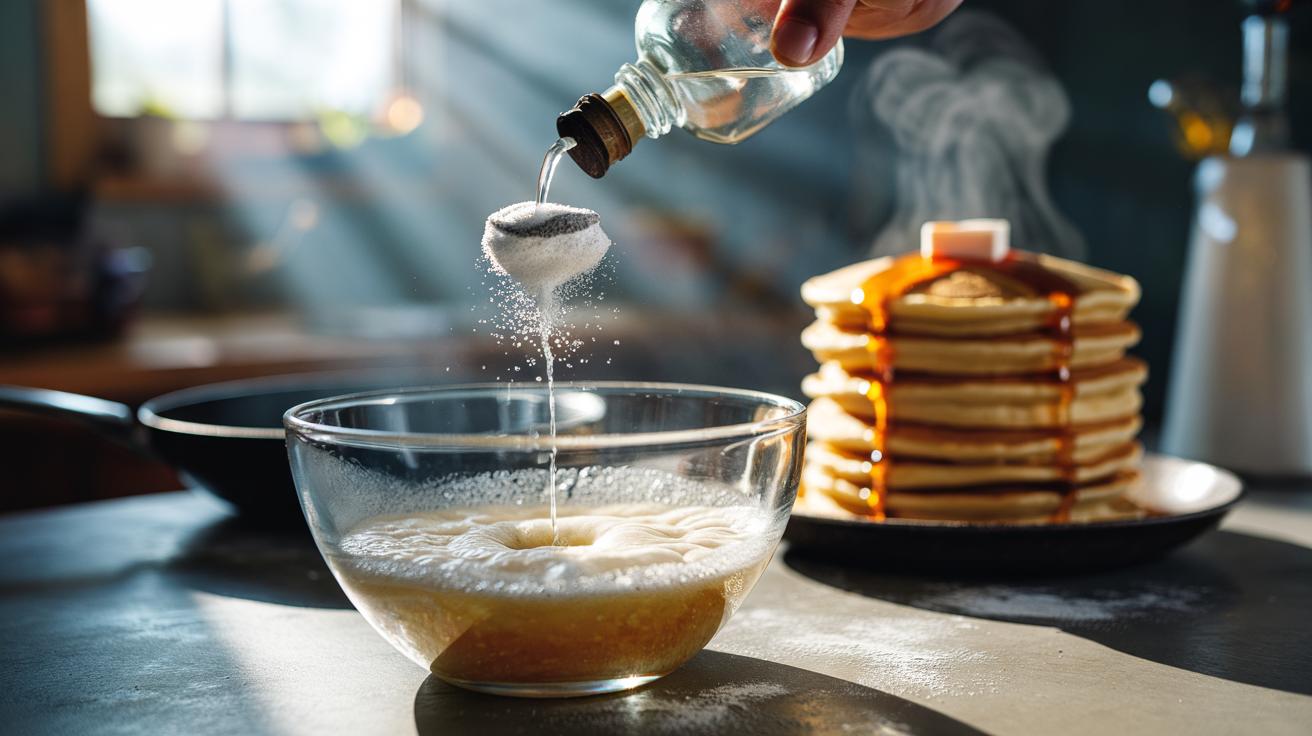
The secret is an acid–alkali reaction. Vinegar (acid) meets bicarbonate of soda (alkali) and immediately releases carbon dioxide gas. Those tiny bubbles become scaffolding for the batter, expanding under heat, then setting into a light, tender structure. It’s the same principle as self‑raising flour, but dialled up on demand. Acid activates lift; heat fixes it in place. Crucially, this reaction acts fast, so timing and gentle mixing matter. You want bubbles in the pan, not dissipating in the bowl.
Acidity also refines flavour and texture. A slightly lower pH relaxes gluten formation, helping avoid rubbery pancakes even if your whisking is less than perfect. Aim for a mild tang, not a vinegary smack. Typically, 1 tablespoon of vinegar to 250 ml milk produces a buttermilk‑like effect, and 1 teaspoon bicarbonate to 200–250 g flour supplies the alkaline counterpart. Add vinegar to the wet ingredients and bicarbonate to the dry, then bring them together at the last minute for maximum rise. Cook promptly on a medium hob so bubbles inflate steadily rather than collapsing in overheated oil.
Choosing the Right Vinegar for the Job
Not all vinegars behave—or taste—the same. Distilled white vinegar is neutral and dependable, delivering lift without flavour drift. Apple cider vinegar imparts a gentle fruitiness that flatters vanilla and cinnamon. Malt vinegar is classic on chips but can read savoury; use sparingly if you love its toasty edge. The goal is subtlety: enough acidity to awaken the bicarb, not enough to take over breakfast. When in doubt, choose white vinegar for a clean finish.
| Vinegar Type | Acidity (%) | Flavour Profile | Ratio per 250 ml Milk | Best For |
|---|---|---|---|---|
| Distilled White | 5 | Clean, neutral | 1 tbsp | Classic fluffy stacks |
| Apple Cider | 5 | Soft fruit, rounded | 1 tbsp | Spiced or fruity pancakes |
| Malt | 5–6 | Malty, robust | 2 tsp | Hearty, wholemeal batters |
Check labels: strength can vary. Stronger vinegar demands a touch less. If using lemon juice instead, keep the same tablespoon‑per‑250 ml ratio, noting its brighter citrus edge. Balance is everything. Too much acid will flatten sweetness and skew browning; too little leaves the bicarbonate under‑activated. Smell the mixed batter—if it’s lightly tangy rather than sharp, you’re in the sweet spot.
Step-By-Step Method and Ratios
First, split your mix into dry and wet camps. In a bowl, whisk 200–250 g plain flour with 1 tsp bicarbonate of soda, 2 tsp baking powder, 1–2 tbsp caster sugar, and a pinch of salt. In a jug, combine 250 ml milk with 1 tbsp vinegar and let it stand for 2–3 minutes until faintly thickened—your instant buttermilk. Whisk in 1 large egg and 1–2 tbsp neutral oil or melted butter. Keep the wet and dry separate until the pan is hot.
Heat a non‑stick frying pan over medium. Lightly grease. Pour wet into dry. Stir with a spoon, not a whisk, for 10–12 gentle strokes. Lumps are fine; smoothness is not the goal. Stop mixing as soon as streaks of flour disappear—overworking knocks out gas and toughens gluten. Scoop 60–80 ml per pancake. When bubbles rise and edges look matte, flip once. Cook the second side briefly until springy. Hold finished pancakes in a low oven for a few minutes if needed. For dairy‑free, swap milk for oat or soya and keep the vinegar ratio; the rise remains impressively buoyant.
Common Mistakes and How to Fix Them
Overmixing is the chief culprit. Vigorously whisking expels gas and builds gluten, resulting in flat, chewy pancakes. The fix is behavioural: stir briefly and leave some lumps. Think “streaky batter”, not “silky batter”. Next up, stale leavening. Old bicarbonate won’t fizz; test with a splash of vinegar—vigorous bubbles mean it’s alive. If not, replace. Excess acid is another trap, telegraphed by a sharp smell and weak browning. Correct by adding a spoon of sugar and a pinch more baking powder, then resting the batter for five minutes.
Heat mismanagement sabotages lift. A scorching pan burns the base before bubbles set; a cool pan makes pancakes spread and sulk. Aim for a steady medium with a faint shimmer of oil. Beware double‑dosing with self‑raising flour and extra bicarb unless you adjust salt and sugar; bitterness creeps in. For hearty flours (buckwheat, wholemeal), increase milk by 15–30 ml to keep flow, and let the batter rest 5–10 minutes to hydrate. Cook soon after mixing: gas waits for no one. Gentle handling preserves the structure you’ve created, from bowl to plate.
A teaspoon of vinegar doesn’t just lift pancakes; it lifts expectations. By pairing a clean acid with bicarbonate of soda, you get repeatable, high-rise stacks with a tender crumb and a fragrant, lightly browned surface. The method is quick, the ingredients inexpensive, the results weekend‑worthy even on a weekday. Master the ratios, protect the bubbles, and keep the heat honest. Whether you favour apple‑cider nuance or the neutrality of white vinegar, your breakfast is about to ascend. Which vinegar will you reach for the next time you whisk a batter and chase that perfect, airy rise?
Did you like it?4.4/5 (30)