In a nutshell
- 🗓️ Plan like a pro with a written timetable, tool check, and triage; align dishes to one oven temp and rely on an instant-read thermometer for confidence.
- 🍗 Beat dry turkey with accurate temperature (74–75°C breast, 78–82°C legs), a 30–45 minute rest, and a 24–48 hour dry brine; bake stuffing separately.
- 🥔 Deliver stress-free sides: parboil-and-chill roasties for extra crunch, two-step your greens, and finish a make-ahead gravy base by seasoning at the end.
- ⏱️ Make ahead wisely: cook sauces and braises in advance, label and chill fast, then reheat gently with moisture management (steam for starches, hot-and-fast for skins).
- ⚠️ Host inclusively and safely: provide clear allergen labels, prevent cross-contamination with separate utensils, and offer thoughtful GF/vegan swaps and standout alcohol-free drinks.
Holiday cooking should be joyful, not a white-knuckle test of stamina. Yet even seasoned home cooks stumble over timing, temperature, and sheer volume. The good news? A few practical fixes turn chaos into calm. Think clearer lists, gentler heat, and strategic make-ahead. In British kitchens, where ovens vary wildly and fridge space is precious, smart planning matters more than fancy gadgets. Small decisions—like salting earlier or resting meat longer—pay off in tenderness and taste. Below, you’ll find proven, kitchen-tested strategies to dodge the biggest traps. Use them as a guide, not gospel. Your menu, your guests, your style—only steadier, simpler, and far less stressful.
Plan like a Pro: Timing, Tools, and Triage
Every stress-free feast starts on paper. Sketch the whole menu, then circle the time-critical items—roasts, Yorkshire puddings, sauces. Assign oven or hob slots and write down temperatures. One clear schedule beats a dozen last-minute dashes. Work backwards from the moment you want to serve: if you’re carving at 2pm, your turkey must be out by 1.15pm to rest, the potatoes need the top shelf at 1.20pm, and gravy gets five quiet minutes for final seasoning. Keep that timetable on the fridge and set multiple alarms on your phone.
Match ambition to kit. If you’ve only one shelf and a modest roasting tin, choose dishes that share a single oven temperature (180°C fan works for many). Borrow a second roasting tin. Stock spares: foil, baking paper, ice, cling film. An instant-read thermometer is the single most valuable tool you can buy. It turns guesswork into confidence. Finally, triage: if time runs short, prioritise the centrepiece and one excellent side; shop the rest or simplify. No one remembers the third veg if the main is perfect and hot.
Build in buffers. Plan a 15-minute contingency before service, plus a 10-minute clearing window after prep. Label containers, stack by cooking order, and pre-measure spices. It feels fussy. It saves your day.
Avoid Dry Turkey: Temperature, Resting, and Brining
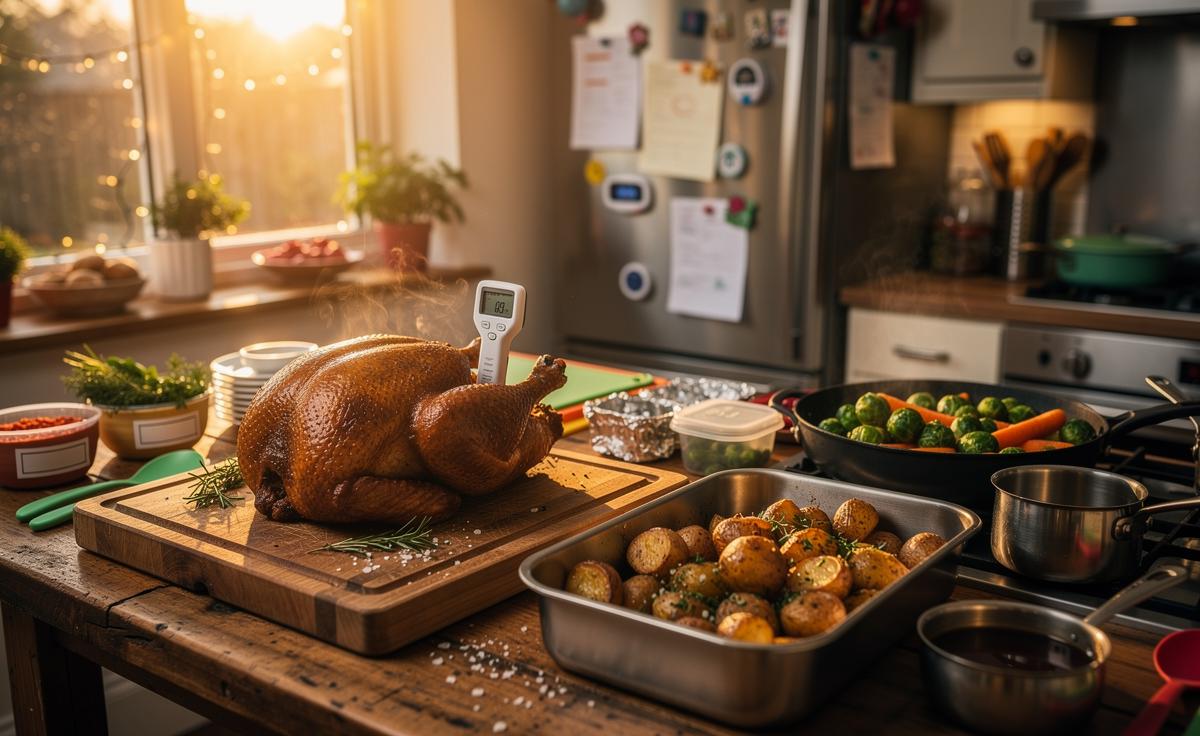
Dry turkey isn’t fate; it’s physics. The fix begins with accurate temperature. Roast until the thickest part of the breast hits 74–75°C, checking near the bone without touching it. Legs run tastier a tad higher—78–82°C. Once you’ve hit safe temperature, stop cooking; carryover heat will finish the job. Tent loosely with foil and rest 30–45 minutes. Juices redistribute, fibres relax, and carving becomes silky rather than sawdusty.
Brining is your moisture insurance. A simple dry brine—1 to 1.5% fine salt by weight rubbed under and over the skin—works wonders in 24–48 hours. Add citrus zest, pepper, or thyme if you like. Wet brines add flavour and forgiveness, but demand fridge space. Either way, pat dry before roasting for crisp skin. Start hot to colour, then drop to a gentler heat (e.g., 220°C for 20 minutes, then 170–180°C fan) to protect the breast.
Don’t pack the cavity. Stuffing slows heat flow and risks overcooking the breast while the core lingers below safe temperature. Bake stuffing separately for safety and speed. Butter under the skin is nice; salt on time is non-negotiable.
| Item | Target Core Temp | Suggested Rest |
|---|---|---|
| Turkey breast | 74–75°C | 20–30 min |
| Turkey thigh/leg | 78–82°C | 20–30 min |
| Pork roast | 70–75°C | 15–20 min |
| Stuffing (tray-baked) | 75°C | 5–10 min |
Side Dishes Without Stress: Vegetables, Gravy, and Bread
Great sides are simple, well-timed, and generously seasoned. Parboil potatoes the day before, rough up their edges, and chill uncovered for extra crunch. On the day, roast in hot fat—goose, beef dripping, or neutral oil—without crowding the tin. High heat is flavour. Seasonal veg like sprouts and carrots love a two-step: blanch until just tender, cool, then reheat in a hot pan with butter, lemon, or miso for gloss and zip.
Gravy is the pressure valve. Make a robust base ahead using roasted chicken wings, onions, and a splash of wine. On the day, whisk in pan drippings and adjust with stock. If it’s thin, reduce; if it’s salty, add a knob of unsalted butter or a ladle of low-salt stock. Season at the end. Stale bread worries? Warm rolls for five minutes at 160°C; brush with melted butter and flaky salt. Or pivot: toast slices, rub with garlic, and call it festive bruschetta.
Keep colours bright. Toss greens with a squeeze of citrus right before serving. A bowl of fresh herbs—parsley, dill, tarragon—rescues heavy plates. Texture contrast is your best friend.
Smart Make-Ahead Moves: Prep, Storage, and Reheating
Cook once, win twice. Many dishes are happier the next day. Braised red cabbage, spiced carrots, gravy base, cranberry sauce—make them 48 hours ahead. Cool fast, store in shallow containers, label clearly. Starchy sides reheat best with a splash of liquid and a covered bake to trap steam. Moisture management separates silky from stodgy. Mashed potatoes? Reheat over gentle heat with cream, butter, and a little hot milk; stir patiently, not vigorously.
Protect crunch. Keep garnishes separate—fried shallots, nut crumbs, herby breadcrumbs—and add at the table. Roasties do not forgive cling film; use a low oven blast just before service instead. For pastry, blind-bake and freeze cases; bake from frozen to resist sogginess. Plan fridge real estate: raw meats at the bottom, ready-to-eat on top, and a “serve soon” box for items that need attention first.
Reheating needs precision. Oven at 160–170°C for gentle, even heat; pans for quick revivals. Microwaves are fine if you finish with a hot pan or oven to restore bite. Low and slow for sauces, hot and fast for skins.
Allergy and Diet-Friendly Hosting: Labels, Swaps, and Safety
Nothing derails a feast like an avoidable allergen slip. Start by collecting dietary needs early—vegan, coeliac, nut allergy, dairy intolerance—and design at least one complete plate for each guest. Keep the labels literal: “contains nuts,” “gluten-free,” “made in a kitchen that handles sesame.” Use separate utensils and boards; wash hands between tasks. Cross-contamination is invisible but not inevitable. Serve allergen-friendly dishes first or on a distinct surface to reduce risk.
Swaps are easier than you think. Use gluten-free flour for gravy thickening or cornflour slurry. Choose plant butter for mash and pastry; olive oil for veg glazes. Nutty crunch? Try toasted seeds. If in doubt, keep recipes simple and ingredient lists short. Save packaging to show guests, which builds trust and avoids guesswork when time is tight.
Alcohol-free options deserve flair—spiced cordial with soda, sharp shrubs, or a citrus-and-herb punch. Mark them clearly. Everyone should feel seen at the table. And remember: if a label isn’t certain, don’t serve it to the person at risk. Safety first, pride second.
Holiday meals are marathons disguised as sprints. The secret isn’t heroics; it’s restraint, forethought, and a dash of science. Use thermometers, salt early, rest meats well, and give sides a head start so you can focus on conversation when it counts. Keep a spare tin, a calm timetable, and a forgiving attitude in your apron pocket. Perfect is brittle; delicious is durable. What one change—from a dry brine to make-ahead gravy—will you try this year to make your festive table calmer and tastier?
Did you like it?4.3/5 (25)