In a nutshell
- 🍪 A tiny pinch of salt clarifies flavor in cookies, reducing bitterness and making sweetness, butter, and chocolate taste cleaner and more intense within seconds.
- 🧪 The science: salt modulates perceived sweetness, aroma release, and water activity, balancing spread and set while taming baking-soda harshness—think conductor, not soloist.
- 🧂 Choose wisely: use fine sea/kosher salt in dough for even seasoning and flaky sea salt on top for crunchy contrast; table salt is potent, while smoked or Himalayan add subtle character.
- ⏱️ Technique matters: aim for 1/2–3/4 tsp per cup of flour (about 0.8–1.2% by flour weight), salt early for balance, then add a finishing sprinkle 2–3 minutes after baking; sprinkle from height for even scatter and rescue over-salted batches with a touch of sweetness.
- 🎉 Serve to impress: highlight texture and contrast with glossy chocolate and visible flakes, store airtight and re-crisp briefly, and pair with milk, oolong, English bitter, or sherry—try a mini salt bar for interactive flair.
A startling secret sits in every good baker’s pocket: a pinch of salt. Not a handful. Not even a teaspoon. Just enough to flick across the tongue and make sweetness sing. In cookies, salt clarifies flavor, tightens texture, and guides aromas that would otherwise get lost in sugar’s fog. A tiny pinch can transform the entire cookie. The result is immediate, almost theatrical—chocolate tastes more chocolaty, butter seems fuller, brown sugar grows toffee-deep. Guests notice, even if they can’t name it. That’s the power move: a quick sprinkle that works in seconds, yet feels like wizardry.
The Science Behind Salted Sweetness
Salt doesn’t just season; it reprograms perception. On the tongue, sodium ions reduce bitterness and dial up the perceived intensity of desirable notes, letting sweetness and aroma compounds come forward. It’s contrast, not volume, that matters. Salt makes flavors clearer, not simply stronger. In cookie dough, tiny amounts also nudge proteins and sugars towards a more controlled bake, improving the balance between spread and set. That’s why the same recipe, salted vs. unsalted, can yield a cookie that tastes “finished” rather than flat.
The chemistry is practical. Salt affects water activity, which influences how quickly batter warms and sugars dissolve, shaping the crust and crumb. It can calm metallic edges from baking soda, stopping that harsh aftertaste. And by modulating aroma release in the nose, it primes the brain to read buttery notes as richer and nutty flavors as deeper. Short story: salt is a conductor, not a soloist. Without it, sweetness becomes a monotone. With it, you get nuance—layers, length, and the all-important second bite.
Choosing the Right Salt for Cookies
Not all salts are equal in cookies. Crystal size and purity change everything: salting the dough wants control; finishing the cookie wants drama. Use fine kosher or sea salt for the mix, where even distribution prevents hot spots. Save flaky salt for the top—big, crisp pyramids that pop on contact. One salt builds structure, the other builds excitement. Avoid overly damp salts that melt too fast, losing that all-important crunch at the finish.
| Salt Type | Crystal Size | Best Use | Impact on Flavor |
|---|---|---|---|
| Fine Sea/Kosher | Small | In dough | Even seasoning, balanced sweetness |
| Flaky Sea (e.g., Maldon) | Large, delicate flakes | Finishing | Crunch, bursts of contrast |
| Smoked Sea Salt | Medium | Finishing | Savory depth, subtle aroma |
| Himalayan Pink | Variable | In dough or finish | Mild mineral notes |
Worried about iodized table salt? It’s fine, but potent. Because crystals are tiny, it tastes saltier per teaspoon and can skew the balance. If you use it in dough, reduce the amount slightly. For show-stopping cookies, pick a clean, low-bitterness salt with a pleasing crunch. The win is sensory theatre: you see the flake, you feel the crunch, then the chocolate spikes. That sequence makes people say “wow” out loud.
Pinch, Sprinkle, or Flake: How and When to Salt
In the dough, think precision. Aim for about 1/2 to 3/4 teaspoon fine salt per cup of flour (roughly 0.8–1.2% by flour weight) for classic styles. Creaming butter with salt early ensures even distribution and tames any baking soda bite. For brown butter cookies, add salt just after the butter cools; it binds with warm fats and accentuates the nutty, Maillard-driven notes. Salt early for balance, salt late for drama.
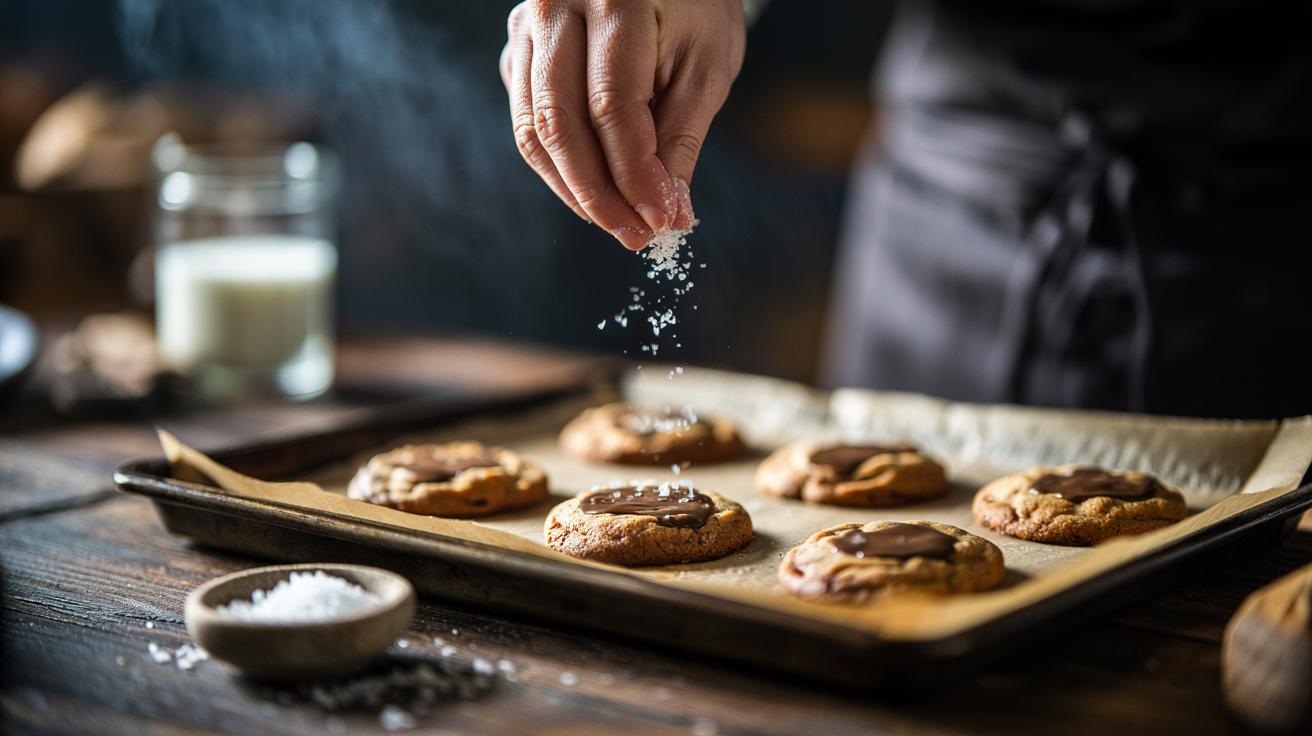
As a finish, the rule is restraint. Sprinkle a few flaky crystals on warm cookies, 2–3 minutes out of the oven, so the flakes adhere but don’t melt away. Not every cookie needs a crown—target the ones loaded with chocolate, caramel, peanut butter, or miso. Contrast loves fat. A good test: bake one tray naked, one tray flecked. Taste side by side. You’ll learn your sweet spot in a bite.
Shortcuts help. Pinch between fingers for control. Sprinkle from 20–25 cm height for even scatter. If your salt clumps, dry-toast it briefly, then cool, to restore crispness. And if a batch runs too salty, add a quick drizzle of honey or a dust of powdered sugar right before serving. Balance can always be rescued.
Serve to Impress: Texture, Presentation, and Pairings
Cookies are simple. Presentation isn’t. A few smart choices turn a plate into a headline. Bake to the edge of golden, not brown, then let a rim set so flakes sit proud and crisp. For soft-centred styles, a light press of flaky sea salt over still-shiny puddles of chocolate creates irresistible contrast: glossy, matte, crunchy, gooey. Let guests see the salt—anticipation heightens flavor. Use a cold tray for sharper edges; use a warm tray for more spread and chewier texture. Both work with salt; the show changes, not the song.
Pairings drive the applause. Milk is classic, but try oolong tea, a malty English bitter, or a nutty sherry; salt bridges sweet and savory with ease. Even a tart raspberry coulis can sharpen perception, making the cookie taste more chocolate-forward. Store salted cookies airtight, with a parchment buffer to protect the flakes. Re-crisp quickly in a low oven if needed. And for parties? Offer a tiny “salt bar” with two finishing salts and tasting cards. It’s interactive, effortless, and pure theatre. Guests remember the cookie they could customize.
Salted cookies aren’t a trend; they’re a lens. A pinch reframes sugar, butter, and chocolate so each note stands taller, cleaner, and longer on the palate. You don’t need a new recipe. You need intention and a few glittering flakes placed at the right moment. Your kitchen becomes a tasting room, your tray a story of contrast and control. In seconds, a simple bake becomes a signature. Ready to try the pinch that changes everything—what cookie will you salt first, and how bold will you go?
Did you like it?4.4/5 (28)