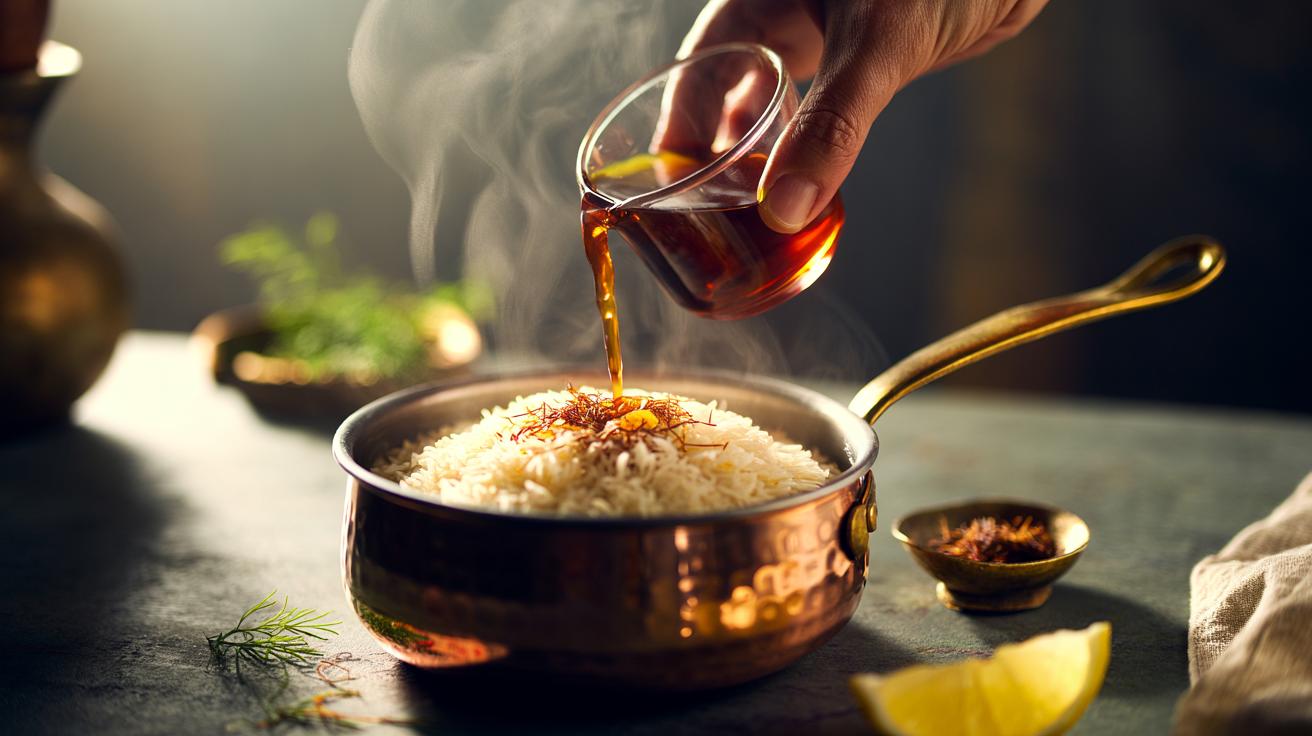
In a nutshell
- 🍚 Brew saffron tea to distribute colour and aroma evenly; avoids clumping threads and creates a cohesive, golden bowl of rice.
- 🔬 Key compounds—crocin (colour), picrocrocin (bittersweet), safranal (aroma); steep covered 10–15 minutes at 80–90°C for optimal extraction.
- 🍽️ Choose the right base: basmati for separate grains, jasmine for softness, bomba for brothy dishes; buy vivid whole threads (e.g., PDO La Mancha, ISO Cat I) and avoid stale powder.
- 🥄 Practical method: rinse/soak rice, crumble 15–20 threads, fold brewed tea into the cooking liquid, steam gently, rest 10 minutes; finish with butter or oil, or develop a crisp tahdig.
- 🌿 Pairings and twists: citrus, ghee, cardamom, fennel, pistachios; regional cues from paella, Persian rice with barberries, and Indian pulao; UK-friendly with smoked haddock and peas.
Staining rice gold with saffron tea is a small act with a big payoff. You brew a few threads, pour the liquid amber over steaming grains, and the scent travels before the bowl lands on the table. In British kitchens chasing brighter midweek meals and celebratory centrepieces alike, this simple technique delivers nuance without fuss. A short infusion coaxes astonishing depth from the world’s most prized spice. Expect floral top notes, honeyed warmth, and a whisper of hay. Expect elegance. Most of all, expect consistency: tea disperses colour and flavour evenly, so every spoonful shimmers, not just the lucky corner.
Why Saffron Tea Elevates Your Rice
Drop whole threads straight into a pot and they clump, painting some grains vivid while others remain pale. Brew a quick saffron tea instead, and you unlock compounds that need gentle hydration and heat to shine. The carotenoid crocin delivers that luminous golden hue, dissolving into water with ease; picrocrocin brings a tender, bittersweet edge that stops the dish becoming cloying; safranal provides the signature aroma, volatile and delicate. Infusion protects these aromatics, letting them bloom without scorching. Think of it as steeping leaves for the perfect cuppa: time, temperature, and patience define the outcome.
Use water just off the boil, about 80–90°C, and steep for 10–15 minutes. Cover the cup. The trapped vapour carries fragrance back into the liquor. A pinch—roughly 10–15 threads for two portions—often suffices. Longer isn’t always better; past 20 minutes, some freshness fades. Crucially, saffron tea integrates with your cooking liquid, so every grain drinks from the same well. This is how a simple brew turns rice into a cohesive, perfumed whole rather than a patchwork. The result? Clear flavours, clean colour, and controlled intensity.
Choosing the Right Rice and Saffron
Start with rice that suits your goal. For perfumed, separate grains, basmati is king—aged if you can find it. Jasmine gives a softer, more floral comfort, while Spanish bomba or Calasparra love soaking up broth for paellas and brothy rice. Short‑grain varieties create creamy textures that carry saffron beautifully in risotto-like dishes. Rinse until the water runs mostly clear to remove excess starch; for basmati, a 20–30 minute soak improves elongation. Good rice respects your saffron; poor rice swallows it. Texture determines how the spice rides: airy pilaf versus clingy, luxurious spoonfuls.
Now the saffron. Choose vivid, deep red stigmas with minimal yellow styles. Labels such as PDO La Mancha or high-grade Iranian saffron can signal quality, but trust your senses: threads should smell warm and hay-like, not musty. Seek ISO Category I where noted, and buy from reputable merchants who store it dark and dry. Powder is convenient but oxidises quickly and risks adulteration. Buy whole threads, grind or crumble just before brewing, and you’ll taste the difference. A tiny amount transforms a pot; skimp on quality and you’ll chase flavour with salt and butter that never quite compensates.
Step-by-Step Method: Brewing, Infusing, and Finishing
Rinse 300 g of rice until the runoff is nearly clear. If using basmati, soak for 20–30 minutes, then drain. Warm 3–4 tablespoons of water or light stock to just off the boil. Add 15–20 saffron threads, lightly crumbled, and steep covered for 12–15 minutes. In a pan, sweat a bay leaf in a teaspoon of ghee or olive oil, then add the drained rice and salt. Stir for 30 seconds to coat. Add your main cooking liquid (about 450–500 ml, adjusted for rice type), then pour in the saffron tea. Reserve a teaspoon of the liquor for a final flourish.
Bring to a gentle simmer, lid on, and cook until the liquid is absorbed and the grains are tender. Rest off the heat for 10 minutes. Fluff with a fork, dot with a little butter or extra-virgin olive oil if you like, and streak the reserved saffron tea across the top for marbling. For Persian-style crunch, steam over low heat longer to develop a tahdig crust. Keep the heat calm and the lid closed—steam is your friend. A squeeze of lemon brightens; toasted almonds add texture without bullying the spice.
| Rice Type | Rice Amount | Saffron Threads | Liquid Ratio | Steep Time | Result |
|---|---|---|---|---|---|
| Basmati | 300 g | 15–20 | 1:1.5–1.7 | 12–15 min | Separate, aromatic, golden |
| Jasmine | 300 g | 12–15 | 1:1.4–1.6 | 10–12 min | Softer, lush, floral |
| Bomba/Calasparra | 300 g | 20–25 | 1:2–2.5 | 15–18 min | Brothy, richly infused |
Flavor Pairings and Regional Twists
Saffron loves fat, acidity, and gentle aromatics. Finish with lemon zest or a squeeze of orange to lift sweetness; fold in a spoon of crème fraîche or ghee to round edges. Cardamom pods, bay, or a whisper of cinnamon stay in harmony, while aggressive smoke or heavy chilli can stomp over the spice. Let saffron lead, not shout. For seafood nights, pair with mussels and fennel; for plant-led plates, roast cauliflower with cumin and scatter over the rice with toasted pistachios. A handful of dill or parsley adds fresh snap.
Borrow from traditions without copying them outright. Spanish cooks tint rice for paella with saffron tea and paprika, letting shellfish drip their juices into the pan. Persian kitchens chase contrast: tender grains against crackling tahdig, sour barberries winking through gold. Indian pulao leans on whole spices and a buttery finish, the saffron tea streaked late for marbling. In the UK, try smoked haddock with saffron rice and peas for a coastal nod, or pile charred leeks and brown butter over the top. Each twist preserves the core: fragrance first, balance always.
What begins as a short steep ends as theatre: a pot lifted from the stove, lid opened, and a cloud of saffron-scented steam that turns heads. The tea method gives you control—over colour, aroma, and intensity—without complexity or cost beyond patience. It respects the ingredient, and it respects your time. Small ritual, big return. Now the question moves from technique to creativity. With the brew mastered and the grains obedient, which direction will you take next: bright citrus and herbs, seafood and smoke, or a quietly luxurious bowl with just butter and salt?
Did you like it?4.5/5 (26)