In a nutshell
- 🍪 Aluminium foil keeps cookies fresh by creating a near-impermeable barrier to moisture, oxygen, and light, slowing oxidation and trapping delicate aromas for better flavour and texture.
- ⏱️ The 30-second wrap: cool cookies completely, stack with parchment, fold foil snugly, press out excess air, label, and store away from heat and sunlight for day-to-day freshness.
- 🧪 Match wrap to cookie: crisp shortbread prefers a looser seal with a small paper towel; chewy chocolate chip likes a tight seal (add a crumb of bread in very dry homes); iced or filled treats should be wrapped individually and chilled.
- 🚫 Avoid pitfalls: don’t wrap warm cookies (condensation ruins crispness), don’t mix textures in one packet, and never microwave foil; for a quick refresh, bake unwrapped at 150°C for 4–6 minutes.
- ❄️ Boost longevity: use foil plus a tin for week-long storage; for the freezer, combine foil + zip bag as a freezer barrier and thaw still-wrapped to prevent surface condensation.
British bakers know the heartbreak. You lift the lid on yesterday’s cookies and discover the crisp snap has dulled, the buttery aroma has drifted. Here’s the quick, low-tech fix: aluminium foil. In roughly 30 seconds, a neat wrap creates a tight barrier that slows staling, protects fragrance, and keeps texture on point. It’s tidy. It’s reusable. It works whether you prefer chewy chocolate chip or crumbly shortbread. Seal the flavour, stop the air, and your bakes live to delight another brew-time. Below, the science, the method, and the small tweaks that turn a sheet of foil into a freshness tool every home baker should wield.
Why Foil Works for Freshness
Cookies stale for three main reasons: moisture migration, oxidation, and aroma loss. Crisp biscuits pull in ambient humidity and go limp. Chewy ones bleed moisture to the air and harden. In parallel, fats oxidise, dulling flavour, while delicate volatile aromas dissolve into the room. Foil counters all three by being almost impermeable to water vapour, oxygen, and light. That’s the whole trick. Where a thin plastic bag breathes a little, aluminium foil is a near-total gatekeeper, trapping the environment your bake prefers and freezing it in time—at least for a couple of days.
Texture matters. A moisture barrier preserves the contrast between the crisp rim and soft middle on a chocolate chip cookie, and it stops shortbread absorbing kitchen humidity. Inside the wrap, the cookie’s own microclimate stabilises starches, slowing retrogradation (the process that makes bakes go firm and dull). The absence of air also limits oxidation of butter and chocolate. Better still, foil blocks light, protecting cocoa and nut flavours that can fade on a bright worktop. Lock out air, keep moisture where it belongs, and your cookies taste as if they left the oven an hour ago.
The 30-Second Wrap Method
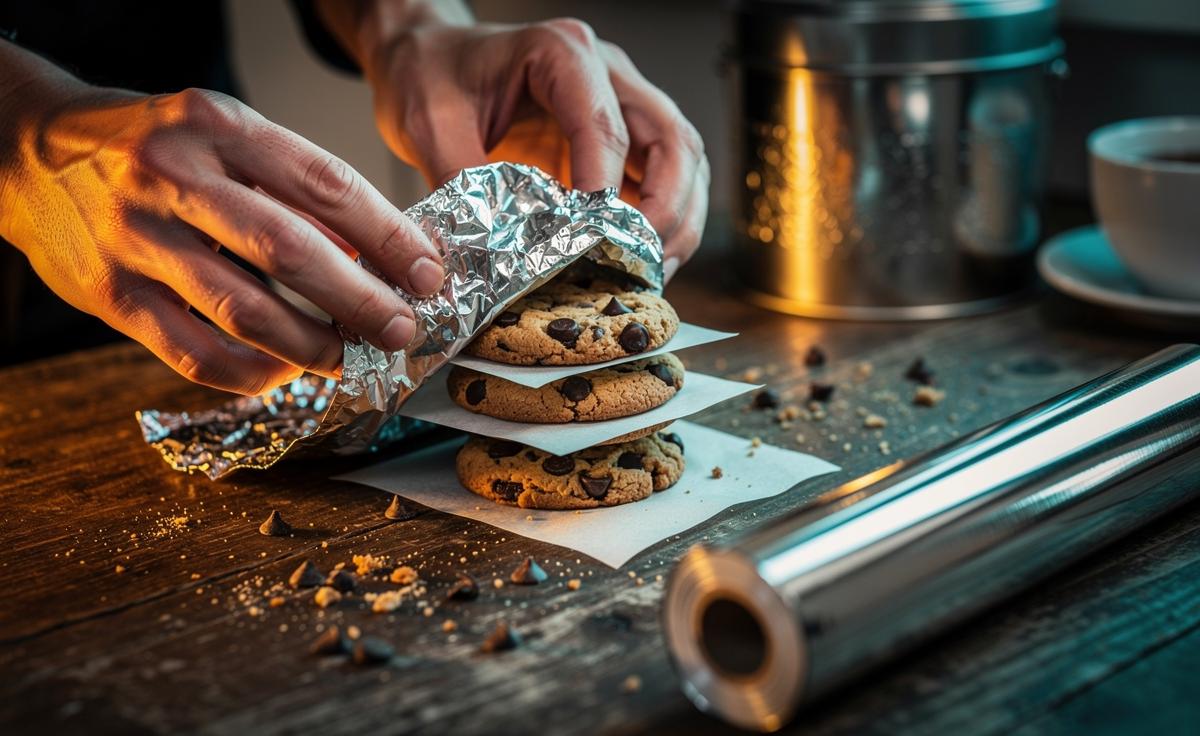
Start cold. Warm cookies steam; that trapped vapour wrecks crispness. Wait until they’re fully cool—touch the base; if it’s not cool, give it five more minutes. Tear a rectangle of aluminium foil large enough to envelop your stack with a generous overlap. For travel, double-layer the foil. Stack three to five cookies with tiny squares of baking parchment between each to prevent sticking or flavour transfer.
Place the stack on the centre of the foil. Fold the short sides over, snug but gentle. Roll the long edge to create a tight seal. Press around the circumference to chase out obvious pockets of air without squashing. Think “soft vacuum”: less air, zero crush. Label and date the packet. Store at room temperature, away from heat and sunlight. For family grazing, make several small packs so you only open what you’ll eat.
Match the wrap to the bake. Here’s an at-a-glance guide:
| Cookie Type | Foil Adjustment | Freshness Window (Room Temp) |
|---|---|---|
| Crisp shortbread | Looser wrap + small paper towel square to absorb micro-humidity | 2–3 days of snap |
| Chewy chocolate chip | Tight seal; no towel. Add a tiny piece of bread if your kitchen is very dry | 3–4 days of chew |
| Iced/filled | Wrap individually; keep chilled if dairy-based | 1–2 days (refrigerated) |
Thirty seconds per bundle is enough to lock in flavour and texture until the weekend. If you need longer, wrap as above and freeze; the foil becomes your freezer barrier too.
Mistakes to Avoid and Smart Add-Ons
Don’t wrap warm. That’s the big one. Steam condenses inside foil and turns a proud snap into a soggy sigh. Avoid mixing textures in one packet: crisp and chewy have competing water activity needs. If combined, the crisp absorbs moisture from the chewy and both lose. Use parchment between layers to protect decorations and prevent caramel or chocolate welding stacks together. Never microwave foil. If you want to refresh, remove the foil and warm cookies on a tray at 150°C for 4–6 minutes; cool briefly to restore crunch.
Foil plays well with others. For best results over a week, double up: foil wrap, then into a tin or lidded box. In damp weather, slip a small paper towel square inside a pack of crisp biscuits; in very dry centrally heated homes, a thumbnail-sized piece of bread prevents chewy cookies from turning chalky. Keep any non-food desiccants physically separate from food. For the freezer, foil plus a zip bag prevents frost and flavour drift; thaw still-wrapped at room temperature to avoid condensation on the biscuit surface. Small, airtight, and right-sized: that’s the preservation recipe.
In a world of gadgets, a sheet of aluminium foil remains the quickest upgrade for home baking. It’s cheap, reusable with care, and astonishingly effective at bottling up aroma, protecting texture, and postponing that sad slide into staleness. Use it for lunchbox bundles, bake-sale staging, or to pace your own treats through the week without compromise. Seal swiftly, store smartly, enjoy fully. What will you try first: crisp shortbread held taut with a paper towel, or a chewy chocolate chip packet softened just so with a crumb of bread?
Did you like it?4.6/5 (28)