In a nutshell
- 🧻 Use a paper towel as a moisture sink to capture excess moisture, keeping leaf surfaces dry while maintaining internal hydration; replace the towel as soon as it feels damp.
- 🧪 The science: hydrophilic cellulose fibres wick water via capillary action, diverting condensation and buffering humidity to about 90–95% RH, especially overnight when droplets form.
- 📦 Method: sort and dry thoroughly, line container top and bottom with towels, avoid compression, and store in the crisper drawer; expect 5–10 days of crispness with towel changes every 24–48 hours.
- ⚠️ Avoid wet leaves, scented towels, overstuffed boxes, and proximity to ethylene-producing fruit; keep the fridge at 1–4°C to prevent chill injury and water-soaked patches.
- ♻️ Try reusable options: a clean tea towel or microfibre cloth, perforated bags with a cloth insert, and light wraps for whole heads; only dress salads at serving.
There’s a simple kitchen move that can salvage limp salad and stretch your weekly shop: tuck a paper towel in with your lettuce. It sounds almost too easy, yet the logic is rooted in plant biology and physics. Leaves breathe, shed moisture, and attract microbes; fridges chill and then cycle humidity. When those worlds collide, crisp turns to soggy. The towel acts like a sponge and a buffer, catching excess moisture before it clings to delicate leaf surfaces. Dry on the outside, hydrated inside: that is the aim. Done right, this low-cost trick can keep a head of romaine snappy, butterhead bouncy, and mixed leaves bright for days beyond their usual peak.
Why Lettuce Gets Soggy in the Fridge
Lettuce is mostly water, held in thin-walled cells that rely on internal pressure to stay taut. After harvest, those cells lose moisture via transpiration and break down through respiration. The fridge slows both, but not evenly. Open the door, warmer air rushes in; close it, temperatures drop and vapour condenses. Overnight, tiny droplets form on box lids and bags, then trickle back onto leaves. That surface wetness creates a slick film. Oxygen drops, microbes flourish, and cell walls soften. The result is the dreaded limpness. It isn’t just “wet” that ruins lettuce, it’s wetness in the wrong place at the wrong time.
Cut edges accelerate the problem. Torn leaves leak sap rich in sugars and minerals. That exudate is a buffet for bacteria and yeasts, which thrive in high humidity with stagnant air. The first sign is translucency at the veins, then a glassy, floppy texture. Balance is key: leafy greens prefer high relative humidity to prevent wilting, yet pooled water is a fast track to slime. A paper towel provides a controlled sink for condensation, preserving a humid microclimate while keeping leaf surfaces comparatively dry.
The Paper Towel Method, Step by Step
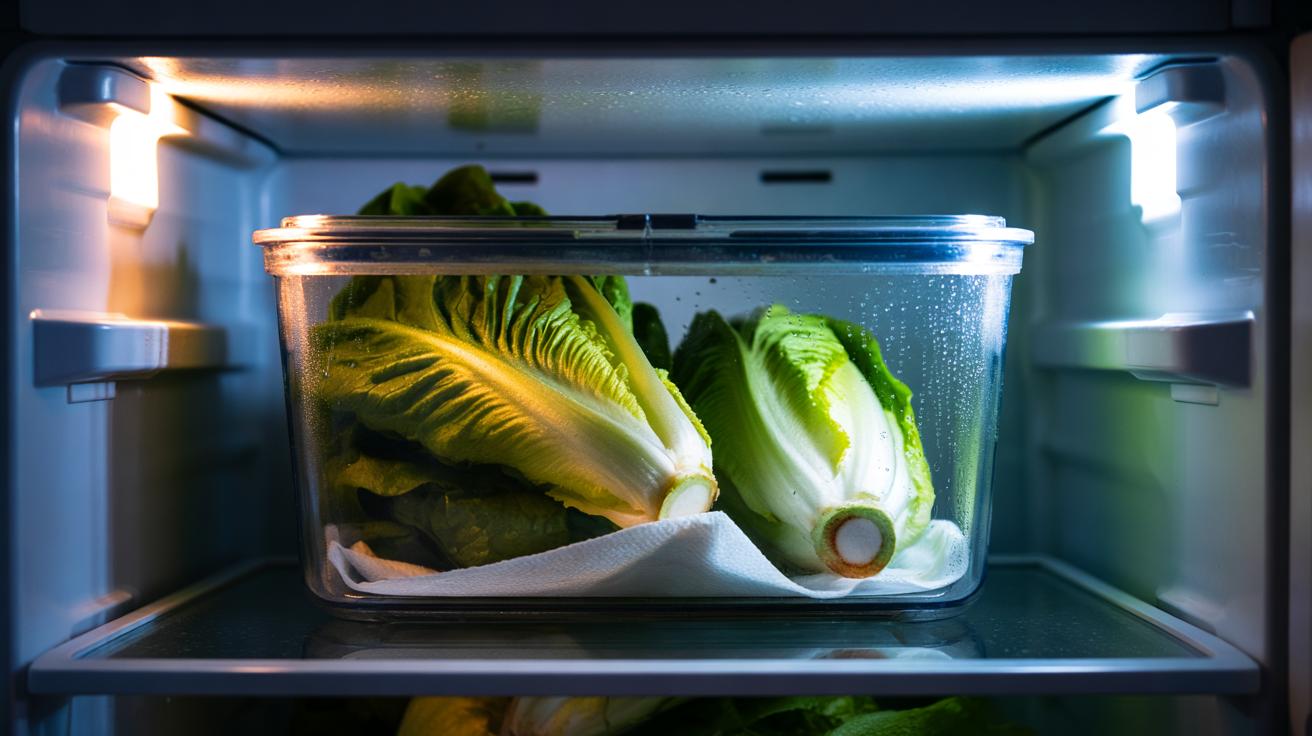
Start by sorting your lettuce. Discard bruised bits. If you wash now, spin or pat absolutely dry; any clinging droplets become tomorrow’s sog. Line a lidded box or the original bag with a folded paper towel. Add the leaves loosely, avoiding compression, and place another towel on top before sealing. For whole heads, slip a towel around the cut stem end or wrap the head lightly, then store in a breathable bag. Slide the lot into the crisper drawer. Change the towel as soon as it feels damp. That swap is the difference between crisp and clammy by midweek.
For clarity on setups and expectations, here’s a quick reference you can pin to the fridge:
| Storage Setup | Best For | Towel Change | Expected Shelf Life |
|---|---|---|---|
| Box + top/bottom towel | Loose leaves, mixes | Every 24–48 hours | 5–7 days crisp |
| Head lightly wrapped | Romaine, iceberg | Every 2–3 days | 7–10 days crisp |
| Bag with towel insert | Space-saving storage | Daily if very damp | 4–6 days crisp |
Do not pack leaves tightly. Gentle airflow prevents cold, wet pockets. Always label the box with the date. If you prefer washing later, store the head dry; rinse only before eating to keep that cellular turgor intact.
The Science: How Paper Towel Absorbs Overnight Moisture
Paper towel is made of cellulose fibres riddled with pores. Those fibres are hydrophilic, drawing water through capillary action. As the fridge cools after a door opening, air inside your container reaches its dew point and condensation forms. Without a sink, droplets settle on leaf surfaces and creep into the fine valleys along veins, where they linger. With a towel present, the first surfaces to “wet” are the fibres, which wick liquid away almost instantly, leaving leaves comparatively dry. Think of the towel as a rain gutter in miniature, redirecting drips before they soak the salad.
The towel also stabilises the microclimate. It buffers humidity swings by holding water when conditions are damp, then slowly releasing vapour as the air dries, keeping relative humidity high enough to prevent wilting. That balance is crucial: greens prefer roughly 90–95% RH, but they hate free water. This absorption–release cycle happens overnight, when temperature gradients are steeper and droplets are most likely to form. Add in a lidded box that curbs airflow just enough to stop desiccation, and you’ve engineered a steady state where excess moisture is captured, not smothering your lettuce.
Mistakes to Avoid and Smarter Variations
The classic error is storing leaves while still wet. A salad spinner is your ally; a kitchen towel finish is even better. Avoid scented or lotion-infused paper towels, which can impart aromas. Don’t ignore maintenance: if the towel feels clammy, replace it. Otherwise you simply swap one wet surface for another. Beware of overstuffed containers; compression damages cells and squeezes juice onto neighbours. Keep lettuce away from ethylene-heavy neighbours like apples and ripe avocados, which speed yellowing and softening. Finally, set your fridge no colder than 1–4°C. Below that, some lettuces suffer chill injury: browning edges, water-soaked patches, faster rot.
Want to cut waste? Switch to reusable options. A clean tea towel or microfibre cloth works well; wash and rotate. Perforated produce bags with a cloth insert mimic commercial “modified atmosphere” packs on the cheap. For whole heads, trim the stem, wrap lightly with a damp–then-wrung cloth around the core, and place in a vented box; this concentrates moisture at the stump, not the leaves. If prepping lunches, portion leaves in small containers with a paper towel square. Dress salads only at the table. Oil and acid accelerate breakdown when left on leaves, undoing all your careful moisture control.
In a world of complicated gadgets, this remains a rare fix that costs pennies and pays in crunch. A humble paper towel turns chaotic fridge humidity into a managed microclimate, catching excess moisture as it appears overnight and keeping texture lively for days. Combine good prep—gentle handling, proper drying, sensible airflow—with a quick towel swap, and lettuce stops being a race against time. The best test is the fork: does it snap? If not, what small tweak will you try tonight to put that fresh, perky bite back into your greens?
Did you like it?4.3/5 (20)