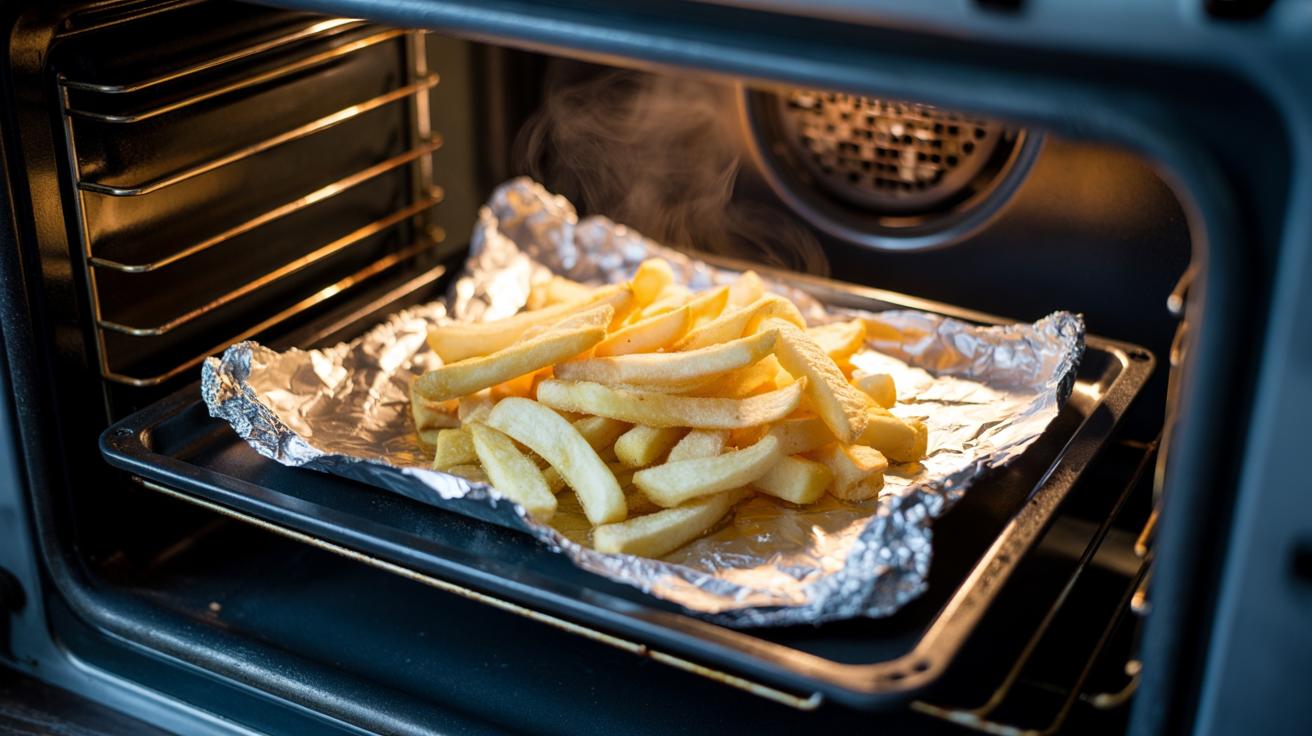
In a nutshell
- 🌡️ How foil boosts crunch: crumpled foil creates peaks and valleys that improve conduction, airflow (convection), and evaporation, driving the Maillard reaction for a brittle crust.
- 🥔 Best ingredients: choose floury potatoes like Maris Piper or King Edward, use high smoke point oils (rapeseed, sunflower, groundnut), and dry chips thoroughly to prevent steaming.
- 🔧 Method at a glance: preheat to 220°C (200°C fan), preheat the tray, lay lightly oiled chips on crumpled foil in a single layer, bake 25–30 minutes, turn once, and finish with a brief grill for extra snap.
- 🛠️ Fixes and upgrades: avoid overcrowding, oil foil lightly to prevent sticking, rotate the tray for even browning; try semolina/polenta dusting, herbs, garlic, or malt vinegar for flavour without losing crunch.
- 📈 Results that matter: expect crisp outsides, fluffy centres, less sticking, and pub-worthy chips at home—no deep-fryer required, just smarter heat management.
There’s a small kitchen hack hiding in plain sight, and it starts with a roll of foil. Oven chips often fall at the final hurdle: golden to the eye, limp to the bite. The fix is surprisingly simple. Introduce crumpled aluminium foil to the tray and you’ll elevate heat, manage steam, and supercharge texture. This is not a gimmick. It’s physics you can eat. In minutes, you’ll discover why restaurants love ridged surfaces and dry heat. Give the potatoes room, give the moisture an exit, and give the crust a fighting chance. The result? Crispier chips, less sticking, and that elusive shatter when you crunch.
How Foil Turns Heat into Crunch
At oven temperatures, three forces shape your chip: conduction from the tray, convection from hot air, and evaporation of water. A sheet of crumpled foil changes all three. The peaks touch the chip in tiny points, boosting local conduction. The valleys create miniature air tunnels, enhancing convection under and around each piece. This subtle airflow helps steam escape rather than pool beneath your chips. Less steam means drier surfaces, and drier surfaces brown faster.
That browning is the Maillard reaction. It needs heat and low surface moisture. Flat trays trap droplets; ridged foil sheds them. Because the foil isn’t perfectly flat, oil doesn’t spread in a slick—micro-puddles form that baste edges without drowning them. The metal also heats swiftly, stabilising temperature when you open the door to turn the chips. The upshot is consistent dry heat on all sides, which delivers a brittle shell and fluffy centre. Short version: harness micro-geometry, win macro-crunch.
Choosing the Right Potatoes and Oil
Technique matters, but so does the raw material. In Britain, Maris Piper and King Edward are chip royalty for good reason: a high dry-matter content that turns fluffy inside and crunchy outside. Waxy varieties fight you. Aim for uniform batons about finger-thick. Rinse to remove surface starch, then either steam-dry or parboil for 3–5 minutes to gelatinise the outer layer. Dry thoroughly—wet chips steam, dry chips crisp. A tea towel and five minutes in room air do wonders.
Oil is your conductor and flavour carrier. Choose a high smoke point: rapeseed (canola), sunflower, or groundnut oil. Olive oil can work for flavour, but keep it light and watch the temperature. A teaspoon per portion is enough when the foil ridges help distribute it. Season lightly at the start with fine salt, finishing with flaky salt after baking for bite and aroma. Want restaurant sheen? A small knob of butter tossed in at the end glazes the crust without softening it.
Step-by-Step: The Foil Trick for Oven Chips
1) Heat the oven to 220°C (200°C fan). Place a heavy tray inside to preheat. 2) Tear a sheet of foil larger than the tray. Crumple it loosely, then smooth it out so ridges remain. 3) Lightly oil the foil and the chips; don’t soak. 4) Spread chips in a single layer with gaps. No overlaps. Space is crunch. 5) Bake 15 minutes, shake or turn once, then bake 10–15 minutes more until deeply golden. 6) For extra snap, finish with a 2-minute blast under a hot grill, watching closely.
Post-oven, rest the tray on the door for 1 minute. That quick pause lets steam drift off rather than collect in your bowl. Now season boldly: flaky salt, cracked pepper, vinegar mist, or paprika. If using Parmesan, add it right at the end so it melts onto the hot crust but doesn’t scorch. You’ll hear it before you taste it—the faint rattle of chips that are actually crisp.
| Foil Setup | Oven Temp | Time Guide | Texture Result | Tip |
|---|---|---|---|---|
| Crumpled, lightly oiled | 220°C (200°C fan) | 25–30 mins | Crisp outside, fluffy inside | Turn once at 15 mins |
| Crumpled + final grill | 220°C + grill | 25 mins + 2 mins | Extra brittle edges | Watch to avoid scorching |
| Perforated foil (poked holes) | 210–220°C | 28–32 mins | Drier base, fast steam exit | Use with thicker chips |
Troubleshooting and Smart Variations
If chips emerge pale and limp, diagnose moisture first. Were the batons fully dried? Did you crowd the tray? Overcrowding is the enemy of convection. Spread them out or use two trays. If they stuck, add a whisper more oil next time and ensure the foil was oiled, not just the potatoes. For uneven colour, preheat the tray longer and rotate it halfway. If smoke appears, your oil may be too low in smoke point or there’s residual sugar from glazes.
For flavour twists without sacrificing crunch, try dusting with semolina or polenta before baking—just a teaspoon coats a tray’s worth and amplifies texture. Garlic? Add sliced cloves for the last 10 minutes to prevent burning. Herbs like rosemary or thyme can go in from the start. Craving pub-style chips? Finish with malt vinegar and sea salt. Gluten-free? Stick to starch rinses and spice rubs. Air fryer user? The same crumple principle applies to a basket liner, trimmed to allow airflow—expect shorter times and similar snap.
Foil isn’t magic, but it’s close: a humble surface tweak that unlocks better heat flow, rapid evaporation, and the crisp you crave on a weeknight. Combine it with the right spud, proper drying, and disciplined spacing, and you’ll get a pub-worthy tray without deep-frying or special kit. Small changes, huge results. Once you’ve heard that brittle edge crack, there’s no going back. What twist will you try first—herb-scented, chilli-dusted, or a classic salty batch with a sharp splash of vinegar?
Did you like it?4.4/5 (22)