In a nutshell
- 🍚 The foil-steam method creates a sealed, high-humidity microclimate for fluffy, separate grains in less time; start with boiling water and a tight foil seal.
- 🧪 Steam retention reduces evaporation, speeds gelatinisation, curbs boil-overs, and preserves aroma—don’t peek or you’ll dump heat and moisture.
- 🔧 Hob or oven: rinse, season, seal with heavy-duty foil, cook gently, then rest 10 minutes so steam redistributes and sets texture.
- ⏱️ Use lower water ratios and precise timings for jasmine, basmati, short-grain, brown, and wild blends; tweak slightly for pan, brand, and hob strength.
- 🧊 Stay safe: cool rice quickly to prevent Bacillus cereus; boost flavour with aromatics, stock, butter, or saffron, and fix issues with small water or heat adjustments.
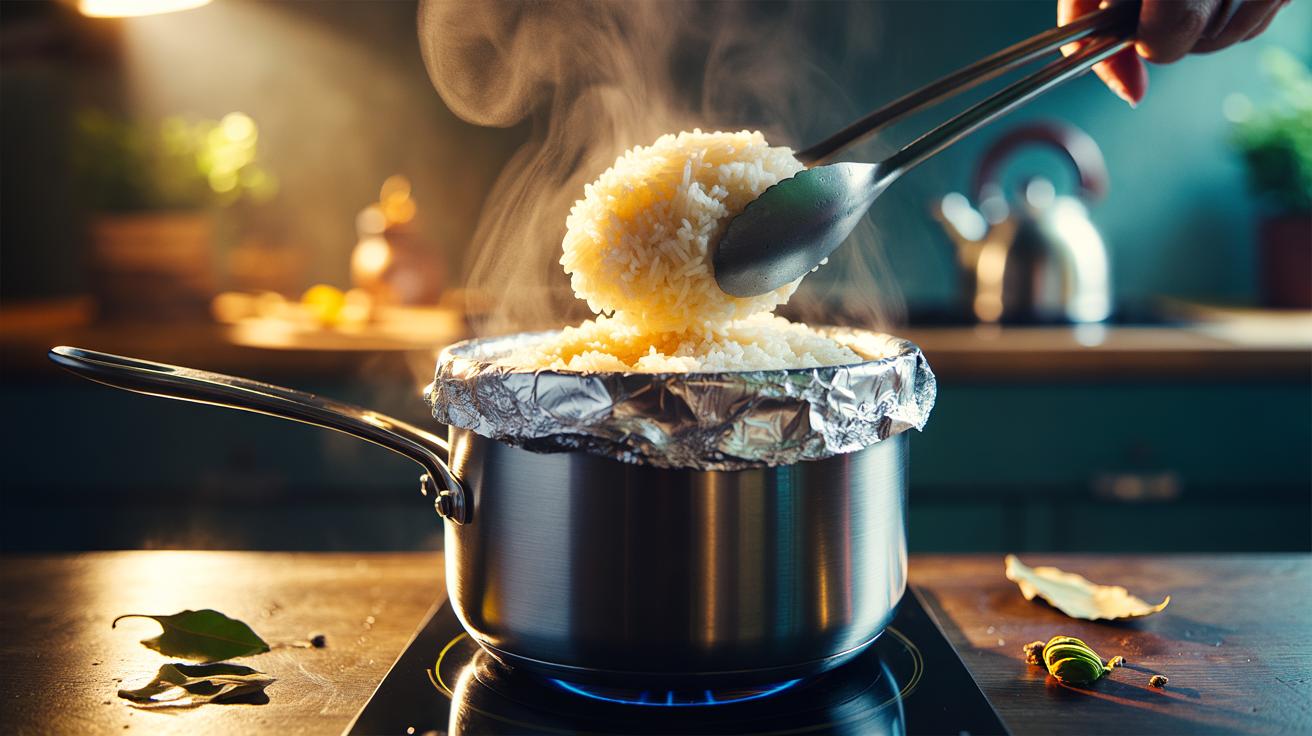
What if perfect rice took less time, less water, and absolutely no guesswork? That’s the promise of the foil-steam method, a smart tweak that turns any pan or oven tray into a tiny, high-humidity cooker. By sealing in vapour, the grains gently swell, hold their shape, and emerge glossy and separate. It’s weeknight-friendly. It’s reliable. It’s quietly brilliant. Whether you’re tackling a biryani, zesty rice bowls, or a simple side for grilled fish, the technique delivers consistent results with minimal fuss. Use boiling water, keep the seal tight, and let the steam do the heavy lifting. Once you try it, you may never go back.
The Science of Foil-Steaming Rice
Rice transforms when starch granules absorb water and heat, a process known as gelatinisation. The trick is to maintain steady moisture and temperature so every grain cooks evenly. A tight foil seal captures vapour, reduces evaporation, and creates a humid microclimate that helps heat reach the core of the grain quickly. Think of it as a miniature steamer, one that sits right on your hob or in your oven. Because less water escapes, you can use slightly lower ratios than classic absorption methods and still end up with fluffy, distinct grains.
There’s another bonus: the seal curbs the starchy foam that can bubble over. Less mess on the hob, fewer pan-scrubbing battles. The vapour inside the parcel or pot condenses and recycles back into the rice, boosting efficiency. Resist the urge to check mid-cook. Every peek dumps steam and sets you back minutes. Instead, trust the timings and the physics. When heat cuts off, residual steam finishes the job—gentle, controlled, and remarkably forgiving.
Result? Fluffy rice that tastes cleaner, because aromas aren’t blown away with escaping steam. Texture improves too: tender on the outside, subtly firm in the middle. For many cooks, it’s the simplest route to restaurant-grade consistency.
Step-by-Step: The Foil Seal Method
On the hob: rinse rice until the water runs mostly clear. Drain well. Bring freshly boiled water from the kettle to the pan for a head start. Add salt—about 1/4 teaspoon per 180 g (1 cup) rice—and a teaspoon of oil or butter if you like sheen. Lay a sheet of heavy-duty foil over the pan, press it to the rim to seal, then clamp the lid on top. Bring to a whisper of a simmer, reduce heat to low, and cook to time. Do not lift the foil. Switch off the heat, leave sealed for 10 minutes, then fluff with a fork.
In the oven: combine rinsed rice and boiling water in a small roasting tin or lidded casserole. Season. Cover tightly with foil, crimping the edges to prevent vapour leaks; add a lid if you have one. Bake at 200°C (180°C fan) until just tender, then rest 10 minutes off heat. The oven version is brilliant for larger batches or when hob space is tight, and it scales effortlessly without changing technique.
Two small upgrades go a long way: aromatics and temperature discipline. Slide in crushed cardamom, a bay leaf, or a strip of lemon zest for perfume. Keep heat low; the sealed environment amplifies it. Always rest for 10 minutes after cooking so steam redistributes and grains firm up. That pause is where the magic sets.
Water Ratios, Timings, and Grain Types
Because the foil seal reduces evaporation, the ratio of rice to water trends lower than open-pot methods. Start with boiling water, measure by volume for ease, and adjust by a tablespoon or two on your second attempt to match your preferred bite. For fragrant varieties like basmati and jasmine, rinsing (and a brief soak for basmati) improves separation. Brown and wild grains simply need more time and water to soften bran layers.
Use this table as a reliable baseline, then tweak subtly for your pan, hob strength, and brand of rice. If in doubt, undercook by a minute or two and let the rest carry over in the sealed rest. Peeking costs steam; patience pays dividends.
| Type | Prep | Ratio (Hob) | Time (Hob) | Ratio (Oven) | Time (Oven) |
|---|---|---|---|---|---|
| Jasmine (white) | Rinse | 1 : 1.05–1.1 | 10–12 min | 1 : 1.1–1.2 | 18–20 min |
| Basmati (white) | Rinse + soak 15 min | 1 : 1.2 | 12–14 min | 1 : 1.25–1.3 | 20–22 min |
| Long-grain (white) | Rinse | 1 : 1.25 | 12–14 min | 1 : 1.3 | 22 min |
| Short-grain (sushi) | Rinse + soak 20 min | 1 : 1.1 | 12–14 min | 1 : 1.2 | 18–20 min |
| Brown basmati | Rinse | 1 : 1.6–1.75 | 28–32 min | 1 : 1.8–2.0 | 40–45 min |
| Wild rice blend | Rinse | 1 : 2.0–2.2 | 40–50 min | 1 : 2.2–2.4 | 50–55 min |
Remember, salt matters. Season the water so the rice tastes lively, not flat. A teaspoon of neutral oil or a knob of butter adds gloss and limits clumping in long grains. For pilaf-style dishes, lightly toast rinsed rice in a splash of fat before sealing, then add boiling water and proceed as above—deeper aroma, same clean fluff.
Troubleshooting, Flavour Upgrades, and Food Safety
Undercooked centre? Drizzle in 1–2 tablespoons of boiling water, reseal immediately, and steam on low for 2–3 minutes, then rest again. Slightly wet? Spread the rice on a warm tray for a minute to let surface moisture flash off, then return to the pan, cover, and rest. If the base catches, your heat was too high or your seal leaked; trim the browned layer and note to dial back next time. Small adjustments beat big fixes.
Flavour boosters are effortless with steam on your side. Add a bay leaf, smashed garlic clove, star anise, or lemon peel under the foil for a scented lift. Swap some water for light stock. Stir in herbs, toasted sesame oil, or lime juice after resting to keep aromas vivid. For biryani-style decadence, dot with butter and saffron milk before sealing; the vapour carries fragrance through every grain.
Handle leftovers with care. Cooked rice can harbour Bacillus cereus spores that thrive if it sits warm. Cool rice quickly—within one hour—refrigerate promptly, and reheat until steaming hot. Keep for up to 24 hours in the fridge. The foil method makes batch cooking simple, but safety first: shallow containers, swift chilling, and a hot reheat keep your kitchen on the right side of delicious.
All told, the foil-steam approach is fast, tidy, and astonishingly consistent. It respects the grain, makes the most of trapped vapour, and turns everyday rice into a reliable pleasure. Master your preferred ratio, pick your aroma, and keep that seal tight. Don’t peek, do rest, and let steam finish the work. Once you’ve nailed your house method, what will you cook first to show it off—ginger-lime jasmine with salmon, saffron basmati for a feast, or a nutty brown rice salad for weekday lunches?
Did you like it?4.5/5 (22)