In a nutshell
- 🍵 Tannins from tea gently bind and denature surface proteins, softening bite in about 30 minutes (20–40 min window) without mushiness; it’s a surface effect, not collagen breakdown.
- 🧪 Practical method: brew 500 ml with 4–6 black tea bags (4–5 min), add 1.5–2% salt plus 5–10 g sugar, chill fully, marinate by cut (poultry 20–30 min, beef/lamb 30–40, fish 10–15), then pat dry and sear hard.
- 🧊 Safety first: use freshly boiled water, cool over ice, keep under 5°C, submerge in non-reactive containers, and discard the marinade (or boil 3 minutes before using as a glaze).
- 🍗 Smart pairings: black tea for beef/pork, green for chicken, Lapsang for smoky pork/lamb, rooibos for delicate proteins; season with garlic/ginger/soy and add acids at the finish for clarity.
- 🛠️ Troubleshooting: if bitterness appears, you likely over-steeped—go shorter but stronger, balance astringency with a touch of sugar, and keep the marinade window tight for clean flavour.
Put down the vinegar bottle. Tonight’s fastest route to softer steaks and juicier kebabs runs through your tea caddy. By steeping a concentrated brew and bathing your chops in it, you harness the gentle power of tannins—polyphenols that nudge tough proteins into submission without turning the surface mushy. It’s simple. It’s cheap. And it’s surprisingly consistent. Ready in half an hour, with clean flavour and no fuss. Use everyday tea bags and a handful of pantry aromatics; keep it all chilled; then sear hard for a burnished crust. In around 30 minutes, you’ll notice a tender bite, a savoury lift, and a subtle, tea-kissed complexity that flatters beef, pork, lamb, and poultry.
Why Tea Tannins Tenderise Meat in Minutes
Tannins are plant polyphenols. They bind to proteins on the meat’s surface, causing light denaturation that unwinds strands and reduces chewiness. Think of it as a microscopic loosening of knots rather than a full unravelling. This is a surface effect, not a deep cure, which is precisely why 30 minutes is enough to change mouthfeel without compromising structure. Unlike heavy acids, tea’s astringency is moderate, so you avoid that mealy texture overzealous marinades can create.
There’s more at work. A tea brine—essentially strong tea plus salt—improves water retention in myofibrillar proteins, helping the meat stay juicy under heat. Aromatic compounds from black or green tea carry delicate, bittersweet notes that heighten umami and accentuate browning. Caffeine and polyphenols contribute to antioxidant behaviour at the surface, subtly supporting the Maillard reaction’s complexity. Do not expect collagen to melt in the marinade; that still requires time and temperature in the pan or oven. But the bite softens, the crust tastes deeper, and the overall impression skews tender, not flabby.
One caveat. Over-extraction yields bitterness. If tea steeps too long or the meat sits too late, tannins can make fibres feel powdery. Keep the window tight: a robust brew, cooled quickly, then 20–40 minutes in the fridge. You’ll taste clarity, not harshness.
How To Make a Tea-Bag Marinade That Works
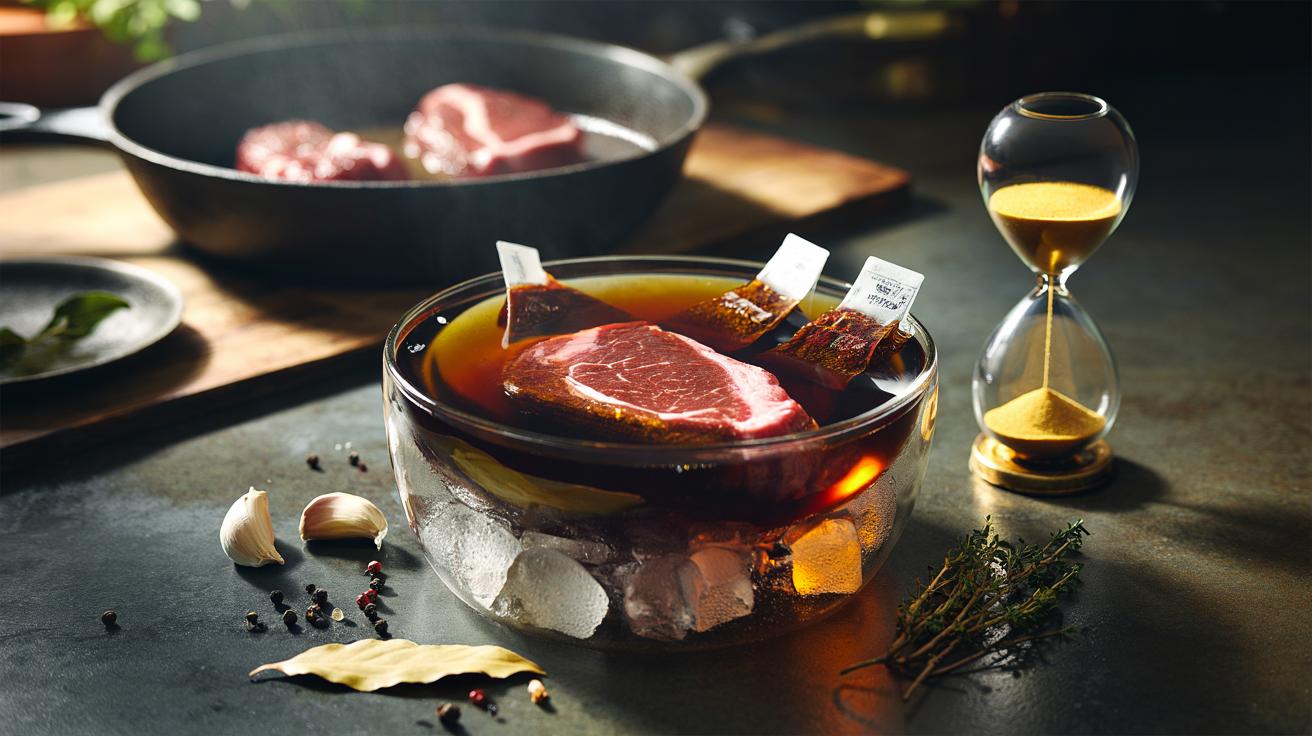
Start with strength. For 500 ml boiling water, use 4–6 black tea bags (Assam or English Breakfast), steep 4–5 minutes, then fish them out promptly. Stir in 7–10 g fine salt (about 1.5–2% by weight) and 5–10 g sugar or honey to round the edge. Cool fast over ice. Add aromatics to taste: smashed garlic, a strip of lemon zest, cracked pepper, a bay leaf. Always chill the brew fully before it touches raw meat.
Submerge thin steaks, cutlets, chops, or skewered pieces so liquid just covers. Refrigerate 20–30 minutes for poultry and pork, 30–40 for beef and lamb. Fish needs far less—10–15 minutes—because delicate proteins denature quickly. Drain, pat very dry, brush with a neutral oil, then sear hard. That dryness is non-negotiable: it guarantees a lacquered crust instead of a steamy pallor. Discard the used marinade or boil it briskly for 3 minutes before reducing as a sauce.
Ratios and choices matter. Heavier cuts welcome richer leaves; light meats take to greener styles. For smoky nuance, a pinch of Lapsang in the pot works wonders with pork shoulder steaks. For bright balance, green tea plus ginger and spring onion flatters chicken thighs. Keep it lean on acids; tea already carries bite. A squeeze of citrus at the end, not in the bowl, preserves tenderness and keeps flavours clean.
| Tea Type | Tannin Level | Flavour Notes | Suggested Cuts | Steep/Marinade Time |
|---|---|---|---|---|
| Black (Assam, Breakfast) | High | Malty, brisk | Beef steaks, pork chops | 5 min / 30–40 min |
| Lapsang Souchong | Medium–High | Smoky, pine | Pork, lamb shoulder | 4 min / 30–40 min |
| Green (Sencha) | Medium | Grassy, sweet | Chicken thighs, turkey | 2–3 min / 20–30 min |
| Oolong | Medium | Floral, toasted | Duck breasts, pork belly | 3–4 min / 25–35 min |
| Rooibos | Low | Honeyed, woody | Delicate poultry, fish | 5 min / 10–20 min |
Troubleshooting, Safety, and Smart Pairings
If bitterness creeps in, you likely over-steeped or under-sweetened. Brew again, shorter and stronger rather than longer and weak; it’s the cleanest path to controlled tannins. Salt is essential: aim for 1.5–2% in the liquid to nudge water retention without turning things briny. Sugar doesn’t make it sweet; it balances astringency and speeds browning. Do not marinate at room temperature. Keep meat under 5°C and move quickly from fridge to hot pan.
Hygiene is simple. Use freshly boiled water to brew. Chill the tea fast in an ice bath. Submerge meat fully in a non-reactive container, cover, and refrigerate. Discard the marinade after use, or if you want it as a glaze, boil vigorously for at least three minutes and then reduce with a knob of butter. Patting dry before cooking is the most powerful step for texture; it concentrates flavour and ensures a crisp sear.
For pairings, treat the tea like a spice. Black tea loves garlic, thyme, soy, and a dash of Worcestershire on steaks. Green tea sings with ginger, scallions, sesame, and a squeeze of lime added after cooking. Lapsang introduces smoke without a smoker—ideal for weeknight pork, excellent under sticky apple or maple glazes. Keep acids light until the finish and you’ll protect tenderness while locking in clarity. The result tastes intentional, not “tea-like”. Just better.
With a kettle, a handful of tea bags, and a pinch of salt, you can transform midweek meat in 30 minutes. The science is sound, the method repeatable, the flavour quietly arresting. Small effort, outsized reward. Start safe, keep the brew bold, and adjust the tea variety to the cut. Then finish with heat and restraint. The only question is which way you’ll go first: malty black tea for rib-eye, grassy green for chicken, or smoky lapsang for pork? What cut are you itching to tenderise with tea tonight, and which leaf will you choose?
Did you like it?4.4/5 (29)