In a nutshell
- 🧀 Milk speeds melting by hydrating proteins and softening the casein network, lowering the effective melting point for quicker, smoother flow.
- 🔥 Gentle heat is crucial: keep temperatures around 60–75°C and stir constantly to prevent splitting and greasy separation.
- 📏 Aim for 60–120 ml milk per 100 g cheese, adding grated cheese gradually; whole milk gives body, semi-skim keeps it lighter.
- 🧪 Stabilise the emulsion with milk’s proteins; a small cornflour slurry or optional sodium citrate enhances smoothness and prevents oiling off.
- 🛠️ Use practical techniques: grate don’t chunk, heavy-based pan, silicone spatula, and adjust with extra milk if the mix tightens; adapt ratios for cheddar, gruyère, mozzarella, and parmesan.
From toasties to fondue, we chase that perfect pull and gloss. The quickest route there is disarmingly simple: add milk. A splash shifts the physics, not just the flavour, helping cheese surrender to heat sooner and more evenly. Milk speeds melting because it changes moisture, pH, and fat behaviour, turning claggy clumps into a silky pour. Home cooks can harness this in minutes. Professionals do. It’s not witchcraft. It’s dairy chemistry. Add milk before the cheese, keep the heat gentle, stir with purpose. The payoff is huge: faster melt, fewer splits, and a sauce that clings rather than pools.
Why Milk Makes Cheese Melt Faster
Cheese resists heat because its casein network locks fat and moisture in a tight lattice. Milk loosens that lattice. The added water hydrates proteins, lowers the mixture’s effective melting point, and increases heat transfer through the mass. More water means more mobility. More mobility means faster softening. Crucially, milk’s natural minerals nudge the calcium balance around casein micelles, softening the matrix just enough to yield. The result: quicker melt and a smoother flow at lower temperatures.
Texture matters too. Grated cheese melts faster than blocks because surface area skyrockets. Combine that with milk and you amplify the effect: thin films of dairy slide between shreds, distributing heat and preventing localised scorching. Milk’s whey proteins also help stabilise the fat-in-water mix as cheese liquefies, so you see less greasy separation. And because milk sits around pH 6.6, it subtly moderates the sauce environment, often improving the gloss without harsh tang. Think of milk as a gentle negotiator between fat, protein, and heat. The payoff? Faster, smoother, fewer lumps.
The Science of Emulsifiers and Water
A good cheese sauce is an emulsion: fat droplets from the cheese dispersed in a continuous water phase. Milk supplies that water and adds proteins that coat droplets, reducing their urge to reunite into slick pools. Starch (from a tiny cornflour or flour slurry) thickens the water phase and corrals fat, creating a cushion against splitting. Low heat is non-negotiable: keep the pan below 70–75°C and off a rolling boil. Boiling scalds milk sugars, tightens proteins, and drives oil out of the mix.
Different cheeses behave differently. Younger, higher-moisture cheeses like Mozzarella melt readily but can go stringy; milk dampens that elasticity. Aged hard cheeses such as Parmesan hold less water and need more help from liquid and agitation. Acidic cheeses (goat’s) may split under high heat; milk softens the pH blow. For extra insurance, some cooks add a pinch of sodium citrate to cheddars and gruyères, which chelates calcium and stabilises casein, but milk alone often suffices for weeknight sauces and toasties. Respect the emulsion: steady heat, constant movement, and timely dilution.
Practical Techniques: Ratios, Heat, and Tools
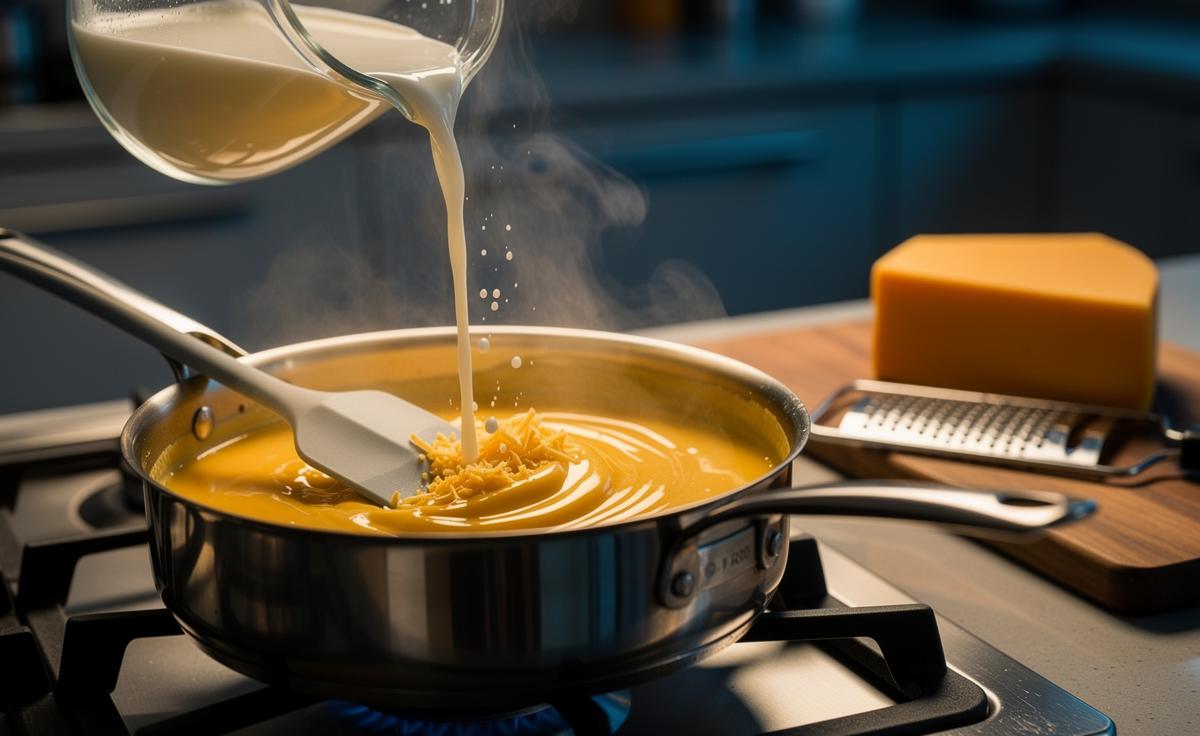
Technique beats brute heat. Start with a cold pan and milk, then add grated cheese a handful at a time, stirring until each addition melts before the next. For sauces, plan roughly 60–120 ml milk per 100 g cheese, adjusting for style and thickness. Whole milk gives body; semi‑skimmed is lighter but still serviceable. Add 1–2 teaspoons of cornflour slurry if you want restaurant-level stability for mac and cheese or Welsh rarebit. Grate, don’t chunk; add gradually; keep it moving.
| Cheese Style | Milk per 100 g | Target Temp | Expected Result |
|---|---|---|---|
| Cheddar (medium) | 80–100 ml | 65–72°C | Smooth, glossy sauce; no oiling off |
| Gruyère/Comté | 90–120 ml | 65–70°C | Silky, fondue‑style flow |
| Mozzarella | 60–80 ml | 60–68°C | Less string, better coating |
| Parmesan | 100–120 ml | 65–72°C | Velvety, not gritty |
| Feta (crumbled) | 100 ml + starch | 60–68°C | Creamy dip; reduced grain |
Use a heavy‑based saucepan and a silicone spatula to sweep the base. Heat low and steady. If the mixture thickens too quickly or looks tight, splash in more milk to relax it. For dips, finish with a knob of butter for sheen. For toasties, brush bread with a whisper of milk, then add cheese; it hastens melt before the crust over-browns. Stop at the first sign of smoothness—overcooking breeds grease. With these moves, you’ll get speed and polish, not compromise.
Milk is more than a companion; it’s a quiet accelerator. It shortens the journey from firm to flowing, minimises split risk, and lends sauces a professional gloss without specialist kit. The key isn’t brute force but balance: enough liquid, gentle heat, steady agitation. Whether you’re building a Mornay for cauliflower cheese or coaxing cheddar into a midnight toastie, the milk trick pays off in minutes. Try it once, and you won’t go back to dry, clumpy melts. What will you melt first with milk—bold, nutty gruyère for a fondue night, or a sharp cheddar for the ultimate mac and cheese?
Did you like it?4.5/5 (24)