In a nutshell
- 🧪 The science: lactic acid and calcium gently unwind proteins while casein forms a protective film, so a yogurt marinade locks in moisture without turning chicken mushy; a salted coat works like a light brine.
- 🥛 Choosing yogurt: opt for plain Greek for cling and browning, natural for coverage on whole birds, or try kefir and labneh; avoid sweetened tubs, add oil to low‑fat, and match marinade times to cut.
- 🌶️ Build flavour: use 250–400 g yogurt per 1.5 kg chicken, 1–1.5 tsp salt (or 1.25–1.5% by weight), oil, garlic/ginger, warm spices, lemon zest, and herbs; rub under the skin and rest on a rack.
- 🔥 Roast right: start at 200°C then finish at 180°C, scrape excess marinade, use a rack and hot tray, cook to 73–75°C, and rest 10–15 minutes for juicy, evenly cooked meat.
- 🥄 Sauce and versatility: skip raw marinade; deglaze the tray and swirl in fresh yogurt off heat for a tangy gravy; customise spices for a reliably moist, browned roast every time.
A pot of yogurt might be the most quietly brilliant ingredient in your kitchen arsenal. Spread over chicken like a gentle armour, it turns a weeknight roast into something restaurant-succulent. The science is simple yet elegant: gentle acidity, milk proteins, and a whisper of fat working together to keep every bite moist. Yogurt doesn’t bully meat into tenderness; it coaxes it. Compared with punchy citrus or vinegar, it’s forgiving, consistent, and versatile with spices. Whether you’re roasting a spatchcocked bird or tray-baking thighs, a yogurt marinade gives you margin for error and a golden, flavour-packed crust that resists drying out.
Why Yogurt Locks In Moisture
The tenderising force of yogurt comes from lactic acid and calcium. They nudge proteins in the chicken to unwind, then reclasp in a looser lattice that traps juices during roasting. Unlike aggressive acids, yogurt’s pH sits in a sweet spot. It softens without shredding texture. Yogurt tenderises without turning meat mushy. That balance is why the results taste plump rather than flabby, with fibres that bite back just enough.
There’s another secret weapon: casein proteins. They cling to the surface and form a delicate film that slows evaporation in a hot oven. A little fat in the yogurt helps browning, while milk sugars nudge the Maillard reaction. The outcome is a burnished, savoury crust that keeps the meat insulated as it roasts.
Salt matters too. Seasoning the yogurt marinade early creates brine-like conditions right at the surface, drawing salt into the meat where it seasons and helps retain water. A salted yogurt coat is both flavour and insurance. This synergy explains why yogurt marinades are so common from the Levant to South Asia—and why they consistently deliver juicy roasts.
Choosing the Right Yogurt for Marinating
Pick plain, unsweetened yogurt. The choice between Greek-style and natural depends on texture and fat. Thick Greek yogurt clings beautifully, ideal for a bold crust on legs or thighs. Natural yogurt flows more easily, great for whole birds, ensuring even coverage under the skin and across crevices. Full-fat versions add flavour and encourage browning. Low-fat works too, but you may want a splash of oil. Avoid flavoured or sweetened tubs; sugar burns fast. If it’s very tangy, balance with a touch of honey to round the edges.
Kefir and labneh have roles as well. Kefir is pourable and lightly fizzy, excellent for quick coats and speedy weekday roasts. Labneh, almost spreadable, excels when you want a thick, spice-packed paste that doubles as a basting layer. Keep everything cold while marinating, and don’t exceed 24 hours for delicate cuts like breasts.
| Yogurt Style | Fat (%) | Acidity (approx pH) | Texture | Best For | Marinade Time |
|---|---|---|---|---|---|
| Greek (full-fat) | 5–10 | 4.4–4.7 | Thick, clingy | Thighs, drumsticks | 2–12 hours |
| Natural (plain) | 3–4 | 4.5–4.8 | Pourable | Whole chicken | 4–24 hours |
| Kefir | 1–2 | 4.2–4.6 | Very fluid | Quick marinades | 1–6 hours |
| Labneh | 8–10 | 4.5–4.8 | Spreadable | Crusty coatings | 2–8 hours |
How to Build a Flavour-First Yogurt Marinade
Start with a baseline: 250 g plain yogurt, 1–1.5 tsp fine salt, 1 tbsp oil, and aromatics. Garlic and ginger paste give backbone. Add warm spices—paprika, turmeric, cumin, coriander—and a pinch of chilli for lift. Lemon zest brightens without extra acid. Season boldly; yogurt softens sharp edges. If you like sweetness, a teaspoon of honey balances smokier spices and aids browning.
Think ratios. For 1.5 kg chicken, aim for 300–400 g yogurt to coat generously without pooling. Salt at roughly 1.25–1.5% of meat weight if you’re precise. Mix in chopped herbs at the end—mint for coolness, dill for freshness, coriander for citrusy lift. Consider a tablespoon of tomato purée for depth and colour.
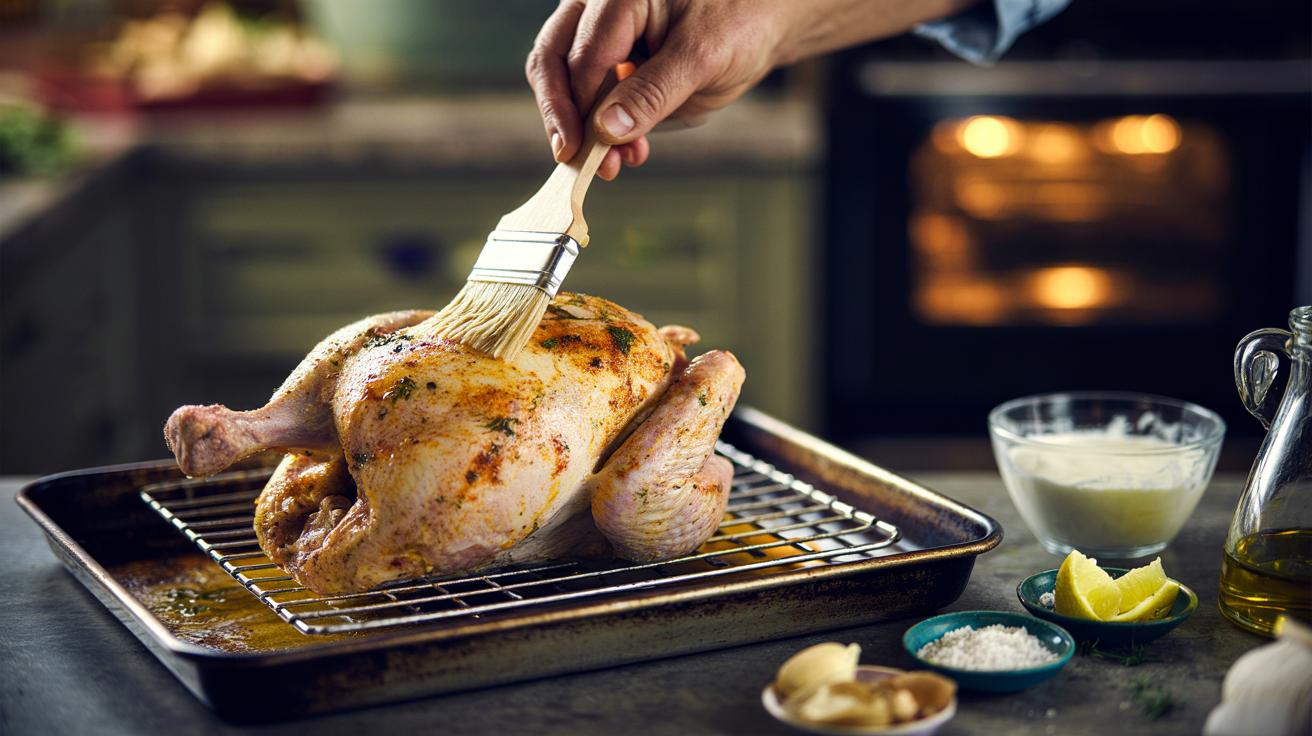
Application matters. Pat the chicken dry, loosen the skin, and rub marinade under as well as over. Contact equals flavour. Rest on a rack in a tray so air circulates and the coating sets slightly. For an overnight marination, keep it covered and chilled; uncover for the final 30 minutes in the fridge to firm the surface for better browning.
Roasting Technique: From Fridge to Oven
Preheat decisively. For UK fan ovens, 200°C works well to kick-start colour; then drop to 180°C to finish gently. Scrape off thick excess marinade from the skin and brush with a touch of oil—this prevents scorching while keeping the protective layer intact. Too much wet coating can steam, not roast. Season the exterior again with salt and a crack of pepper just before it goes in.
Use a rack and a hot tray. Airflow crisps the coating and evens heat. Roast until juices run clear or the thickest part hits 73–75°C, then rest 10–15 minutes. That pause is crucial; redistributed juices stay where they should. For lacquered edges, baste once midway with the tray juices, not raw marinade.
Want a sauce? Don’t boil the used marinade. Instead, deglaze the tray with stock or water, whisk in a spoon of fresh yogurt off the heat, and finish with chopped herbs. Fresh yogurt plus pan juices equals instant tangy gravy. It’s bright, silky, and keeps the roasted flavours centre stage.
In a world of quick fixes, a humble pot of yogurt quietly solves the biggest roast-chicken problem: dryness. The alchemy of lactic acid, casein, fat, and salt turns ordinary birds into reliably juicy centrepieces, whether you’re cooking thighs on a Tuesday or a golden whole bird for Sunday lunch. It’s thrifty, adaptable, and beautifully British in its practicality. Once you’ve tried a yogurt coat, it’s hard to go back. What spice blend will you fold into your next yogurt marinade to make it unmistakably yours?
Did you like it?4.4/5 (30)