In a nutshell
- 🧠 Adopt a capsule pantry: fewer, multi-use staples reduce decision fatigue, cut waste, and boost nutrition by prioritising protein, fibre, and healthy fats.
- 🧰 Conduct a Three-Box clear-out with the ABC test (Age, Benefit, Contamination), learn UK label rules (use by vs best before), and rotate with FIFO plus a 7-day “use-up” plan.
- 🛒 Make smart swaps and staples: pulses, oily fish, whole grains, nuts/seeds, tinned tomatoes, and spices; use frozen veg/fruit and label jars with cooking ratios for semi-automatic meals.
- 📦 Why bulk isn’t always better: apply unit pricing, buy for a fortnight, and try split-bulk to avoid staleness, cash lock-up, and over-portioning; weigh pros vs cons.
- 🍽️ Go from audit to action: a 7-day pantry-first meal map (batch once, remix often) plus storage essentials—airtight containers, cool-dark-dry spots, open dates, and clear allergen labels.
Here’s the pantry truth that dietitians quietly repeat to clients: the smaller your stash, the stronger your choices. A tightly edited cupboard shrinks decision fatigue, trims food waste, and unlocks quicker, healthier meals. I spoke to UK-registered dietitians who swear by a capsule pantry—a focused set of versatile staples that cross-pollinate across breakfasts, packed lunches, and last-minute suppers. The goal isn’t austerity; it’s agility. By prioritising foods rich in protein, fibre, and healthy fats, your weekly shop becomes simpler and your plate more balanced. Below, you’ll find their most practical strategies—tested in busy households, backed by nutrition science, and adapted for real British kitchens.
Why Less Is More for Your Pantry
Dietitians often begin with behavioural science: the bigger your stock, the harder it is to see, remember, and use it. A curated shelf reduces cognitive clutter and makes it obvious how to compose a meal. Think in building blocks—protein (tinned fish, beans), fibre (oats, whole grains), and flavour (tomatoes, spices). Small, repeatable choices beat grand, infrequent overhauls. When the staples are few and flexible, Tuesday night doesn’t spiral into takeaways. Instead, you default to dependable combinations: beans + tomatoes + spices becomes soup, stew, or traybake with little friction.
There’s also nutrition quality. Ultra-varied “random acts of shopping” tend to fill shelves with duplicates and low-payoff items—three types of crackers, four sauces, no real meal base. A leaner set of foundational ingredients steers you to balanced bowls: oats with seeds and fruit; pasta tossed with pulses and greens; couscous folded with tinned mackerel and lemon. And there’s cost: UK charity analyses indicate households bin food worth hundreds of pounds a year. A disciplined pantry nips that in the bud by aligning volume with actual appetite.
Dietitians’ Audit Method: The Three-Box Clear-Out
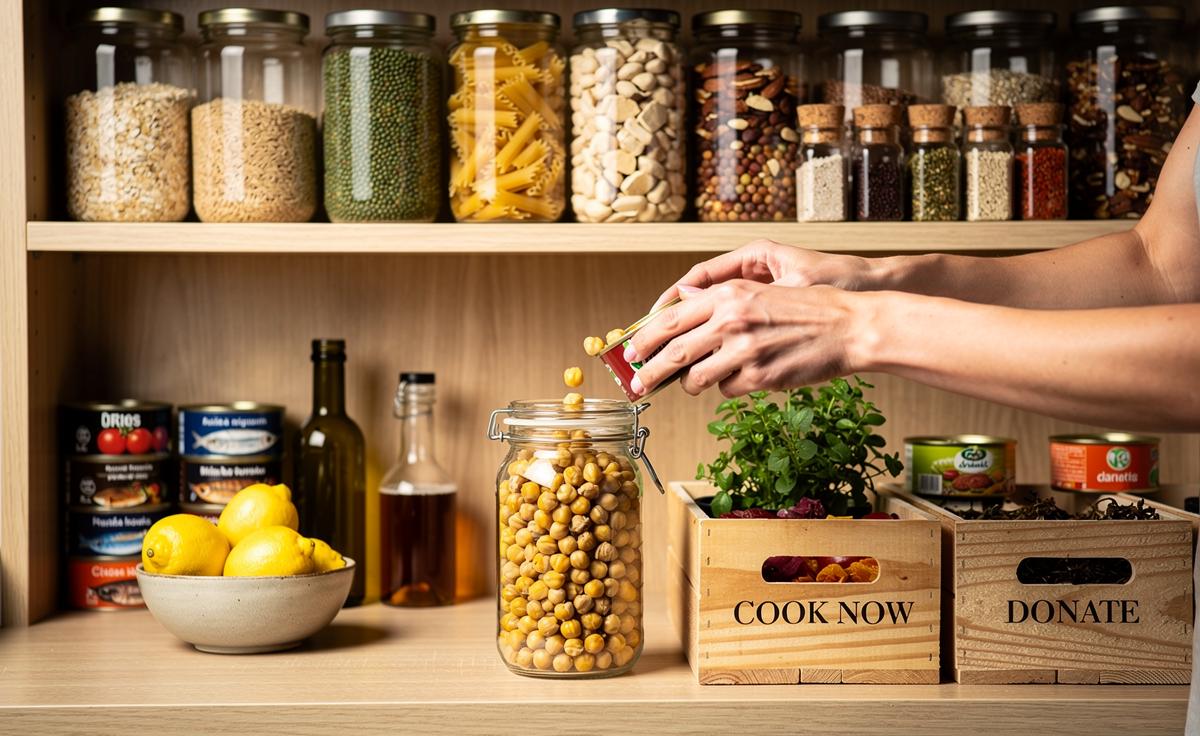
Set two hours, make tea, and empty everything onto a clean surface. Use the Three-Box method: Keep (in-date, frequently used), Cook Now (nearing date; plan for this week), and Donate/Compost (unwanted but safe, or clearly spoiled). Dietitians apply a quick ABC test—Age, Benefit, Contamination. How old is it? Does it nourish or duplicate? Has moisture, pest damage, or odour crept in? If in doubt and it’s high risk—bin it. Then decant reasonable amounts into clear, airtight containers, label with the name and open date, and shelf by function—breakfast, proteins, grains, sauces.
Misunderstood labels also trigger waste. In the UK, “use by” refers to safety; “best before” signals quality. Many dry goods remain fine past “best before” if stored well and smell/look normal. Plan a 7-day “use-up” menu for the Cook Now box. For everything you keep, place newest stock behind older items—classic FIFO (First In, First Out). Finish with a photo: a visual inventory makes the next shop deliberately boring—and brilliantly effective.
| Label | What It Means | Action |
|---|---|---|
| Use by | Safety date (especially chilled items) | Do not eat after this date |
| Best before | Quality date for shelf-stable goods | Check look/smell; often still fine |
| Display until | For retailers, not consumers | Ignore for safety decisions |
Build a Capsule Pantry: Smart Swaps and Staples
Dietitians recommend a core of 20–30 items that dovetail across meals. Start with pulses (chickpeas, lentils), oily fish (sardines, mackerel), whole grains (oats, brown rice, wholewheat pasta), nuts/seeds (peanut butter, mixed seeds), versatile veg (tinned tomatoes, onions, garlic), and flavour drivers (olive oil, vinegar, curry paste, paprika). Choose staples that solve multiple meals—oats become porridge, crumble topping, or savoury oatcakes; chickpeas morph into hummus or traybake protein; tomatoes anchor soups and sauces. Keep one sweetener (honey or maple), one neutral oil plus olive oil, and two “house” spice blends to prevent clutter creep.
Swap refined for whole where possible. Couscous over instant noodles; wholewheat pasta over white; mixed beans over processed “meal kits”. Choose no-added-salt and no-added-sugar tins to maintain control. For dairy, UHT milk or fortified oat drink covers sudden shortages. And don’t forget frozen staples—peas, spinach, berries—nutrient-dense and low-waste. Label containers with cooking ratios (e.g., “1 cup rice : 2 cups water”) to make midweek cooking semi-automatic. The result is a cupboard that cooks itself, not one that taunts you.
| Staple | Smart Swap | Why It Works | Quick Use-Up Idea |
|---|---|---|---|
| White pasta | Wholewheat pasta | More fibre for fullness | Toss with tinned tuna, capers, tomatoes |
| Instant noodles | Couscous | Faster, versatile, less sodium | Stir in chickpeas, lemon, parsley |
| Sugary cereal | Oats | Budget-friendly, heart-healthy | Overnight oats with berries |
| Jarred sauces | Tinned tomatoes + spices | Ingredient control, lower cost | 15-min shakshuka |
| Processed snacks | Nuts and seeds | Protein and healthy fats | Toast with paprika and salt |
Why Buying in Bulk Isn’t Always Better
Bulk can be brilliant—but only with a plan. It shines for high-turnover items with long shelf life (oats, rice) or shared households. Yet dietitians warn that “value” often evaporates through spoilage, staleness, and over-eating. Buy what you will actually eat in a fortnight is a safer rule for small homes. Calculate per-100g unit pricing and compare against the smallest size you can realistically finish. If you lack airtight storage or a cool, dry cupboard, that jumbo bag of nuts becomes rancid regret.
A balanced approach is “split-bulk”: share larger bags with a neighbour, decant half into airtight jars, freeze portions (nuts, wholemeal flour) to pause the freshness clock. Consider space economics too—if bulk buys force tins to hide behind tins, you’ll forget them. Pros: lower cost per unit, fewer trips, consistent staples. Cons: cash tied up, stale flavours, pest risk, and the nudge to over-portion. A quick table stakes test: if an item appears in three different meals you actually cook each week, bulk might be smart; otherwise, pay a little more for agility.
From Audit to Action: A One-Week Pantry-First Meal Map
Here’s the bridge between a tidy cupboard and dinner on the table: a 7-day, pantry-first plan dietitians use to clear “Cook Now” items without fuss. Start with a 30-minute Sunday prep: cook a pot of whole grains, roast a tray of mixed veg, and make a quick bean base (onion, garlic, tomatoes, mixed beans). Batch once, remix often. Monday could be grain bowls; Tuesday the bean base becomes tacos; Wednesday it morphs into soup. A small squeeze bottle of lemon juice and a jar of toasted seeds lift everything.
Reader case study: “Amira, Leeds” cut her weekly spend by £22 and reported 30% less bin waste after mapping pantry meals for two weeks—nothing fancy, just consistency. Try this rotation: omelette with peas and feta; sardine pasta with capers; chickpea curry with spinach; tomato-lentil soup; couscous salad with beans; baked potatoes with tuna and sweetcorn; oat pancakes with yoghurt and berries. Keep a running “Use Next” note on the fridge. The rhythm matters more than recipes: two anchors (grains, beans), one flavour bomb (curry paste), one green thing (frozen spinach), and your capsule pantry does the heavy lifting.
Storage, Labelling, and Safety Essentials
Good storage buys you time—and confidence. Use airtight containers for flours, grains, and nuts; label with name and open date using removable tape. Store in a cool, dark, dry spot; heat and light speed rancidity, especially in oils and wholemeal flour. Apply FIFO: older items front, new behind. Decant selectively—herbs and spices fade faster in sunlight; small jars stored away from heat preserve potency. Wipe shelves monthly; inspect for clumping, webbing, or off smells.
Safety basics are simple but non-negotiable. “Use by” means do not eat after; “best before” invites inspection and judgement. Keep allergens clearly labelled when decanting to prevent cross-contact, especially in shared kitchens. Freeze open packs of nuts and wholemeal flour to slow spoilage. Keep oil bottles capped tight; smell and taste for staleness. Finally, standardise scoops and ratios on labels (rice 1:2, lentils 1:3) to turn cooking into muscle memory. When your system is this clear, you stop stockpiling “just in case” and start cooking on purpose.
Paring back a pantry isn’t joyless minimalism; it’s a weekly dividend of time, money, and headspace. With a lean list of multi-use staples, a repeatable audit, and practical storage habits, you get quicker meals, less waste, and better nutrition without thinking too hard. The cupboard becomes a compass, not a museum. Which single change—Three-Box clear-out, capsule staples, or split-bulk buying—will you try first, and what’s the one item you’ll finally let go this week?
Did you like it?4.4/5 (27)