In a nutshell
- 🧄 Why it works: Shaking creates rapid collisions and shear forces that break the skin’s adhesion without crushing cells, keeping cloves intact and aroma clean.
- 🥣 How to do it: Use two nested bowls or a lidded jar; shake hard for 10–20 seconds in small batches so cloves ricochet freely and skins release.
- ✅ Best conditions: Works brilliantly with cured, room‑temperature garlic; struggles with fresh, moist, or elastic skins and overfilled bowls.
- 🔁 Alternatives & trade‑offs: Knife smash for immediate mincing, silicone tube for quiet small batches, brief microwave only as a last‑resort helper.
- 🧼 Tips & storage: Keep everything dry, move decisively, reduce odour with stainless steel; refrigerate peeled cloves up to 3 days or freeze for longer.
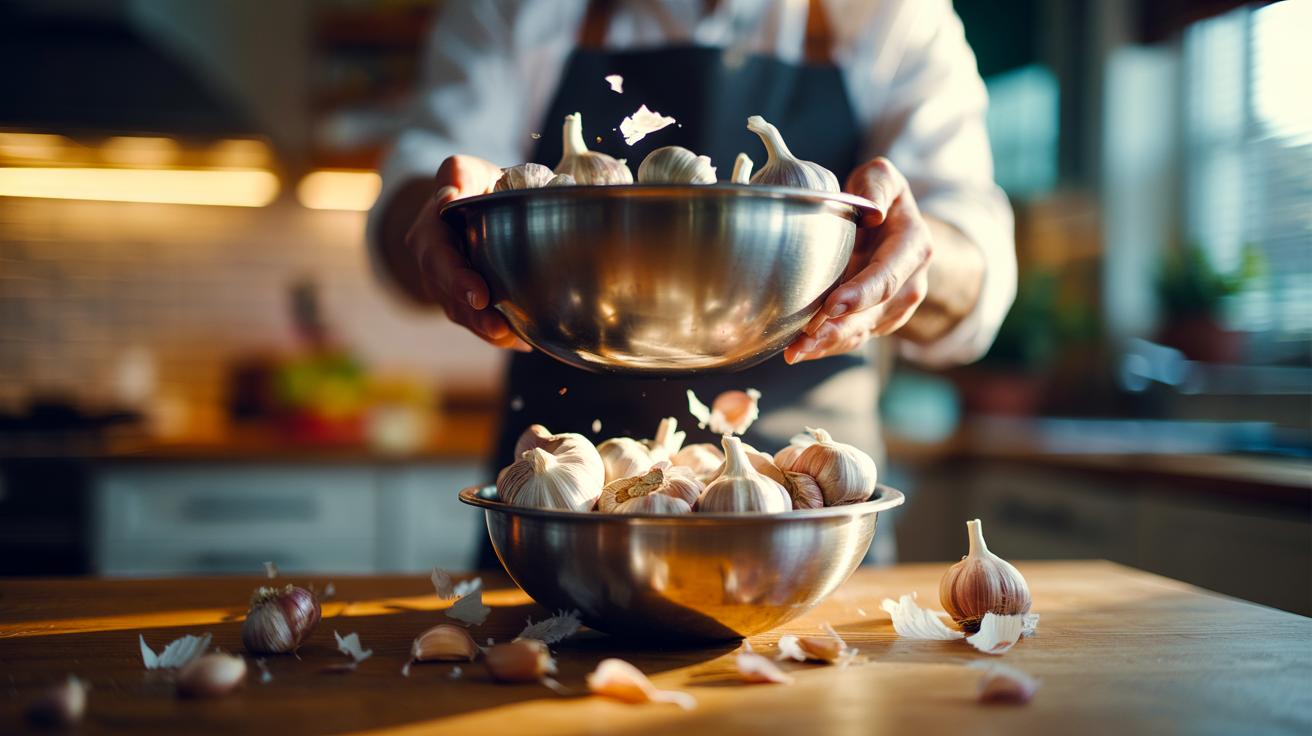
There’s a kitchen sound that thrills cooks and terrifies vampires: the brisk rattle of garlic in a bowl. A few vigorous shakes and—like a conjuror’s trick—the papery skin slips away. No blades. Minimal mess. Just physics and a little rhythm. This isn’t a novelty hack; it’s a repeatable technique that saves time, keeps your fingers cleaner, and preserves the clove’s aroma better than a heavy squash with a knife. In test kitchens and home flats alike, the two-bowl shake or sealed-jar method has become a weeknight staple for swift prep. The clever bit is simple: you loosen bonds, not cloves. Here’s why it works—and how to make it foolproof.
The Physics Behind the Shake
Garlic skins cling for two main reasons: dried membranes create a snug, fibrous jacket, and tiny residues act like tacky anchors. When you shake cloves inside a bowl or jar, you introduce rapid collisions that generate shear forces. Those forces slide the skin against the clove repeatedly, weakening the microscopic grip and tearing the membrane at stress points. Each impact also flexes the clove’s surface, creating hairline separations where air slides in. The result? Friction falls, skin lifts. Shaking works because you disrupt adhesion faster than you bruise the flesh.
There’s more going on. As cloves ricochet, they eject tiny flakes that act like dry lubricants, further lowering resistance. Meanwhile, a few impacts can exude a whisper of oil and moisture, forming a boundary layer that lets the skin glide off. Crucially, you’re not pulverising the cell walls to the point of releasing much allicin, so the clove’s perfume stays focused and clean. Kinetic energy does the heavy lifting, not crushing pressure. It’s controlled chaos with predictable results.
How To Do It: Bowl, Jar, or Two-Bowl Method
Start with firm, dry cloves separated from the bulb. Trim root ends if they’re particularly tough; it gives the skin a weak spot. For a handful (8–15 cloves), drop them into a medium metal bowl, invert a second bowl on top, and clamp tight. Shake hard for 10–20 seconds. Short, staccato movements are best. You’ll hear the clatter ease as skins break. Open, sift out the naked cloves, and repeat briefly for any stragglers. If your hands tire, you’re likely shaking for too long.
No second bowl? Use a lidded jar. A wide 500 ml jar works beautifully: add cloves, screw the lid, and shake vertically and horizontally. The glass adds weight, which boosts impact and efficiency. Sensitive to noise? Nestle a tea towel between bowls to dampen sound, or shake inside the sink. For large batches, work in waves; overloading reduces space for the crucial ricochet effect. Finish by rubbing any clingy skins with a quick finger pinch. Key rule: the cloves must move freely and hit hard surfaces, or the physics fizzles out.
When It Shines—and When It Fails
Shaking thrives with cured, room-temperature garlic where skins are crisp and membranes brittle. It also excels when you need many cloves fast—sauces, batch cook-ups, Sunday roasts. Yet it stumbles with very fresh, wet “green” garlic and some soft-neck varieties whose skins behave more like elastic than paper. Refrigerated bulbs can be clammy, reducing the slide you need; let them sit for ten minutes to dry the surface. Sprouted, older cloves sometimes need a second shake or a quick pinch after the main event. Moisture and elasticity are the enemies of clean release.
Here’s the honest guide: if shaking leaves a few stubborn jackets, don’t fight it—finish with a light knife press or a silicone tube. A 5–10 second microwave burst can help in a pinch, but risks softening flavour and heating hotspots. For roasting, keep skins on; for mincing, smashing may be faster. Shaking is about clean, intact cloves and speed without bruising. Choose the method that matches your dish, your mood, and your tolerance for clatter.
| Method | Speed | Mess | Best For |
|---|---|---|---|
| Bowl/Jar Shake | Very fast (10–20 s) | Low, skins contained | Many intact cloves, meal prep |
| Knife Smash | Fast, one-by-one | Moderate | Immediate chopping/mincing |
| Silicone Tube | Moderate | Low | Small batches, quiet |
| Microwave Burst | Fast | Low | Stubborn skins, quick fix |
| Roast Whole | Slow | Low | Spreadable, mellow flavour |
Tips To Keep The Aroma, Not The Mess
Work dry and fast. Dry bowls, dry cloves, dry hands. Moisture blunts friction changes and slows the peel. If a bulb feels clammy, air it on a board for a few minutes. Keep batches small and shake decisively; limp motion just polishes the skins. To minimise garlic odour on fingers, rub with a stainless-steel spoon under cool water—it won’t scrub away chemistry, but it does help with some sulphur compounds. Speed is flavour: less bruising means a purer, longer-lasting aroma.
Storage matters. Peeled cloves keep in a sealed container in the fridge for up to three days before flavour dulls; for longer, freeze them flat, or cover with oil only if you understand fridge safety and plan quick use. For cleaning, a paste of lemon juice and bicarbonate of soda strips lingering smells from bowls without scratching. If you love weekend prep, shake a full bulb, portion into recipe-ready bags, and label by weight or clove count. The aim is efficiency without sacrificing freshness; this method hits that sweet spot with pleasing theatre.
Peeling garlic shouldn’t be penance. The bowl or jar shake turns a fiddly job into a swift, almost joyous ritual, preserving intact cloves and clean, assertive flavour while keeping your board free of papery shrapnel. It leans on shear, impact, and micro-separation, not brute force, so you get speed without mush. Once you’ve heard that softening rattle, you rarely go back. Will you adopt the shake as your default, or do you swear by another method for certain dishes—and why does it earn your loyalty in a busy kitchen?
Did you like it?4.7/5 (27)