In a nutshell
- 🍿 Salt controls moisture: draws out surface water via osmosis, concentrates proteins and sugars, boosts the Maillard reaction, and delivers brittle, audible crackling.
- 🧂 Choose grain and timing: favour coarse flakes for steady draw; dry-brine at 1–1.5% of meat weight, refrigerate uncovered, then wipe wetness and lightly re-salt the skin before roasting.
- 🔥 Method that guarantees crisp: pat skin dry, score pork rind, salt thoroughly, roast on a rack 220–230°C then 160–180°C; never baste with juices, finish under a hot grill, and rest on a wire rack.
- 🛠️ Quick fixes for soft skin: blot condensation, add a fierce blast or grill, improve airflow, avoid foil, rotate the tin, prick stubborn rind, and fan-dry poultry skin before a final salt dusting.
- 📏 Control equals consistency: weigh salt, use the right crystal size, and treat salt as both seasoning and tool to turn pork, chicken, and duck into reliably shattering crackling.
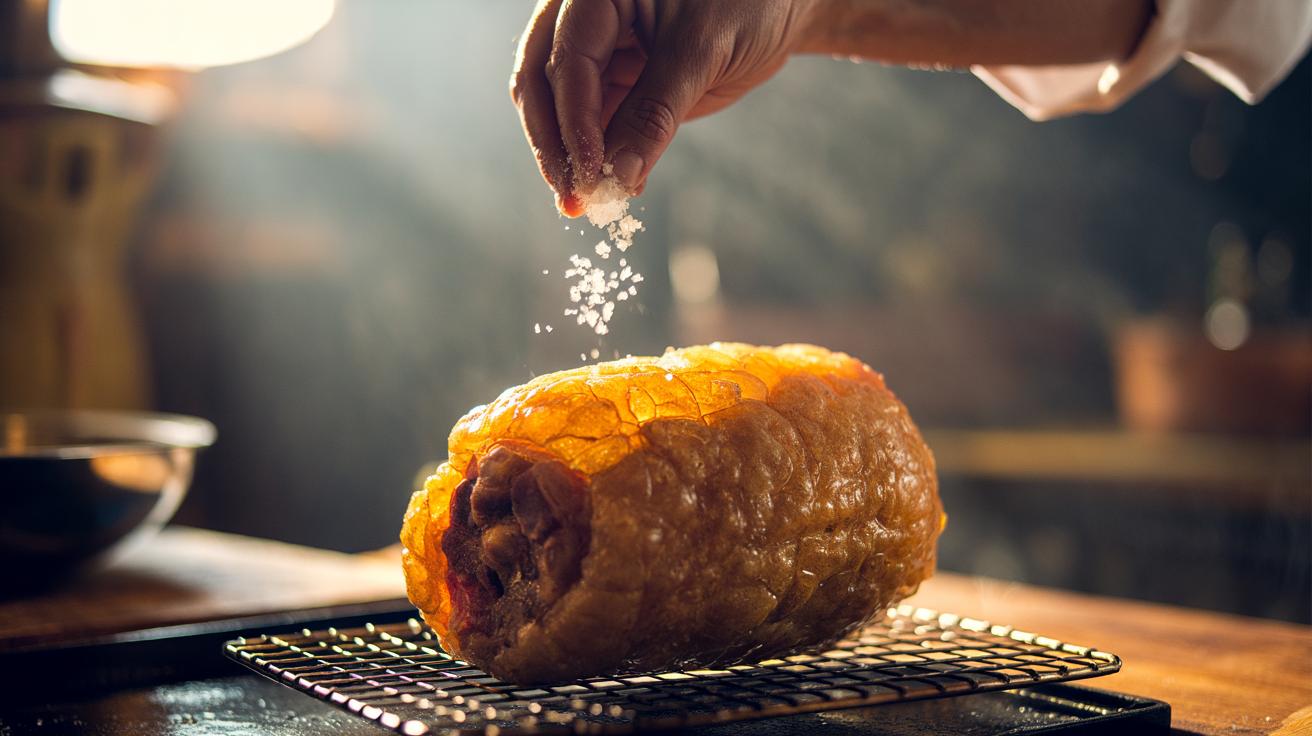
Roast night promises theatre: the hiss of fat, the scent of caramelising skin, and that decisive, glassy shatter. The difference between soft and crackling is not luck; it’s salt. Applied with intent, salt pulls surface moisture, reshapes proteins, and sets the stage for blistered, brittle perfection on pork, chicken, and duck. It’s chemistry in an apron. Dry skin equals crisp skin, and salt gets you there faster than any gadget. Whether you’ve got hours to dry-brine or only minutes to make amends, the right seasoning strategy turns anxious basting into confident roasting. Here’s how to guarantee that coveted crunch, every single time.
Why Salt Delivers Crackling Skin
Salt is a deceptively simple tool. On contact, it draws water from the skin via osmosis, dissolving into a thin brine that then migrates back, seasoning deeper layers while leaving the surface drier. Drier skin browns sooner. It blisters hotter. The result: that brittle, audible crackling people fight for at the table. The secret is not more heat; it is controlling water. Salt also encourages the Maillard reaction, which demands concentrated sugars, amino acids, and above all, a surface free of steam. Steam is the enemy of crunch.
On pork rind, salting contracts the collagen, then the heat puffs it into bubbles. On poultry, salt weakens some surface proteins so they render cleaner, helping fat escape and fry the skin in its own juices. The payoff is speed: a salted, air-dried joint crisps in minutes where an untreated one sputters soggily. Get the moisture out early and the oven can focus on blistering, not drying. That’s the difference between chewy resistance and shattering shards.
Choosing the Right Grain and Timing
Grain size matters. Coarse crystals sit longer on the surface, extracting moisture without dissolving instantly, while fine table salt penetrates quickly and can over-season. Timing matters too. A short window? Use flakes and more airflow. Overnight? Choose a measured dry brine at 1–1.5% of meat weight, then refrigerate uncovered to turbo-charge evaporation. Salt early for depth, salt smartly for texture. Aim for 8–48 hours on large joints; poultry needs less. Before roasting, wipe off visible wetness, then re-salt lightly for the crunch finish.
| Salt Type | Grain Size | Best For | Key Effect | Notes |
|---|---|---|---|---|
| Kosher/Sea Salt Flakes | Coarse | Pork rind, poultry skin | Steady moisture draw; even coverage | Easy to control; ideal for dry-brining |
| Fine Table Salt | Fine | Short-notice seasoning | Rapid penetration | Use sparingly; can over-salt surface |
| Sea Salt (Medium) | Medium | General roasting | Balanced dissolve rate | Good all-rounder for last-minute |
For predictable results, weigh your salt. A 2 kg pork shoulder? Use 20–30 g for an overnight dry brine. Leave it uncovered in the fridge so the skin desiccates visibly. Before the oven, brush off excess crystals from the meat but keep a light, even layer on the skin to kick-start blistering. Salt is both seasoning and tool—treat it as such.
Step-by-Step Method for Pork, Chicken, and Duck
Start with dryness. Pat the skin obsessively. For pork, score the rind lightly—just through the skin, not into the flesh—or ask your butcher. Rub with flakes, getting salt into the cuts, and refrigerate uncovered overnight. For chicken or duck, keep the skin intact, salt all over (including the cavity), and rest uncovered for at least 6 hours. On the day, remove from the fridge 30–60 minutes before cooking to prevent condensation.
Roast on a rack. Heat matters: begin at 220–230°C for 20–30 minutes to blister the surface, then drop to 160–180°C to finish gently. If spots lag behind, dab them dry, sprinkle a pinch of salt, and return to the top shelf. Never baste the skin with pan juices—fat is fine, liquid is fatal. For instant crisp at the end, run a hot grill for 3–6 minutes, watching like a hawk. The crackling will erupt quickly as remaining moisture flashes off.
Rest on a wire rack, not a plate, to keep the underside crisp. Season the meat beneath separately if needed. Carve with a sharp, serrated knife to preserve those prized shards. Result: mahogany glass that shatters, tender meat that sings.
Fixes for Soft Skin and Common Mistakes
Soggy skin? Diagnose the moisture source. If condensation formed while coming to room temperature, blot dry and add a fast, hot blast: 240°C or a fierce grill until blistered. If salt clumped, brush off, dry, then re-season lightly with flakes for better coverage. Airflow is your friend—use a rack and avoid crowded pans. Don’t tent with foil during resting; that traps steam and wilts your triumph. If the oven steams, pour off excess liquid from the tray and return the joint high in the oven.
Uneven blistering usually means uneven dryness. Rotate the tin, raise the shelf, and target lagging patches with a pinch of salt and heat. For pork rind that refuses to puff, prick just the skin with a skewer, rub in salt again, and hit it under the grill. For poultry, ensure the bird is truly dry—paper towels, even a short fan from a cool hairdryer, then a final salt dusting before the heat. Remember: you are drying first, cooking second. Keep salt assertive but measured to avoid bitterness; flavour the meat with herbs and spices beneath the skin instead.
Salt is strategy. Used early, it transforms skin into a dense, desiccated canvas ready to blister; used late, it still amplifies heat and focus. The science is simple, the results spectacular. Control moisture, reward crunch. So the next time a roast promises drama, let salt do the quiet work—drawing, tightening, crisping—while you take the applause. Which joint will you tackle first, and how will you tweak your salting routine to chase the perfect shatter?
Did you like it?4.4/5 (20)