In a nutshell
- 🧪 The science: sour cream adds fat to coat starch, gentle lactic acid to slow retrogradation, and dairy proteins to emulsify—yielding mash that stays silky during service and reheating.
- 🥔 Best ingredients: choose starchy potatoes like Maris Piper, King Edward, Russet, or Yukon Gold; use full‑fat sour cream (≥18%); aim for 100–180 ml per 1 kg; add butter before sour cream to prime the starch.
- 🔧 Method that works: start potatoes in cold salted water, simmer until tender, drain and steam-dry, rice while hot, fold in melted butter, then warmed sour cream; season, adjust with hot milk, and hold warm without splitting.
- 🌿 Flavour and fixes: blend in roasted garlic, chives, spring onion, a touch of horseradish, or grated Parmesan; avoid the food processor, skip cold/low‑fat dairy, and temper Greek yoghurt with butter and cream; vegan? cultured oat crème + olive oil.
- ✅ Make‑ahead confidence: sour cream prevents gumminess and keeps sheen; for leftovers, reheat gently and stir in a spoonful more to revive texture—consistent, restaurant‑level mash every time.
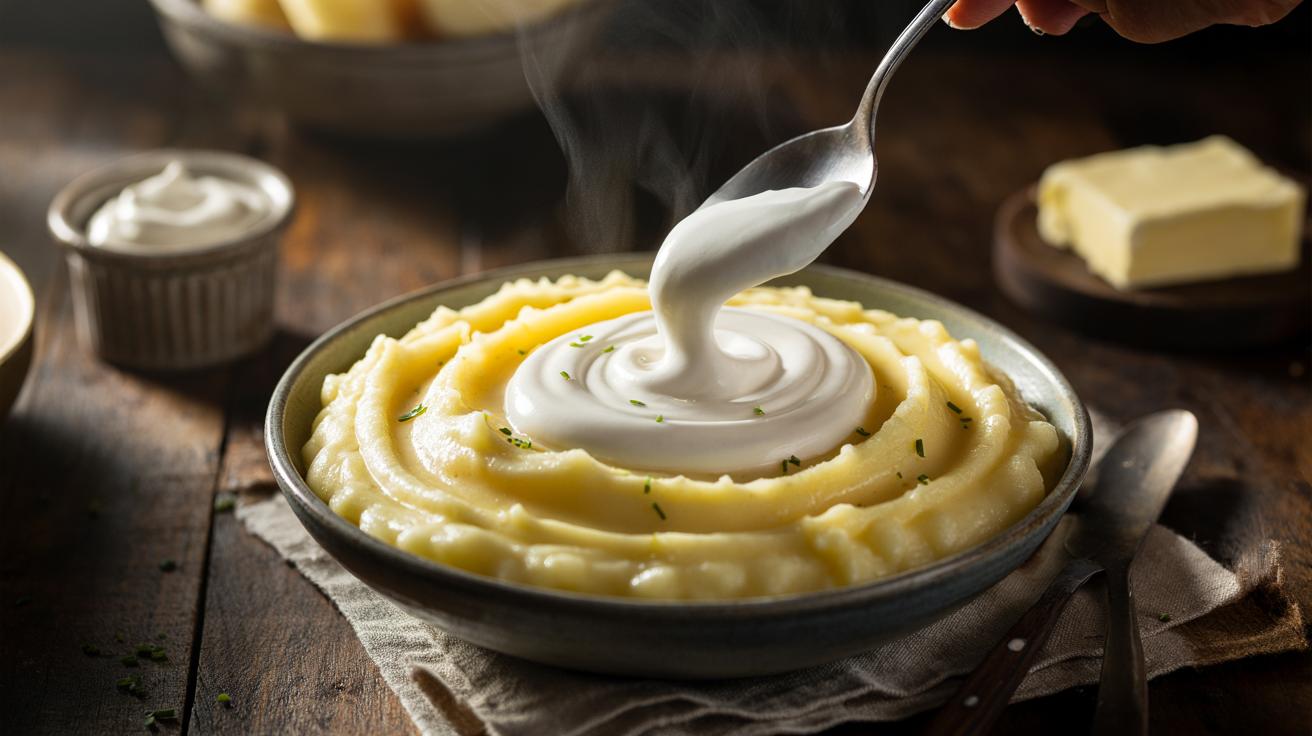
Silky mash that never turns gluey feels like a small kitchen miracle. The secret isn’t a mystery technique or a cheffy gadget; it’s a pot-friendly dairy hero. Add sour cream. Its balanced fat and gentle acidity transform cooked spuds into a cloud-light, richly flavoured purée that behaves beautifully from stove to table. You’ll taste the difference. You’ll also notice it the next day when reheating. Sour cream keeps mashed potatoes creamy, stable, and spoonable long after butter alone would let them tighten. Here’s why that happens, how to choose the right potatoes, and the precise method that delivers perfect results every time.
The Science Behind Creaminess: Fat, Acid, and Starch
Mashed potatoes are a simple emulsion of starch, water, and fat. When potatoes cook, starch granules swell and some amylose leaches out. If those chains tangle unchecked as the mash cools, you get a tight, pasty texture. Sour cream interrupts that process in two ways. First, its fat (typically 18–20%) coats swollen granules, limiting friction and keeping the mash glossy. Second, its mild lactic acid lowers the blend’s pH enough to slow retrogradation, the process that makes starch seize and weep.
There’s more. Sour cream’s dairy proteins act like tiny scaffolds, helping water and fat stay dispersed, which stabilises the mash against splitting during service or reheating. Butter brings richness, but it’s the sour cream that supplies structure and a gentle tang that brightens heavy flavours. Think of sour cream as your built-in insurance policy against gloop, gumminess, and dull flavour. Used correctly, it turns variable spuds into predictable velvet.
Choosing the Right Potatoes and Dairy Partners
Potato type matters. High-starch varieties create fluffy mash with a clean break; waxier spuds can smear and resist absorbing fat. In the UK, Maris Piper and King Edward are stalwarts; in North America, Russet or Yukon Gold do similar work. Pair them with full-fat sour cream for maximum silk. Crème fraîche is an elegant stand-in; Greek yoghurt is tangier but leaner and can split if overheated. Match starchy potatoes with richer dairy and you’ll almost always win.
| Potato | Starch Level | Texture Goal | Sour Cream Guide |
|---|---|---|---|
| Maris Piper | High | Fluffy, light | 120–180 ml per 1 kg, plus butter |
| King Edward | High | Silky, open | 100–160 ml per 1 kg |
| Yukon Gold | Medium | Buttery, dense | 80–140 ml per 1 kg |
Choose sour cream with at least 18% fat; lower-fat versions lack the emulsifying oomph and can taste chalky. Salt content varies by brand, so season your potatoes assertively during boiling and then adjust after stirring in dairy. For extra gloss, a little butter before sour cream helps “prime” the starch for a smoother emulsion.
Step-by-Step Method for Fail-Safe Mash
Peel 1 kg potatoes and cut into even chunks. Start in cold, well-salted water, bring to a gentle simmer, and cook until a knife slides in easily. Drain thoroughly. Then, crucially, return them to the warm pot for 1–2 minutes to steam-dry—excess surface water dilutes flavour and fights your emulsion. Dry potatoes absorb fat; wet potatoes reject it.
Rice or mash the potatoes while hot. Warm 60–80 g butter until just melted and fold it in first; this coats starch and builds richness. In a separate jug, gently warm 120–180 ml sour cream until barely lukewarm. Warm, not hot—overheating risks splitting. Stir the sour cream in gradually, watching the texture go satin-smooth. Season with fine salt, white pepper, and a whisper of nutmeg if you like. If you prefer looser mash, finish with a splash of hot milk; if thicker, hold back a little sour cream.
Hold the mash covered over the lowest heat or in a warm bowl for up to 30 minutes. To reheat later, microwave in short bursts or set over a bain-marie, stirring in a spoonful of sour cream to revive sheen and structure.
Flavour Tweaks and Common Mistakes to Avoid
Once you’ve nailed the base, riff. Whisk roasted garlic into the sour cream for sweetness and depth. Fold in chives, parsley, or spring onions for freshness. A teaspoon of horseradish brings steak-house drama; a splash of olive oil nods to the Mediterranean. For cheese lovers, a modest grating of Parmesan or aged Cheddar melts seamlessly thanks to sour cream’s stabilising proteins.
Now the pitfalls. Don’t blitz potatoes in a food processor; blades shred cells and release excessive starch, turning mash sticky. Avoid adding cold dairy—it cools the mix and tightens texture. Beware low-fat sour cream, which can curdle and taste thin. Add butter before sour cream, keep temperatures gentle, and you’ll dodge most disasters. If using Greek yoghurt, temper it with butter and a splash of cream to bolster fat. Vegan? Use a cultured oat “crème” with added acidity plus a drizzle of olive oil; it mimics tang and body, though not perfectly.
For make-ahead dinners, finish the mash slightly looser, chill quickly, then reheat gently with a fresh spoon of sour cream. It’s reliable, forgiving, and crowd-pleasing.
In the end, sour cream does far more than add tang. It reins in starch, balances richness, and keeps the mash luscious even after a stint on the sideboard. That’s why restaurants rely on it and home cooks should, too. Sour cream is the simplest route to consistently creamy mashed potatoes, weeknight or feast day. What tweaks will you try first—roasted garlic and chives, a punch of horseradish, or a classic, butter-forward version that lets the potatoes sing?
Did you like it?4.6/5 (27)