In a nutshell
- 🌿 Salt preserves herbs overnight by lowering water activity through osmosis, slowing microbes and enzymatic browning while protecting colour and aroma.
- 🧂 Step-by-step: dry thoroughly, layer loose herbs with a light sprinkle of fine sea salt (about 1/2 tsp per 2 cups; 1 tsp for woody sprigs), cover, refrigerate overnight, then shake off or rinse.
- 🍃 Flavour & texture: subtle salting boosts aromatics, keeps leaves firm and bright, prevents steaming in the pan, and yields cleaner searing plus more focused cold sauces.
- 🧊 Safety & storage: use clean containers, discard pooled brine, don’t reuse salt; for less sodium, try a sea salt–potassium chloride blend; wrap leftovers in paper towel in a vented bag for 2–3 days.
- 📊 Salt choices: fine sea salt for basil/parsley/coriander/dill; coarse kosher/sea salt for thyme/rosemary/sage; flaky salt is least effective—aim for light contact, not a crust.
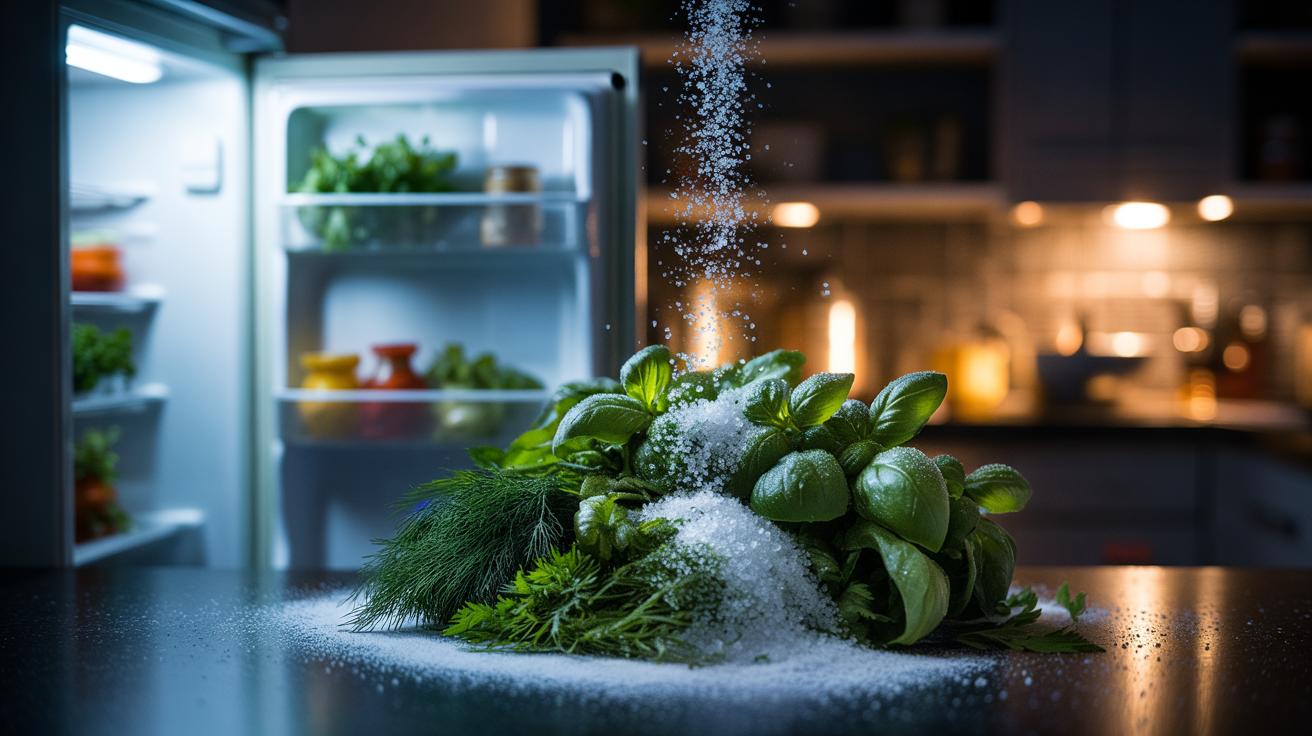
Every cook knows the heartbreak: you buy a fragrant bunch of basil or parsley for dinner, then wake to a limp, darkened heap. There’s a simple, old-world fix hiding in your cupboard. Salt. Not for seasoning this time, but for preservation. By drawing out just enough moisture to curb decay without flattening flavour, salt can keep delicate leaves perky until morning — and sometimes days beyond. The method is quiet, quick and low-effort. You set it up before bed; chemistry does the rest while you sleep. Think of it as a night shift for freshness, where a pinch of salt guards your precious herbs against time.
The Science of Salt: Osmosis, Water Activity, and Microbial Slowdown
To understand why this works, think water activity. Microbes and enzymes that spoil herbs need freely available water to thrive. Salt binds that water, lowering the environment’s “aw” (water activity) and making life harder for wilting forces. It also nudges moisture out of cell surfaces through osmosis, a gentle wicking that discourages mould and slime without fully dehydrating delicate leaves. Salt doesn’t mummify your herbs — it buys you time. That difference matters overnight.
There’s more going on. Salt is mildly hygroscopic, so it absorbs surface damp left after washing. Less surface water means fewer bruises and darker patches by morning. Enzymatic browning slows. Aromatic compounds remain volatile and intact because you store the herbs cooler and drier, not drowning in condensation. For tender herbs such as basil, coriander, dill and parsley, that subtle drying protects chlorophyll from waterlogging, keeping colour bright. For woody herbs — thyme, rosemary, sage — a slightly heavier sprinkle cushions their tougher leaves and prevents desiccation edges. The result? Fresher texture, clean aroma, more predictable flavour when you cook.
Step-by-Step: Overnight Salt Preservation Method
1) Sort and dry: Pick through your bunch, removing yellowed stems. Rinse quickly if sandy, then pat completely dry. Any lingering wetness dilutes salt’s effect. 2) Choose a container: A shallow, lidded box or a wide bowl with a plate on top works. 3) Layer: Scatter a whisper of fine sea salt on the base. Add a loose layer of herbs. Sprinkle a pinch of salt over the leaves. Repeat. Don’t compress. 4) Ratio: As a guide, use about 1/2 tsp fine salt per two loosely packed cups of tender herbs; up to 1 tsp for woody sprigs. 5) Chill: Cover and refrigerate overnight. Cold plus salt is the preservation partnership that keeps texture and aroma vivid. 6) Morning: Shake off excess salt. If you need less salinity, rinse briefly and pat dry just before use.
Keep it simple: aim for light contact, not a crust. If you’re making a cook-through sauce (e.g., a pan gravy), you can keep the faintly salty surface. For raw preparations like salsa verde, rinse, then correct seasoning later. Below is a quick guide to match salt to herbs and outcomes.
| Salt Type | Grind | Best For | Typical Overnight Ratio | Notes |
|---|---|---|---|---|
| Fine Sea Salt | Fine | Basil, parsley, coriander, dill | 1/2 tsp per 2 cups | Even coverage; easy to shake off |
| Kosher/Sea Salt | Coarse | Thyme, rosemary, sage | 1 tsp per 2 cups | Gentler draw; good for woody stems |
| Flaky Salt | Flake | Garnish only | Not ideal | Irregular coverage; use if that’s all you have |
Flavour and Texture: What Changes by Morning
Expect subtle transformation, not pickling. A light salting accentuates volatile aromatics, so basil seems sweeter, parsley greener, dill more anise-like. Texture stays perky because surface moisture, not internal water, is being managed. Leaves feel firmer, less clammy. The goal is crisp suppleness, not leathery dryness. If you’ve overdone it, don’t panic: a quick rinse and careful blot restore balance. You’ll lose a touch of aroma, but keep colour and snap.
Salting also harmonises flavour when herbs meet heat. In a hot pan, unsalted wet leaves steam and can blacken; lightly salted ones sear more cleanly, releasing fragrance into butter or oil rather than into runaway vapour. For cold dishes, the effect is subtler yet welcome: chimichurri, tzatziki, and green goddess dressings taste more focused and less watery. Think of this as pre-seasoning plus texture insurance. Crucially, the method preserves brightness, the very quality that makes fresh herbs irreplaceable in salads, eggs, and last-minute finishes for soups and stews.
Safety, Substitutions, and Smart Storage
Food safety is straightforward: keep herbs refrigerated during the salt rest, use clean containers, and avoid heavy wetness that invites spoilage. Discard any pooled brine in the morning; it’s done its job. Can you reuse the salt? Not recommended — it picks up plant juices. If sodium is a concern, cut the amount in half, then adjust final seasoning in the dish. A partial alternative is a 50:50 blend of fine sea salt and potassium chloride, though taste can skew slightly metallic; test on a small batch first. When in doubt, use less salt and tighten technique — drier leaves, looser layers, colder storage.
For longer than overnight, refresh the layers daily, or switch to an “herb salt” mix: blitz herbs with 3–4 parts salt by weight, then store air-tight; you’ll preserve aroma for weeks as a seasoning rather than a fresh garnish. For tonight’s leftovers, wrap the lightly salted herbs in kitchen paper, slip into a vented bag, and chill. They’ll often hold two to three days, with brightness intact and minimal waste.
Salt is the small, reliable trick that rescues bunches you can’t finish in one go. It’s low-cost, low-risk, and wonderfully forgiving, preserving colour, fragrance and that tender bite you want from fresh herbs. Try it before bed, wake to leaves that behave. Then cook with confidence — or toss them raw into a salad and taste the difference. Let salt do the overnight shift so you can focus on flavour. What herbs will you test first, and how will you fold their renewed freshness into tomorrow’s meal?
Did you like it?4.4/5 (28)