In a nutshell
- 🍞 Restore stale bread in ~10 minutes by wrapping in aluminium foil and heating at 160–180°C; finish briefly unwrapped to re-crisp the crust.
- 🔬 Heat reverses starch retrogradation, reabsorbing moisture and softening the crumb; the foil traps steam for even warming without sogginess.
- ⏱️ Practical timings: baguette 8–10 min, sourdough 10–12, enriched 8–10 at lower heat; use a short 2–4 min unwrapped blast for a crisp crust.
- 🔥 Tips and cautions: lightly mist hard crusts, avoid microwaves/toasters with foil, and never revive mouldy bread.
- 🌱 Smart habits: reuse/recycle foil, store bread properly, freeze portions, and add small flourishes (herbs, zest) to boost aroma while cutting food waste.
Yesterday’s baguette, dense and joyless, needn’t meet the bin. A sheet of aluminium foil and a hot oven can restore softness and aroma in minutes, saving money and reducing waste. The trick is elegant: trap moisture, heat the loaf, re-gelatinise starches, and, if you wish, re-crisp the crust. No specialist kit. No additives. Just physics and a mindful touch. Aim for about 10 minutes, adjusting to size and dryness. Do not attempt this with mouldy bread; revival improves texture, not safety. With careful wrapping and the right temperature, even a tired tin loaf can taste freshly baked again, as good with butter as with soup.
Why Bread Goes Stale and How Heat Reverses It
Staling isn’t simply “drying out”. It’s largely starch retrogradation: as a loaf cools after baking, gelatinised starch molecules realign into crystalline structures, squeezing out water and making the crumb firm, even if total moisture hasn’t changed much. Air exposure accelerates this, but refrigeration speeds it most by encouraging crystallisation. That’s why day-old bread feels tough and crumbly. Understanding this chemistry matters, because it explains why heat is the antidote.
When you wrap a loaf in aluminium foil and heat it, you soften those starch crystals. Water migrates back into the crumb, returning flexibility and spring. Gentle oven heat reverses the alignment, unlocking softness without steaming the loaf to mush. The foil’s job is to trap moisture close to the crumb, preventing excessive evaporation while ensuring even warming. Microwave energy can warm quickly but often makes the crumb rubbery as it superheats water unevenly. The oven, by contrast, allows a controlled, uniform revival, and with a brief unwrapped finish you can restore a delicate, crisp crust too.
The Foil-Wrapped Method: Step-by-Step Guide
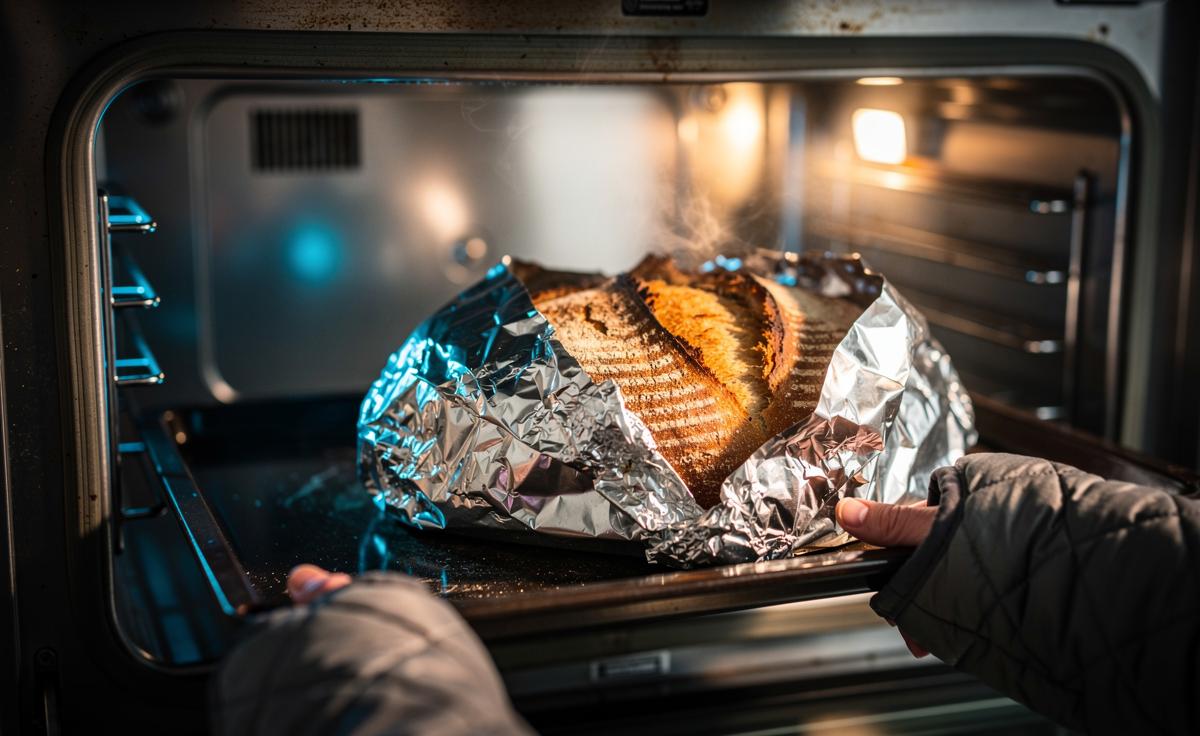
Start by assessing the loaf. Whole loaves and unsliced boules respond best, though part-sliced bread can also be revived with care. If the crust is rock-hard, flick a few droplets of water onto the exterior—mist, don’t soak. A light sprinkle aids steam generation; a dousing yields a soggy crust. Wrap the bread snugly in aluminium foil, sealing edges so steam cannot escape. Place on the middle oven shelf at 160–180°C (fan 150–170°C). For a small baguette, aim for 8–10 minutes; for a medium loaf, 10–12 minutes.
Open the foil and test. The crumb should feel springy, not hot-and-wet. To restore a crackling finish, peel back or remove the foil and return the loaf to the oven for 2–4 minutes. This drives off surface moisture and re-sets the crust. Rule of thumb: if it’s soft but damp, finish unwrapped; if it’s still firm, give another few wrapped minutes before crisping. Never use a toaster or grill with foil—fire risk and arcing are real hazards. Serve promptly; the revived window is best within an hour while the crumb remains supple.
Choosing Temperatures, Timings, and Breads
Different breads need different approaches. Lean loaves (baguette, sourdough, ciabatta) respond beautifully, while enriched types (brioche, panettone) prefer slightly lower heat to protect sugars and butter. Pre-sliced supermarket bread revives, but watch it closely; the thin slices heat fast and can dry if overbaked. If the loaf was frozen, thaw to room temperature or extend wrapped time by a few minutes. When in doubt, err on the lower temperature and check early. A water mist helps stale, arid crusts, but rarely is needed for soft sandwich bread. Avoid adding water to seeds-heavy crusts; the seeds can scorch if over-crisped.
| Bread Type | Temp (°C) | Wrapped Time | Unwrapped Finish | Notes |
|---|---|---|---|---|
| Baguette/Ciabatta | 170–180 | 8–10 min | 2–3 min | Mist crust lightly for steam |
| Sourdough Boule | 170 | 10–12 min | 3–4 min | Thicker crumb needs extra time |
| Brioche/Enriched | 150–160 | 8–10 min | Skip or 1–2 min | Protect sugars; avoid over-browning |
| Pre-Sliced Loaf | 150–160 | 5–7 min | 0–1 min | Wrap tightly; minimal finish |
These ranges are guides, not commandments. Ovens vary. Thickness varies. Use touch and aroma. Soft crumb, lively fragrance, crisp but delicate crust—that’s your target. And remember, revive only what you’ll eat soon; the staling clock restarts as the loaf cools.
Safety, Sustainability, and Smart Variations
Food safety first. Do not attempt to revive bread with visible mould; spores penetrate deeper than you can see. The foil method is oven-only—no microwaves, no toasters, no air fryers with exposed elements that can snag foil. Place the wrapped loaf on a tray to catch crumbs and ease handling. If sodium intake concerns you, avoid brushing with salted water; plain water suffices. For gluten-free loaves, go lower and slower—these formulations can dry rapidly, so wrap tightly and reduce the unwrapped finish to a whisper.
Sustainability matters in British kitchens. Reuse your aluminium foil where possible: allow it to cool, wipe it clean, and fold for next time; recycle when it’s too creased to seal. Consider preventatives too: store bread cut-side down on a board, keep it at room temperature in a breathable bag, and freeze portions you won’t eat within two days. For fragrance, you can tuck a sprig of rosemary under the foil or brush the crust with a teaspoon of water infused with orange zest. Small flourishes, big pleasures. And if you’ve a stale heel left, make croutons; waste nothing.
A humble sheet of foil gives yesterday’s loaf a second life, and the science is on your side: heat reverses staling, while trapped moisture restores a supple crumb and a quick unwrapped blast returns that coveted crackle. It’s fast. It’s thrifty. It turns a near-miss into a centrepiece for soup or cheese. Revive what you need, eat it warm, and enjoy the fleeting perfection of freshly refreshed bread. What loaf will you rescue tonight, and how will you tweak the method—mist, herbs, or a daring finish—to make it unmistakably yours?
Did you like it?4.7/5 (23)