In a nutshell
- 🍞 Bread stales through starch retrogradation, a reversible process that heat and a touch of humidity can unwind to restore softness and aroma.
- ⏱️ The 30‑second rice method: microwave uncooked rice with a splash of water, place bread elevated over the steamy bowl, cover loosely—delivering controlled humidity without sog.
- 🌡️ Why it works: rice releases measured steam to relax retrograded starch, then acts as a hygroscopic buffer to absorb excess moisture and protect the crust.
- ✅ Texture targets and tips: aim for a flexible crumb, use short rest pulses, keep bread off wet surfaces, avoid overwatering, and finish in a hot pan if you want extra crispness.
- 🔁 Alternatives at a glance: damp towel microwave, oven spritz, or stovetop steam—pick by time and loaf size, but rice is cheap, repeatable, and kind to crusts.
Stale loaf. Hope not lost. In the time it takes to find the butter knife, you can coax bread back to life using a bowl of rice and a whisper of steam. This nimble household hack harnesses the way wheat starch behaves when warmed and gently rehydrated, restoring bend and bounce to a tired crumb without turning the crust rubbery. The trick is counterintuitive: use rice to create moisture, then let the rice absorb the excess so your slice isn’t soggy. For weekday toast, last-night sourdough, or Sunday rolls that slept uncovered, here’s how to make science work in 30 seconds flat—and why it works.
The Science of Staling: Why Bread Hardens, Not Just Dries
Bread doesn’t simply “go dry.” It undergoes starch retrogradation, a molecular reshuffle that pushes water out of the starch and into the surrounding crumb and crust, firming the texture and dulling aroma. As the loaf cools after baking, gelatinised starch chains recrystallise; over hours and days, they form tighter structures that feel hard to the bite. Air exposure accelerates it, but even wrapped bread will stale through this internal change. Staling is a reversible texture shift, not a permanent fate.
Heat can unwind those crystals. Briefly warming the crumb to roughly 60–70°C melts them, restoring softness. Add a touch of humidity and the process speeds up, because water acts as a plasticiser that helps the starch relax. That’s where rice comes in. Dry grains are hygroscopic—they grab water vapour readily—yet hot, lightly moistened rice will also release a measured pulse of steam. Used cleverly, rice becomes a humidity buffer: it feeds just enough moisture to revive the crumb, then mops up the leftovers so the crust doesn’t weep or turn leathery. Control the moisture, control the texture.
The 30-Second Rice Method: Steps and Why It Works
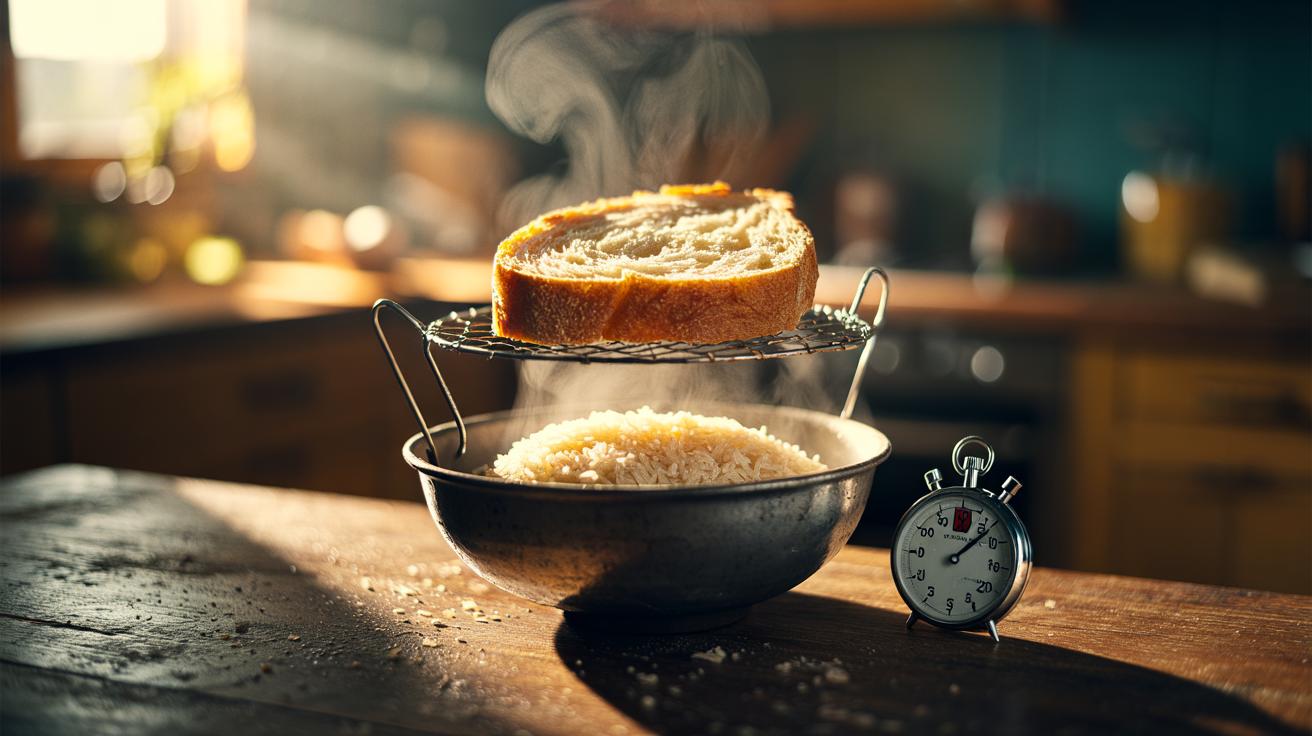
Here’s the quick routine. Place 1/2 cup uncooked rice in a microwave-safe bowl and splash in 1 tablespoon water. Microwave the bowl alone for 45–60 seconds until the rice is very warm and steamy. Immediately set your stale slice on an inverted saucer or small rack over the bowl (keep it off the damp surface), cover loosely with a plate, and wait 30 seconds. That’s it. For a whole roll, give it two back-to-back 30-second rests with a 10-second air break. Do not nuke the bread directly; use the rice as your gentle steamer.
Why it works: the steamed micro‑chamber lifts the crumb into the sweet zone where retrograded starch relaxes. The vapour softens the interior quickly, restoring flexibility and aroma. As the rice cools, it flips roles, absorbing stray condensation so your crust stays presentable rather than rubbery. Think of it as a one‑bowl proofing cabinet and dehumidifier in miniature. Speed is the point; 30 seconds is enough for slices and most buns. Overdo it and you risk a damp, glassy crust. Keep the bread elevated and the cover loose for balanced humidity.
Texture Targets, Common Pitfalls, and Alternatives
Your goal is contrast: a tender, resilient crumb with a non-soggy exterior. Feel the slice after 30 seconds; it should flex without cracking. If it’s still stiff, give another 15–20 seconds of rest over the hot rice rather than blasting the microwave. Short pulses beat long zaps every time. Avoid too much water in the bowl; more than a tablespoon floods the chamber and leaves the crust sticky. And never seal the setup airtight—trapped steam condenses on the surface and turns the crust leathery as it cools. For very thick loaves, finish with a minute in a hot, dry pan to crisp the shell while preserving the softened interior.
There are other routes to revival depending on time and kit. Use them when you’re rescuing a whole baguette or when you want pronounced crunch. Here’s a quick comparison to help you choose:
| Method | Time | Best For | Pros | Watch-outs |
|---|---|---|---|---|
| Rice humidity (30s) | 30–60 sec | Slices, rolls | Fast, controlled moisture, minimal sog | Too much water kills crust |
| Damp towel + microwave | 20–40 sec | Soft sandwich bread | Ultra quick soften | Often rubbery crust |
| Oven spritz at 180–200°C | 5–10 min | Loaves, baguettes | Crisp exterior, even heat | Slower; risk of drying |
| Steam over simmering water | 1–3 min | Buns, bao-style softness | Deeply tender crumb | Can over-soften crust |
Handled well, the rice method fits weekday reality. It’s cheap, repeatable, and kind to the crust. The rice delivers the crucial humidity burst to re‑mobilise starch, then wicks away excess so texture doesn’t collapse as the slice cools. If you can warm leftovers, you can do this. Store your bread better next time—paper for crusty loaves, airtight for sandwich slices, freeze what you won’t eat—but rest easy knowing a 30‑second recovery is always on standby. Which breads in your kitchen beg for a second chance, and how will you tune the moisture to suit each style?
Did you like it?4.5/5 (21)