In a nutshell
- 🥑 The rice method accelerates avocado ripening by trapping and concentrating natural ethylene in a breathable, low-moisture cocoon.
- ⏱️ Expect results in 18–36 hours—often around 24 hours—with temperature, variety, and starting firmness affecting speed.
- 🧪 Science and safety: it’s a gentle modified atmosphere; avoid airtight sealing, excessive prodding, and chilling injury for clean flavour and texture.
- 🧰 Step-by-step: use uncooked white rice, partially bury in a lidded (not sealed) container, check at 12/24 hours, and refrigerate to pause ripening.
- ⚖️ Comparison: versus paper bag + banana, flour, countertop, or heat, rice balances speed with superior flavour and texture and minimal mess.
When you want guacamole tonight, waiting three days for your avocados to soften feels like torture. Enter the rice trick: nestling firm fruit in uncooked grains to coax them ready by tomorrow. It sounds homespun. It’s quietly scientific. Rice creates a snug microclimate that accelerates the fruit’s own ripening engine, without resorting to heat or gimmicks. The result can be a buttery, sliceable avocado in roughly 24 hours. Success hinges on starting ripeness, ambient temperature, and a little patience. Done correctly, it’s safe, repeatable, and remarkably consistent. Here’s why it works, how to do it, and when to choose alternatives for the best flavour and texture.
How Rice Speeds Up Avocado Ripening
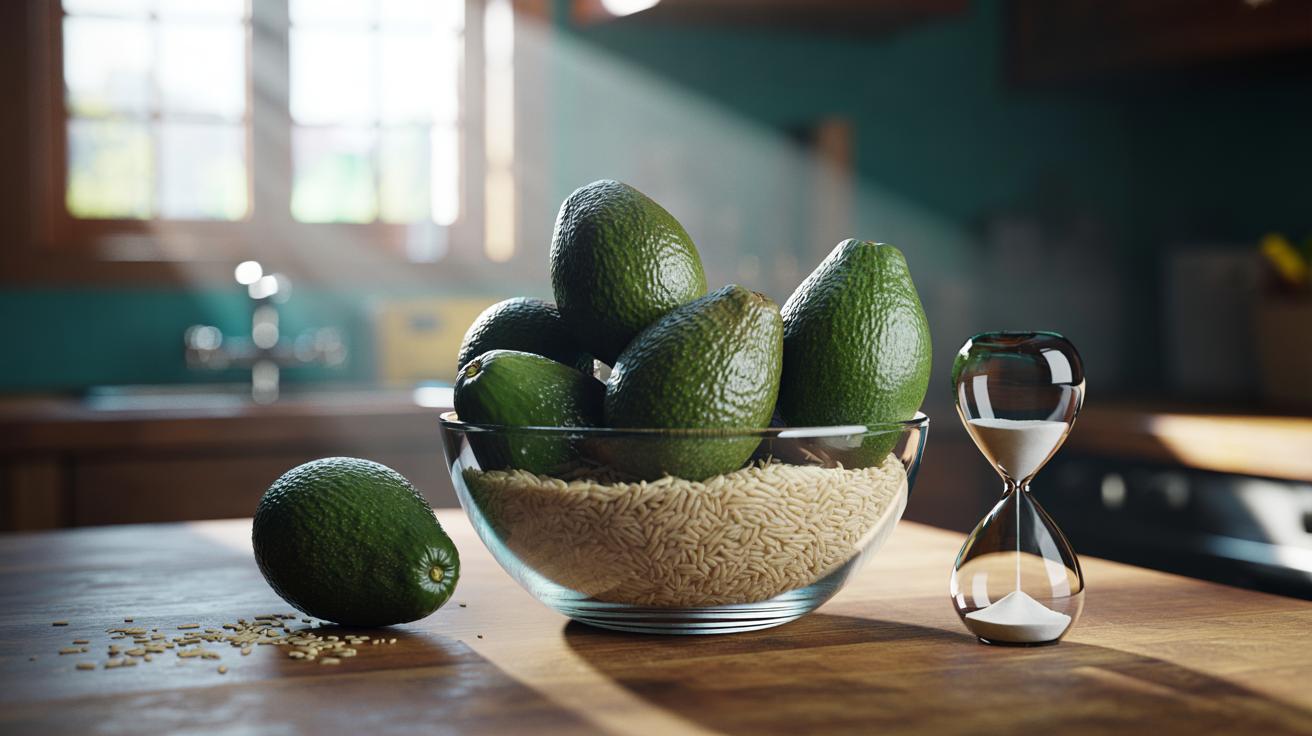
Avocados ripen thanks to a plant hormone called ethylene. As the fruit matures, it produces small amounts of this gas; surrounding it with rice traps and concentrates the ethylene around the skin, nudging the flesh from rubbery to supple. Rice behaves like a breathable blanket. It reduces airflow just enough to build a slightly higher concentration of ethylene, while its dryness wicks away incidental moisture that might otherwise encourage mould. Think of it as creating a controlled, low-oxygen cocoon without smothering the fruit.
Temperature matters. Slightly warm rooms (18–22°C) support faster fruit metabolism, and the rice layer buffers drafts, keeping conditions stable. There’s also the tactile benefit: the grains cushion the fruit, avoiding pressure points that cause bruising. Not every avocado will leap to perfection within 24 hours—particularly dense, glossy-firm Hass or larger varieties might need 36 hours—but many will hit that ideal give by the next day. The beauty of rice is its balance: enough confinement for ripening, not enough to suffocate. That fine line is what makes this method both quick and gentle on flavour and aroma.
Step-By-Step Method: The 24-Hour Rice Hack
Choose firm, uncut avocados without gashes. Select uncooked white rice—its uniform grain and low oil content make it ideal for airflow and moisture control. Use a clean, dry tub or deep bowl with a lid. Pour in a 3–5 cm bed of rice, nestle the avocados so they’re two-thirds buried, then cover with more rice until just submerged. Do not seal the container airtight; a lightly fitted lid is enough. Label the time. Place at room temperature, away from radiators and direct sun.
Check after 12 hours with a gentle thumb press on the stem end. If it yields slightly, you’re close. Rotate the fruit in the rice to even out exposure. At 18–24 hours, test again. Ready for slicing? Move to the fridge to pause ripening. Need more softness for smashing? Leave for another 6–12 hours. Avoid washing or chilling mid-ripen, which can shock the tissues and dull flavour. For large Reeds or very green Hass, expect the quickening to start within 24 hours, with prime texture at 30–36 hours. Discard any rice that has absorbed odours or juice; it’s for ripening, not cooking.
Science, Safety, And Common Pitfalls
The rice method leverages modified atmosphere: slightly reduced oxygen and elevated ethylene spur enzymes that soften cell walls and convert starches to sugars. But balance is everything. Over-confinement can cause anaerobic off-notes. That’s why rice’s porous structure matters: it slows, rather than stops, gas exchange. If an avocado smells sour or alcoholic, it’s overripe or oxygen-starved—use it for cooked dishes, not fresh salads.
Hygiene counts. Start with clean containers and intact fruit; damaged skins can leak sap and invite microbes. The rice should be dry and food-safe. Don’t reuse it for meals. Another trap is impatience. Prodding too hard bruises tissues, which later blacken. Also, avoid heat hacks. Ovens and microwaves soften by cooking, not ripening, leaving rubbery skins and grey, bland flesh. Chilling injury is another culprit: storing unripe avocados below about 5°C stalls ripening enzymes and yields watery textures. If your kitchen is cold, the rice buffer helps, but keep the container in the warmest cupboard you have. Finally, remember variety differences; thin-skinned Hass ripens more predictably than thicker-skinned, late-season cultivars.
How Does Rice Compare To Other Methods?
Plenty of kitchen tricks promise instant avocados, yet few respect the fruit’s chemistry like rice does. A classic paper bag with a banana or apple adds external ethylene, speeding things along but sometimes leaving a faint banana odour. Flour works similarly to rice but is messier and less breathable. Countertop ripening is simple yet slow. And heat-based shortcuts? They trade nuance for haste. When flavour and texture matter, favour methods that amplify the avocado’s own respiration over artificial shortcuts.
| Method | Typical Time | Pros | Cons |
|---|---|---|---|
| Rice burial | 18–36 hours | Even softening; odour-neutral; low mess | Needs enough rice; not instant |
| Paper bag + banana | 24–48 hours | Widely available; adds ethylene | Possible off-odours; bruising risk |
| Flour burial | 24–48 hours | Good ethylene trapping | Dusty; clumps; less breathable |
| Countertop | 2–5 days | Zero equipment | Slow; uneven ripening |
| Oven/Microwave | Minutes | Fast softening | Cooked taste; poor texture |
In side-by-side tests, rice often delivers the best compromise: speed without sacrificing aroma or structure. It’s adaptable, too—scale the container for one fruit or a week’s worth. For ultra-firm fruit, combining rice with a single ethylene source (a small apple) in a breathable setup can shave off a few extra hours while preserving balance. Pick the method that matches your deadline and quality bar.
Used well, the rice method respects the avocado’s biology while giving your timetable a break. It traps the fruit’s own ripening signal, cushions against bruises, and keeps flavours clean. The process is simple, low-cost, and repeatable for weeknights or weekend brunch. Start with sound fruit, mind the clock, and let a humble grain do the quiet work. Next time you face a rock-hard haul, will you bury them in rice, pair them with a banana, or test a hybrid approach to hit your perfect texture on schedule?
Did you like it?4.6/5 (25)