In a nutshell
- 🧪 Bananas are climacteric fruit that emit ethylene; a tight aluminium foil wrap traps this gas and gentle warmth, accelerating enzymes that convert starches to sugars.
- ⏱️ Treat foil as an overnight accelerator: about 8–14 hours, then unwrap promptly to avoid overshooting into brown, spotty softness and mushy texture.
- 🍌 Method: choose nearly ripe fruit, dry the peel, wrap snugly without crushing from crown to tip, keep at room temperature, check at 8–12 hours, and re-wrap briefly if still too firm.
- 🔁 Alternatives: paper bag + apple (1–2 days, gentler), warm countertop (2–4 days, low effort), or oven quick fix (30–60 mins, softens but less flavour complexity).
- ⚠️ Caveats: avoid bruised fruit, watch for condensation, don’t refrigerate mid-ripen, and reuse foil to cut waste while keeping results consistent.
Bananas can be temperamental on a chilly British countertop, lingering at green just when you fancy a bright, sweet fruit for porridge or a bake. A simple kitchen hack—wrapping them in aluminium foil—can nudge them along. The principle is straightforward: trap ethylene, conserve a touch of warmth, and keep humidity close to the peel so enzymatic chemistry speeds up. Done right, it works overnight. Done poorly, it can bruise, sweat, or tip flavour too far into mushy sweetness. Think of foil as a mini ripening chamber: precise, brief, and closely monitored. Below, we unpack the science, the method, and the trade-offs for swift, reliable results.
The Science of Ethylene and Heat
Bananas are a classic climacteric fruit, meaning they emit ethylene, a plant hormone that triggers and accelerates ripening. Once production begins, it is self-amplifying: ethylene promotes more ethylene, which stimulates enzyme activity that softens the fruit and transforms starches into sugars. Temperature shapes this dance. A modest rise—just a degree or two—can lift the fruit’s respiration rate, pushing ripening along without cooking it. Humidity matters as well. Keeping moisture near the peel reduces water loss, protects texture, and supports those enzyme-led conversions.
A tight aluminium foil wrap concentrates ethylene around the banana and subtly retains warmth from the room or nearby appliances, creating a microclimate where chemistry gains pace. Oxygen still gets in at tiny seams, so the fruit keeps breathing, while accumulated ethylene tips it across the “go” threshold. The result is faster softening and sweeter flavour development, especially when the banana is already on the cusp of yellow. Too cold, and reactions crawl. Too hot, and you risk off-notes. The sweet spot is everyday kitchen warmth, not the oven.
Why a Tight Aluminium Foil Wrap Works Overnight
The tight wrap limits ethylene escape and heightens its contact with the peel and pulp, which are peppered with receptors sensitive to this gas. When trapped, ethylene signalling intensifies, accelerating cell-wall breakdown and starch conversion that deliver that creamy, aromatic banana character. At the same time, foil helps stabilise surface temperature and humidity, both of which support enzyme efficiency. It’s a gentle nudge, not a sledgehammer. The biggest gains come when bananas sit at that in-between stage—light green to yellow with green tips—because the ripening machinery is already primed to respond.
Duration is critical. Use foil as an overnight accelerator—roughly 8 to 14 hours—then remove it to prevent overshooting into brown, spotty softness. Over-wrapping for days can dull flavour, encourage condensation, and risk a slightly “boiled” aroma. Choose fruit without bruises, keep wraps snug but not crushing, and avoid refrigeration, which stalls the enzymes you’re trying to spur. Remember, you’re not forcing new chemistry from scratch; you’re amplifying a natural process by concentrating ethylene and keeping conditions cosy enough to hasten sweetness without wrecking texture.
Step-by-Step: Wrapping Bananas for Rapid Ripening
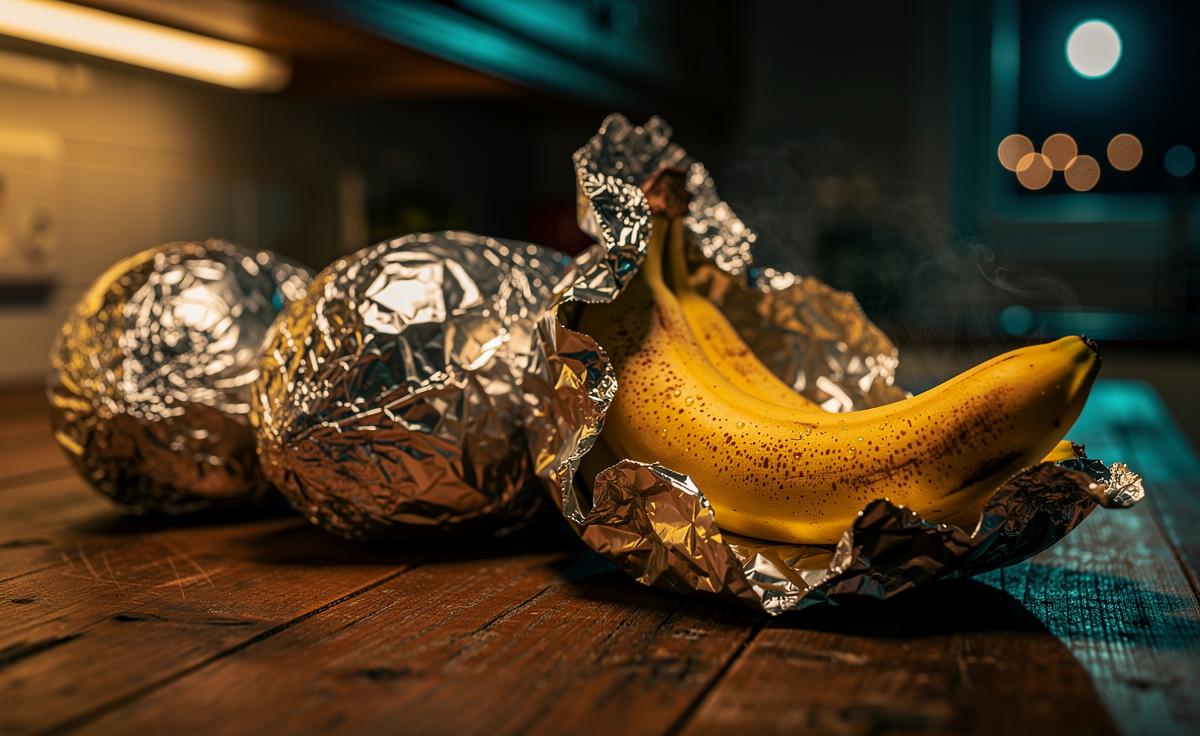
Pick bananas that are nearly there: pale green edging into yellow, or mostly yellow with a hint of green near the stem. Dry the peel; droplets under foil can mar texture. Wrap each banana individually in aluminium foil, shiny or dull side makes little difference, but the fit does. Start at the crown, spiral down, press seams flat. Exclude air pockets without squeezing the fruit. Place the wrapped bananas on a room-temperature rack or a wooden board, somewhere away from cold windowsills and not atop hot radiators.
Wait overnight. Check at the 8–12 hour mark. If the peel feels slightly softer and colour pushes towards full yellow, you’re on target. Unwrap promptly once you hit your sweet spot; leave them longer and you’ll race into speckles. Let the fruit breathe for 20 minutes to release any intensified odours, then eat or bake. Still too firm? Re-wrap for a short second stint, 3–4 hours. For a gentle boost, you can slip a ripe apple or banana into a nearby paper bag while your foil-wrapped fruit works—ambient ethylene rises, and the microclimate compounds the effect.
Comparisons, Caveats, and Eco-Savvy Alternatives
The foil method is fast and targeted, but it’s not a cure-all. Rock-hard, deep green bananas may need a day or two of ordinary counter time before the overnight wrap delivers a dramatic shift. Avoid wrapping bruised fruit; damaged tissues can ferment and skew flavour. If condensation appears, unwrap, pat dry, and switch to a shorter wrap next time. Reuse foil where possible—uncrumple, wipe, and redeploy—to keep your footprint low. And remember: wrapping the crown with plastic film slows ripening; foil over the whole fruit speeds it. Choose the tool for the job.
| Method | Typical Time to Yellow | How It Works | Best For | Downsides |
|---|---|---|---|---|
| Tight Foil Wrap (Overnight) | 8–14 hours | Traps ethylene and warmth | Almost-ripe bananas | Risk of condensation if overdone |
| Paper Bag + Apple | 1–2 days | Shared ethylene in a breathable space | Green to mid-stage fruit | Slower; needs monitoring |
| Countertop, Warm Spot | 2–4 days | Ambient ripening at room temp | All stages | Unpredictable in cool homes |
| Oven “Quick Fix” | 30–60 minutes | Softens via heat, not true ripening | Emergency baking | Flavour less complex |
Use foil for speed, paper bags for gentle predictability, and warm countertops for the lowest-effort option. With a bit of trial and note-taking—time, temperature, ripeness on entry—you’ll tune the approach to your kitchen’s rhythms. The aim is a banana that smells fragrant, tastes bright, and yields under gentle thumb pressure without collapsing. That’s your finish line.
Handled with care, a tight aluminium foil wrap can turn tomorrow’s bananas into today’s breakfast, harnessing concentrated ethylene and a touch of warmth to accelerate natural chemistry. It’s quick, cheap, and reversible if you watch the clock. Try one banana first, calibrate the timing, then scale up for bakes or smoothies. The trick is restraint: short, snug, and promptly unwrapped. Will you test the overnight wrap on a single banana this evening—or will you pit it against the trusty paper bag to see which wins in your kitchen?
Did you like it?4.3/5 (23)