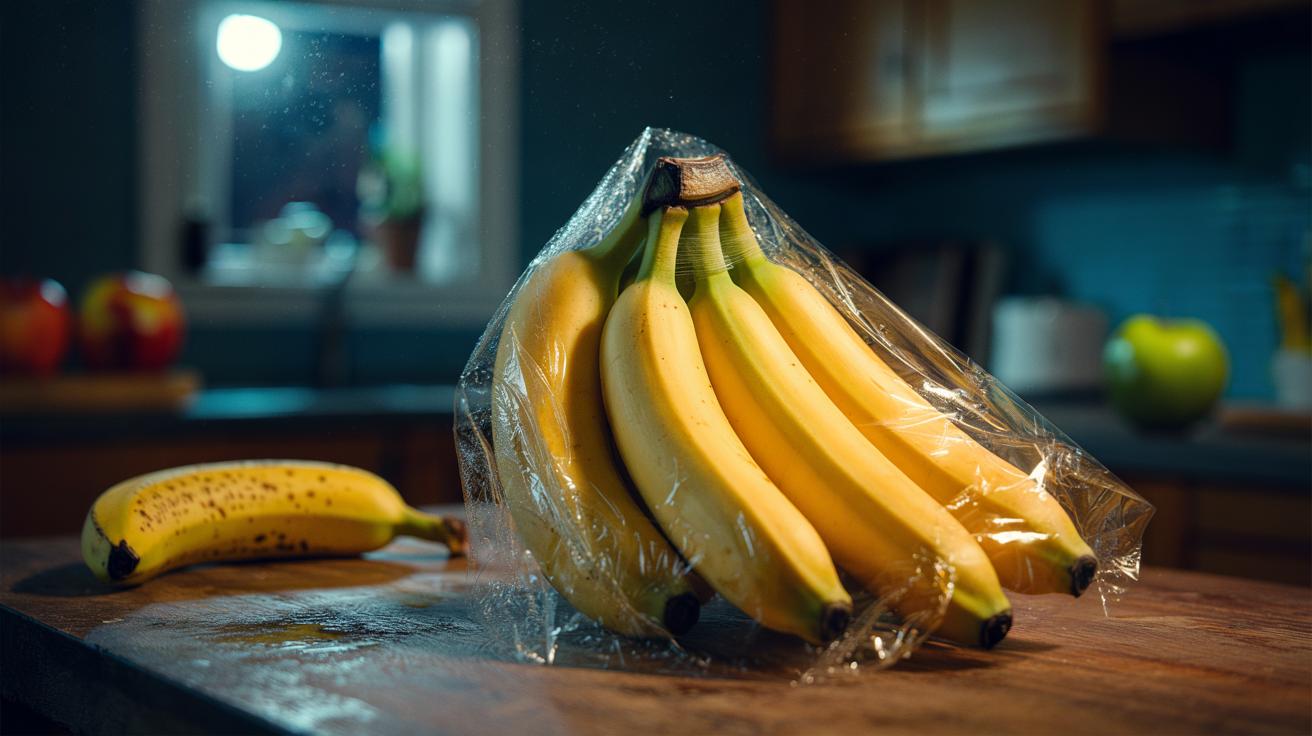
In a nutshell
- 🍌 Wrapping banana stems with plastic wrap reduces ethylene exchange at the crown, slowing ripening overnight by about 0.5–1.5 days.
- 🧪 The science: ethylene drives ripening; sealing the stem/crown moderates gas flow, keeping peels greener and texture firmer.
- 🛠️ How-to: cover only the stems (not the whole fruit), optionally wrap individual stems, and keep bananas away from apples and tomatoes.
- 📦 Storage tips: room temperature for unripe fruit; refrigerate once ripe (stems still wrapped) to hold sweetness without accelerating spoilage.
- ♻️ Benefits: less food waste and more control—remove wrap or bag with an apple to speed ripening when you choose.
Bananas behave like tiny gas factories, changing from starchy and green to sweet and yellow in just a few days. That speed is useful when you want a smoothie now, disastrous when a fruit bowl turns spotty overnight. A simple kitchen hack promises control: wrapping the stem ends with plastic wrap (or UK cling film) to slow the process. The claim sounds too neat. Yet it holds up under scrutiny. By targeting the stem—where gases concentrate—you moderate ripening without fuss, tools, or chemicals. Wrap the stems tonight, and you’ll likely see a calmer bunch by morning. Here’s the science, the method, and what results to expect.
The Science Behind Wrapping Banana Stems
The driver of a banana’s transformation is ethylene, a natural plant hormone that triggers ripening. Bananas generate ethylene internally, but the crown and stem area act like a busy junction where production, diffusion, and exchange with surrounding air are most active. By sealing this zone with plastic wrap, you reduce gas exchange and slow the cascade of ripening signals. The peel keeps its chlorophyll longer. The fruit softens more slowly. It’s not magic; it’s mass transfer. Restrict the flow around the stem and you dial down the pace.
Kitchen trials from home economists and retailer labs report a small yet meaningful effect. At room temperature (about 18–21°C), a wrapped bunch often shows less yellowing and fewer speckles by morning compared with an identical unwrapped bunch nearby. The effect is modest, not miraculous. Think of it as buying time—typically a day or so—rather than stopping the clock. Temperature and airflow also matter: warmer rooms accelerate ripening regardless of wrap, while cool, ventilated spaces support the stem-wrap strategy. Still, for busy households, a day’s grace can be the difference between perfect pancakes and panicked banana bread.
How to Wrap Banana Stems for Best Results
Start with a fresh bunch. Dry the crown if it’s damp. Tear off a small square of cling film and press it tightly over the clustered stems, covering the exposed crown where the bananas join. For even finer control, separate the bananas and wrap each individual stem. This creates mini barriers that blunt ethylene exchange at the precise source. Smooth the film so it adheres; add a small elastic if your kitchen is warm and the wrap loosens. Cover the stems only—never the entire fruit, which can trap moisture and invite mould.
Placement matters next. Keep bananas at room temperature, away from sunny sills and radiators, and far from ethylene-heavy neighbours such as apples and tomatoes. If your goal is to slow ripening overnight, don’t bag the fruit; airflow helps. When the bananas hit peak yellow, move them to the fridge with stems still wrapped to hold sweetness while delaying browning. Unripe bananas shouldn’t be chilled—cold can dull flavour development and cause greyish peels. Below is a quick comparison of common setups and outcomes.
| Method | Setup | Overnight Change | Likely Shelf-Life Gain |
|---|---|---|---|
| No wrap | Bunch on counter | Normal yellowing begins | Baseline |
| Crown wrapped | Cling film over joined stems | Less peel yellowing | ~0.5–1 day |
| Individual stems wrapped | Each stem sealed | Most controlled change | ~1–1.5 days |
| Paper bag + apple | Bag traps ethylene | Ripening accelerates | Faster, not slower |
What to Expect Overnight and Beyond
By morning, a wrapped bunch often looks calmer: fewer freckles, a greener cast at the tips, and a fresher-looking crown. Texture shifts more slowly too. You won’t halt biology, but you do turn down the dial. Expect subtle, visible restraint rather than a dramatic freeze-frame. If you unwrapped one banana for breakfast and kept the rest sealed, you’ll usually notice clearer differences the next day, confirming the effect is local to the stem area.
Across two to three days, the benefit tapers as total ethylene rises inside the fruit. Re-wrap if the film loosens or tears. Replace any wrap that’s damp or sticky with sap. If you need to speed things up later, simply remove the film and place the bananas beside an apple in a paper bag. Common myths? Wrapping the whole banana is counterproductive, and poking holes in peels does not help. Targeting the stem is the efficient, low-waste sweet spot. For peak thrift, combine tactics: wrap stems to slow, split the bunch to spread demand across the week, then refrigerate ripe ones to extend enjoyment without sacrificing flavour.
In a cost-of-living squeeze, small wins matter. The stem-wrap trick is cheap, quick, and repeatable, turning a volatile fruit into a flexible staple. You cut food waste, avoid emergency bakes, and enjoy bananas at the moment you actually want them. Ethylene is still in charge, but you set the timetable. Wrap the stems to slow ripening overnight; unwrap or bag with an apple when speed is the goal. Will you try a crown wrap on the whole bunch, go stem-by-stem for tighter control, or pair the method with smart fridge timing to fine-tune your week?
Did you like it?4.4/5 (27)