In a nutshell
- 🧪 The science: sour cream’s lactic acid, casein, and roughly 18–20% fat reorganise potato starch, smoothing texture immediately and preventing gumminess.
- 🥔 Choose the right ingredients: fluffy UK potatoes like Maris Piper or King Edward, use full‑fat sour cream, and keep dairy warm to avoid seizing.
- 🥄 Method that matters: steam‑dry potatoes, rice them, fold in butter first, then add a dollop of sour cream, and finish with hot milk/stock for perfect consistency.
- ⚠️ Quick fixes and pitfalls: for gluey mash add sour cream and butter; for watery mash evaporate gently; for lumps, sieve or rice; Never use a food processor.
- 🌿 Variations and service: enrich with brown butter, chives, roasted garlic, or a touch of horseradish; crème fraîche or dairy‑free swaps keep the mash silky and reheatable.
Britain loves mashed potatoes. Comforting, versatile, quick to dress up. Yet the difference between decent and transcendent often lies in a single spoonful. Add sour cream and something almost alchemical happens: claggy mash loosens, lumps melt, and the spoon glides through like it’s moving through satin. This isn’t culinary superstition; it’s chemistry you can taste. The combination of gentle acidity, milk proteins, and fat reorganises cooked starch into a smoother matrix. One dollop can perfect the texture immediately, taming gumminess and sharpening flavour without shouting. For weeknights or Sunday roasts, that’s a reliable shortcut to the kind of mash that makes people go quiet.
The Science Behind Sour Cream’s Silken Touch
Potato starch is the star and, sometimes, the saboteur. When heated, starch granules swell and burst, releasing amylose and amylopectin that thicken the mash. Overwork them and you get glue. Under-hydrate them and you get grit. Sour cream strikes a balance. Its lactic acid softens the network by gently lowering pH, discouraging excessive starch bonding that causes stickiness. Its fat envelopes granules, creating separation, while milk proteins—chiefly casein—act as natural emulsifiers, binding water and fat into a stable, glossy suspension. This is why texture improves almost the moment sour cream hits the pan; you’re reorganising the microstructure.
Acidity matters. At roughly pH 4.5–4.8, sour cream nudges the mash out of the zone where starch chains tangle aggressively, reducing what cooks call “drag.” Think of it as loosening tight shoelaces. Meanwhile, 18–20% fat adds lubrication without the heaviness of double cream. Milk alone hydrates but can thin; butter alone enriches but may separate. Sour cream offers both liquidity and structure, delivering a silky body that feels lighter than its richness suggests. Result: a mash that stays smooth as it cools, resists weeping, and reheats more gracefully than butter-and-milk versions.
Choosing Potatoes, Fats, and Dairy That Play Nicely
Start with the right spud. In the UK, Maris Piper and King Edward deliver dependable fluff thanks to higher dry matter. Waxy varieties hold their shape for salads but resist ricing and can turn pasty when mashed. Desiree sits in a friendly middle ground, yielding a supple texture with good potato flavour. Freshness counts: older potatoes with a tinge of sweetness can brown and taste muddy. Size matters too; even pieces cook evenly, preventing hard cores that later form lumps. Salt the water generously to season from within, and don’t overboil—aim for tender edges with centres that don’t crumble.
Balance the dairy. Butter brings aroma and sheen; sour cream supplies acidity, body, and tang; a splash of warm milk, buttermilk, or light stock fine-tunes looseness. The ratios below keep the mash plush, not slack, and guard against greasiness. Temperatures are crucial because cold dairy seizes starch and dulls flavour. Warm ingredients slip in; cold ones fight back. Use full-fat sour cream for stability—light versions can split or taste thin.
| Component | Ideal Ratio (per 1 kg potatoes) | Temperature Target |
|---|---|---|
| Unsalted butter | 80–120 g | Soft, 20–25°C |
| Sour cream (full-fat) | 120–180 g | Warm, 40–50°C |
| Milk or light stock | 80–150 ml, as needed | Hot, 60–70°C |
| Fine salt | 10–12 g | — |
A Step-by-Step Method for Cloud-Soft Mash
Peel and cut potatoes into large chunks to reduce waterlogging. Start in cold, well-salted water. Bring to a gentle boil, then simmer until a knife slides in without resistance. Drain thoroughly and return the potatoes to the hot pan. Steam-dry for two minutes to drive off surface moisture; this concentrates flavour and improves absorption. Rice or pass through a food mill—never mash aggressively. Mechanical shear is the enemy of silk. Keep everything warm. Warm bowl, warm spoon, calm hands.
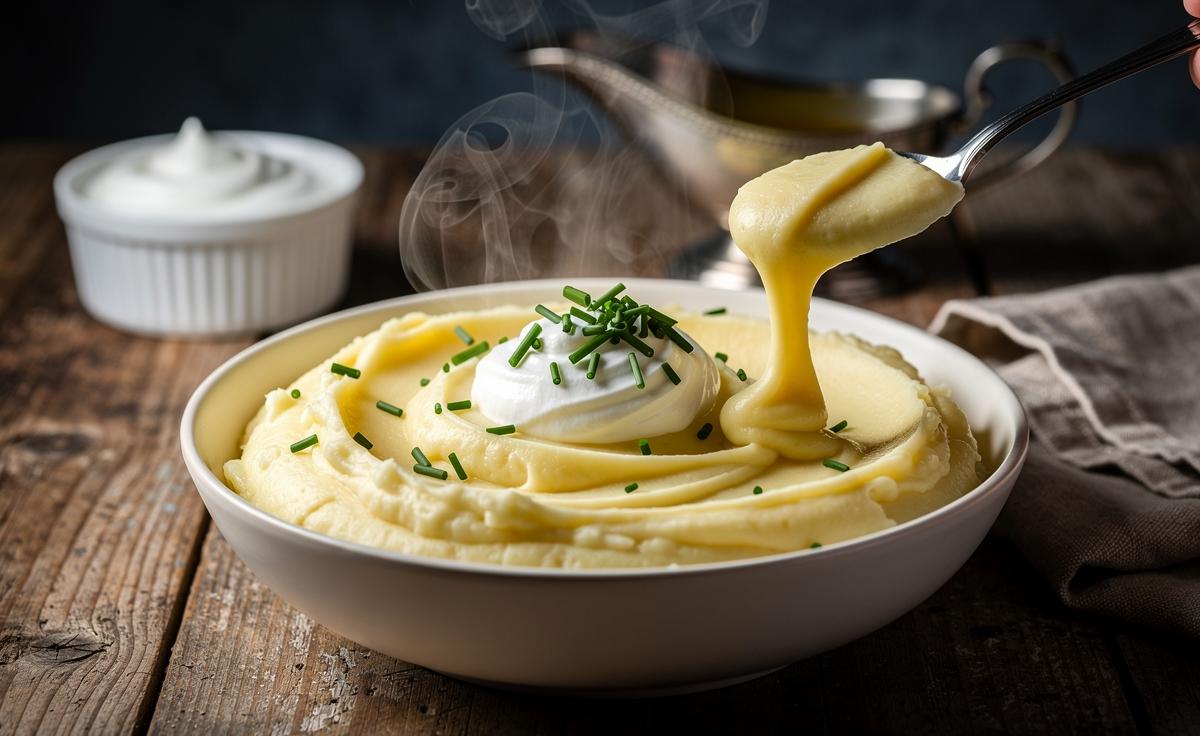
Fold in softened butter first. Fat coats starch, blocking overhydration and laying the groundwork for a stable emulsion. Now the transformative moment. Add a generous dollop of warm sour cream and gently fold. You’ll see the mash relax and shine. Add sour cream last and watch the mash settle into smoothness almost instantly. Adjust with hot milk or stock by the tablespoon; aim for ribbons that hold shape, not a pour. Season with salt and white pepper. For service, keep the mash in a covered bowl over a barely simmering water bath. Finish with a final spoon of sour cream for a glossy top and a whisper of tang.
Quick Fixes, Variations, and Common Mistakes
Gluey mash? Don’t panic. Fold in extra sour cream and a little butter to re-lubricate and dilute the starch network; work gently and stop as soon as it loosens. Stiff mash? Add hot milk, a spoon at a time. Watery mash from overboiling? Return to a low pan and stir over gentle heat to evaporate, then finish with sour cream to restore body. Lumpy? Push through a sieve or ricer while warm. Never blitz potatoes in a food processor; blades shred cells and unleash boundless starch, turning silk to paste. Salt shy? Add a pinch of fine salt, then taste again after 30 seconds. It blooms.
Variations keep things lively. Brown butter adds nuttiness; chives or spring onions brighten with freshness; roasted garlic brings mellow sweetness. A teaspoon of horseradish with sour cream cuts through rich roasts. Swap part of the sour cream for crème fraîche if you want more tang and a firmer set. For dairy-free diners, unsweetened oat “crème” with a splash of olive oil offers a respectable stand-in—different, but satisfying. Whatever the twist, preserve the order: butter first, sour cream second, liquid last. That sequence is the difference between plush clouds and edible wallpaper paste.
Sour cream doesn’t just season mashed potatoes; it re-engineers them. The acidity refines structure, the fat lubricates, and the proteins lock water and butter together so each spoonful tastes polished. It works fast, it works reliably, and it makes leftovers better—a small miracle from a single tub. If you’re chasing the creamiest, lightest mash, the answer is simple: add the dollop, then stop before the starch fights back. Your roast, sausages, or pie will thank you. What will you fold into your next batch to make it unmistakably yours?
Did you like it?4.5/5 (29)