In a nutshell
- 🧈 Use the hot-cup method: warm a ceramic mug with hot water, dry it, and invert over butter to deliver gentle, even heat that softens in 1–3 minutes.
- 🔬 Science that matters: relaxing fat crystals near room temperature and leveraging a mug’s thermal mass preserves flavour and texture without melting.
- 🕒 Clear steps: slice butter, heat and dry the mug, cover, then test for a soft indent; stop before glossiness to keep it spreadable and baking-ready.
- ⚠️ Smart safety: choose ceramic or tempered glass, keep water off the butter, portion what you need, and avoid microwave hotspots that cause partial melting.
- 🔁 Handy alternatives: grating for pastry, dicing for faster softening, low-power microwaving in brief pulses, or a warmed metal bowl—pick by recipe and desired texture.
Everyone knows the frustration: you’ve planned toast, crumpets, or a quick batch of biscuits, only to find the butter is a fridge-hard slab. A knife skips. Crumbs fly. Breakfast mood sinks. There is, however, a kitchen trick so simple it feels like a cheat. Use a cup. More precisely, use hot water to warm a heavy mug, then trap that heat over the butter. The effect is quick, gentle, and reliable. In under two minutes, cold butter becomes spreadable without turning greasy. No microwave roulette. No messy grating. Just smart heat transfer and a result that tastes the way butter should.
Why Hot Water Works on Cold Butter
Butter is an emulsion of milk fat, water, and milk solids. When chilled, fat crystals lock tight, making the block stubbornly firm. Raise the temperature slightly and those crystals loosen, allowing the emulsion to flex and smear beautifully. The sweet spot is around “room soft,” roughly 18–21°C for a typical British kitchen. You don’t need to melt butter; you only need to relax it. The hot-cup approach excels because it delivers heat gently and evenly from all sides, avoiding the scorched edges and icy cores that plague rushed methods.
The science is simple: hot water charges the mug with thermal mass. When you invert it over the butter, residual warmth flows by conduction and a touch of trapped steam. It’s controlled, not violent. A warmed mug won’t rocket past butter’s softening point the way a microwave can. That restraint preserves flavour and texture, keeping the butter sweet rather than oily.
There’s a practical bonus. Cups and mugs are everywhere, often ceramic or thick glass, which hold heat well. No special kit. No fiddling. Just a dependable warm “tent” that turns 50 g of fridge-cold butter into a smooth, ready-to-spread pat fast.
Step-by-Step: The Cup Method for Faster Softening
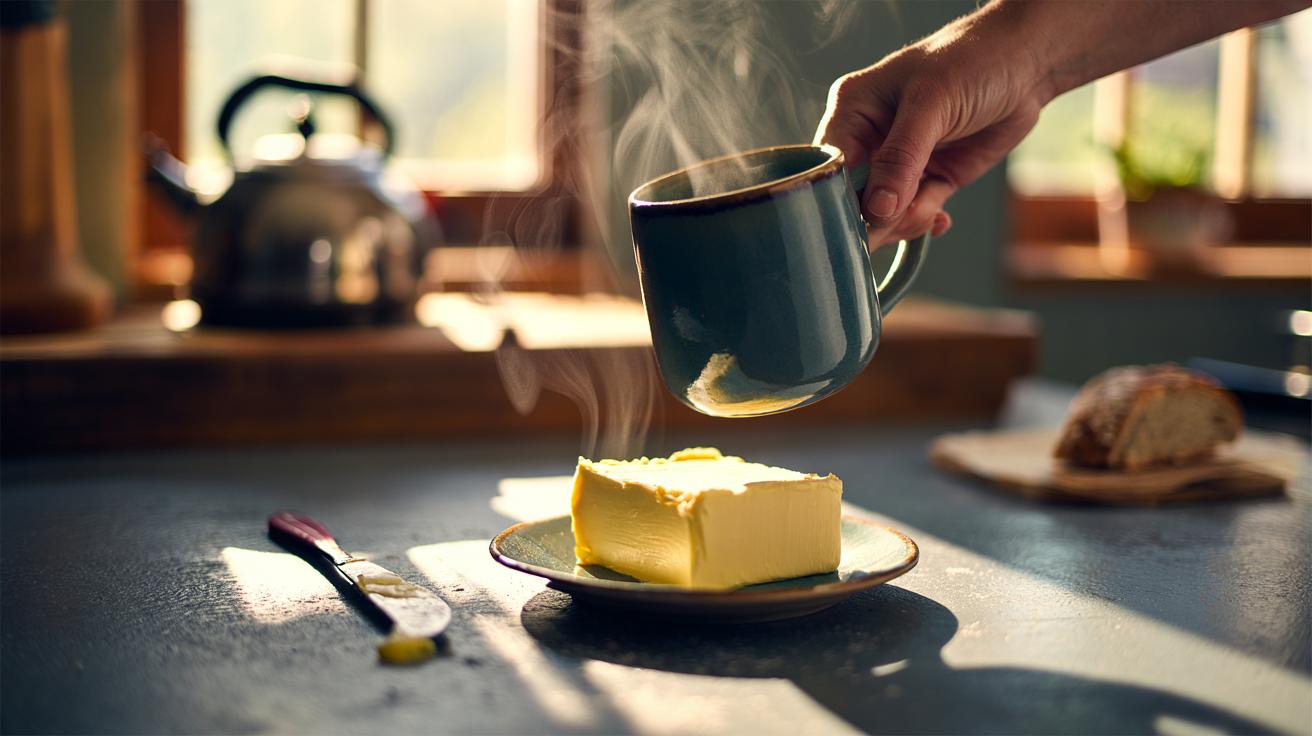
Start with a small slab of butter, 20–50 g for spreading, or 100–125 g if you’re baking. Slice it into 1–2 cm pieces to increase surface area. Set the butter on a plate or its wrapper. Now fill a ceramic mug or sturdy glass with kettle-hot water; leave it for 30–60 seconds so the vessel heats through. Pour the water away, quickly dry the inside so droplets don’t puddle the butter, then invert the hot cup over the butter. Trapped warmth begins softening immediately.
Timing depends on mass and starting temperature. A 30 g pat from the fridge typically softens in 60–90 seconds. A larger block, two to three minutes. If it’s come from the freezer, give it more time, or repeat the warm-up once. Test with a fingertip: you’re looking for a gentle indent, not collapse. For baking, the goal is pliable but cool, so sugar creams properly and holds air. For toast, go a shade softer. If the butter starts to look glossy or slump at the edges, stop—it’s soft enough. You can re-cover for 15 seconds if needed, but avoid overshooting into melt territory.
Safety, Timing, and Common Mistakes
Use a mug that can handle heat. Ceramic is ideal; thick glass is fine if it’s tempered. Don’t shock cold glass with boiling water. Pre-warm gently. Always dry the cup before covering, because splashes can spread water into the butter, which affects texture in pastry and leaves soppy toast. The key is gentle, enclosed warmth—not water on the butter. Keep the butter on a plate so it lifts cleanly; a wooden board can absorb heat unevenly.
Avoid common traps. Don’t cup an entire 250 g block and expect miracles; carve off what you need. Don’t leave it for five minutes while you answer emails; you’ll edge into partial melt, which separates quickly. If you’re baking, remember that unsalted butter softens marginally faster than salted due to moisture differences. Freezer-cold butter benefits from being cut thin or lightly smashed under parchment before the cup goes on. Most importantly, resist the microwave unless you can pulse at 10–20% power and rotate constantly. Patchy heat creates melted rims and a cold core, a nightmare for pastry and uneven spreads. With the cup method, your window of perfect softness is much easier to hit.
Alternatives and When to Use Them
There are days when the hot-cup trick isn’t practical, or you need a different texture. Grating butter on the coarse side of a box grater is brilliant for scones or rough puff—instant tiny shards that warm fast in the bowl. For toast, dicing into small cubes accelerates softening without tools. If you must use a microwave, go low and slow, rotating the butter every five seconds to dodge hot spots. Some bakers place butter under a warmed metal mixing bowl, which behaves like an oversized cup with excellent heat retention. Choose the method that suits your recipe, not just your clock. Here’s a quick comparison to steer you.
| Method | Typical Time | Best For | Main Risk |
|---|---|---|---|
| Hot Cup | 1–3 minutes | Spreading, creaming butter | Over-softening if left too long |
| Grating | 1–2 minutes | Scones, pastry flakes | Messy, warms quickly in hands |
| Dicing | 5–10 minutes | General baking prep | Slower in a cold kitchen |
| Microwave (Low Power) | 20–60 seconds | Emergency softening | Partial melting, uneven texture |
For consistently good flavour, keep butter wrapped, avoid strong-fridge smells, and work with small portions. If you’re making buttercream, aim for soft but cool—about the give of a ripe peach. For toast? Go softer. Match the method to your finish line, and your butter will behave.
The humble hot-cup trick respects butter as an ingredient, not just a spread. It’s quick, repeatable, and quietly elegant—an engineer’s answer to a culinary hiccup. You’ll taste the difference: better spread, fewer torn slices, and bakes that start right because the butter’s at the correct state. Keep a favourite mug near the kettle and you’ll never dread cold butter again. Small ritual, big result. Have you tried the hot-cup method yet—or do you swear by another speedy softening tactic that deserves a place on Britain’s breakfast tables?
Did you like it?4.5/5 (22)