In a nutshell
- 🔬 The science: baking soda raises surface pH, relaxes proteins, and reduces moisture loss, creating a gentle alkaline buffer that keeps meat tender.
- ⏱️ The method: use ~1 tsp per 450–500 g meat, rest for 10 minutes, then rinse or wipe and pat dry; salt after, and cook hot for superior browning.
- 🍗 Best cuts: lean, quick-cooking pieces like chicken breast, pork loin, and thin-sliced sirloin/rump; avoid mince and long-braise cuts; fish needs 5 minutes max.
- ⚠️ Pitfalls: too much soda or too long contact causes a soapy aftertaste; stick to short times and ensure thorough drying to boost crust and flavour.
- 🍽️ Flavour tips: season after tenderising; add acidity (lemon, vinegar) or umami (soy, sesame); the technique is cheap, fast, and reliable for weeknight cooking.
Weeknight steak turning out tough? Chicken breasts dry and stringy? There’s a shockingly effective fix hiding in the baking cupboard. A light coating of bicarbonate of soda—better known as baking soda—can tenderise meat in minutes, not hours. It works without elaborate marinades or exotic ingredients, delivering silkier bites and juicier centres with almost no effort. Home cooks from Hong Kong to Hackney swear by it. Used correctly, this 10-minute trick preserves flavour while transforming texture. Here’s the science, the simple method, and the practical ratios that take you from chewy to succulent faster than you can preheat the pan.
How Baking Soda Tenderises Meat Fast
At its heart, baking soda shifts the meat’s surface pH to the alkaline side. Proteins that would ordinarily contract and squeeze out juices when hit by heat stay more relaxed. That matters. Tight fibres push moisture away, causing toughness. Looser fibres help retain it. By nudging the environment alkaline, you slow the cascade of contraction that leads to dry meat. The effect concentrates on the outer few millimetres—precisely where pan heat bites hardest—so you get protection exactly where you need it.
Unlike long, salty brines, this isn’t about osmosis or deep diffusion. Think surface science. A brief contact with a diluted bicarbonate solution or light dusting creates a micro-buffer. The result: kinder heat, less squeeze, nicer chew. Importantly, the technique doesn’t mask taste. There’s no sugary glaze, no heavy aromatics. It’s a neutral intervention, not a flavour takeover. That makes it ideal for weeknight stir-fries, quick kebabs, or thin-cut schnitzels, where speed reigns and clarity of seasoning matters.
There’s a limit. Too much bicarbonate or too long a rest can leave a faint soapy note. Respect the clock and the ratios. The sweet spot is short—minutes, not hours—followed by a pat-dry to improve browning. Handle that and you’ll get tender, evenly coloured pieces that sear beautifully and stay juicy. No gadgets, no fuss, no pricey enzymes—just a teaspoon and common sense.
The 10-Minute Method, Step by Step
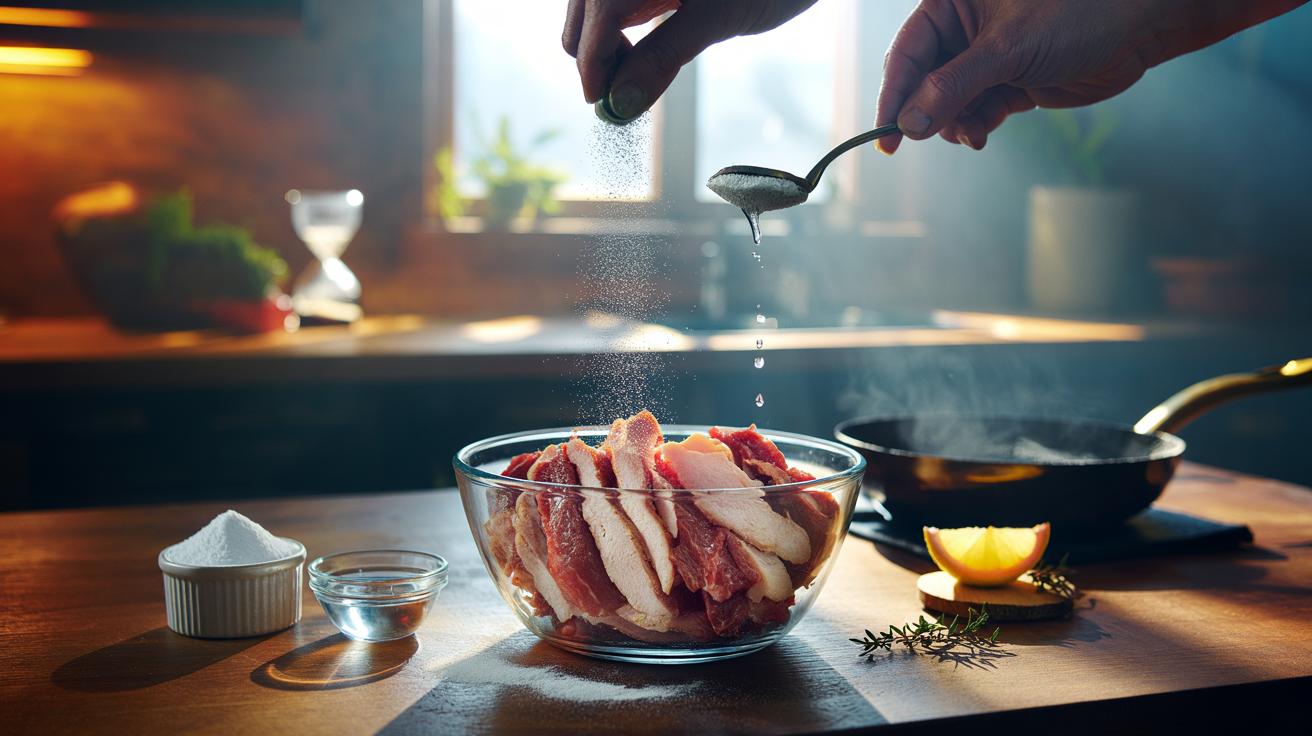
First, cut the meat into even pieces. Thin strips or bite-sized chunks give the quickest, most reliable results because the tenderising concentrates on the exterior. Measure roughly 1 teaspoon of bicarbonate of soda per 450–500 g meat if dusting directly, or dissolve the same amount in 60–80 ml water for a solution that coats more evenly. Toss to coat lightly. You’re not plastering; you’re giving every surface the slightest film.
Set a timer. Ten minutes is enough for small pieces. For slightly thicker strips (up to 2 cm), 12–15 minutes still stays safe. Avoid longer rests, especially with delicate meats like chicken breast. When time’s up, either rinse quickly under cold water and pat very dry, or simply wipe off the excess with damp kitchen paper. Both approaches work; rinsing is belt-and-braces if you’ve been generous with the soda. Drying is essential. Surface moisture fights browning.
Now season and cook hot. A pre-heated pan, a touch of oil, and room-temperature meat will do the rest. Salt after drying, not before the soda step. If stir-frying, add aromatics toward the end to keep them punchy. For skewers, brush with oil and finish with a squeeze of lemon or a glaze. The texture lift is immediate: bouncy, tender, and notably juicier. You’ll notice it most on lean cuts that usually punish the hurried cook.
Ratios, Timings, and Cuts That Benefit
Lean, quick-cooking cuts shine: chicken breast, turkey strips, pork loin, thin-cut rump or sirloin, and most stir-fry beef. Rich, slow cuts—beef shin, oxtail—don’t need this trick; they tenderise through long, moist cooking. Mince can turn pasty, so avoid it. For fish, use extreme caution: 5 minutes max on dense species like monkfish; most fillets are too delicate. Precision on ratios keeps flavour clean and texture natural. Use minimal soda, minimal time, maximum payoff.
| Cut | Bicarbonate per 500 g | Contact Time | Rinse? | Notes |
|---|---|---|---|---|
| Chicken breast strips | 1 tsp | 8–12 min | Optional | Great for stir-fries; pat very dry |
| Beef (sirloin/rump, thin-sliced) | 1 tsp | 10–15 min | Optional | Improves browning and bite |
| Pork loin slices | 3/4–1 tsp | 8–12 min | Yes if over-coated | Avoid over-salting before cooking |
| Lamb leg, thin-cut | 3/4 tsp | 8–10 min | Optional | Finish with herbs and acid |
For flavour, think balance. Because bicarbonate doesn’t season, add salt, pepper, and a bright note—lemon, vinegar, or yoghurt—after drying. A spoon of soy and a dab of sesame oil sing with beef; thyme and lemon flatter chicken. Do not exceed the timing to dodge alkaline aftertaste. If in doubt, use the water-dilution route for gentler, more even coverage. The result? Tender bites and confident searing, all in a coffee-break window.
Used sparingly and with a timer, bicarbonate of soda turns tricky lean cuts into weeknight winners. It’s cheap, fast, and reliable, lifting texture without drowning dinner in sugar or salt. The technique plays nicely with almost any cuisine, from pepper steak to lemony kebabs. Think of it as a protective jacket for the surface of your meat—one you remove before browning so flavour stays sharp and the crust stays crisp. Which cut will you transform first, and what seasoning twist will you pair with your newly tender bites?
Did you like it?4.5/5 (29)