In a nutshell
- 🔬 The science: tannins bind to muscle proteins, gently loosening structure and improving moisture retention; mild acidity assists, making 10 minutes the sweet spot for surface tenderizing without mush.
- 🥄 Method in brief: brew 2–3 tea bags in 500 ml, steep 3–4 minutes, add salt and a little sugar to make a tea brine, cool to 50–60°C, soak meat for 8–12 (thin) or 10–15 minutes (thicker), then pat dry and sear hot.
- 🍵 Choose your tea: black for beef/lamb, oolong for pork/duck, green for chicken and delicate cuts; smoky lapsang adds intensity, while rooibos offers aroma with low tannins—match intensity to the cut.
- ⚠️ Avoid pitfalls: bitterness comes from over-extraction; use a lighter brew, keep the bath warm not boiling, cap time at 15 minutes, manage salt, and dry thoroughly to prevent grey, tight surfaces.
- 🧼 Safety and scope: discard the tea brine (no reuse), treat tea as a primer not a cure—collagen-heavy cuts still need low-and-slow cooking—yet it’s a fast, low-cost way to boost tenderness and browning.
Could a humble tea bag rescue a tough steak? Chefs from Hong Kong cha chaan tengs to British home cooks have quietly used brewed tea to coax tenderness from inexpensive cuts. The trick sits in your mug: tannins, the polyphenols that make tea taste brisk and slightly astringent. In measured doses and short contact, they nudge muscle proteins apart, loosen tight textures, and prime meat for a better sear. It’s fast. It’s thrifty. And it’s surprisingly consistent. In around 10 minutes, a warm tea dip can soften bite without turning meat mushy. Here is how the science, the method, and the flavor choices work together.
The Science: Tannins, Proteins, and Quick Tenderizing
Tea’s tannins bind to proteins. In a cup, that creates a familiar dryness. On meat, brief exposure encourages partial unwinding of myofibrillar proteins and helps moisture retention during cooking. Think of it as a gentle pre-treatment rather than a full-blown marinade. Heat and salt amplify the effect by easing water into the muscle. The secret is controlled contact: short time, moderate strength, warm—not scalding—liquid.
Unlike enzymatic tenderizers (papaya or pineapple), tannins don’t digest protein. They form reversible complexes that slightly reorganize the surface matrix. The result is a softer chew and a cleaner sear because proteins set more evenly under heat. Tea’s mild acidity (pH roughly 5–6) adds a secondary nudge. It loosens connective interfaces without collapsing texture. That’s why 10 minutes is a sweet spot for many cuts: enough to alter the surface, not long enough to darken flavor or tighten it back up.
There are limits. Strong, over-steeped tea can push astringency too far, making the surface taste harsh. Some lean cuts need less time; collagen-rich cuts may benefit but still rely on low-and-slow cooking to break down collagen. Use tea as a primer, not a miracle cure, and it will shine.
Step-by-Step: Tea Bag Tenderizing in 10 Minutes
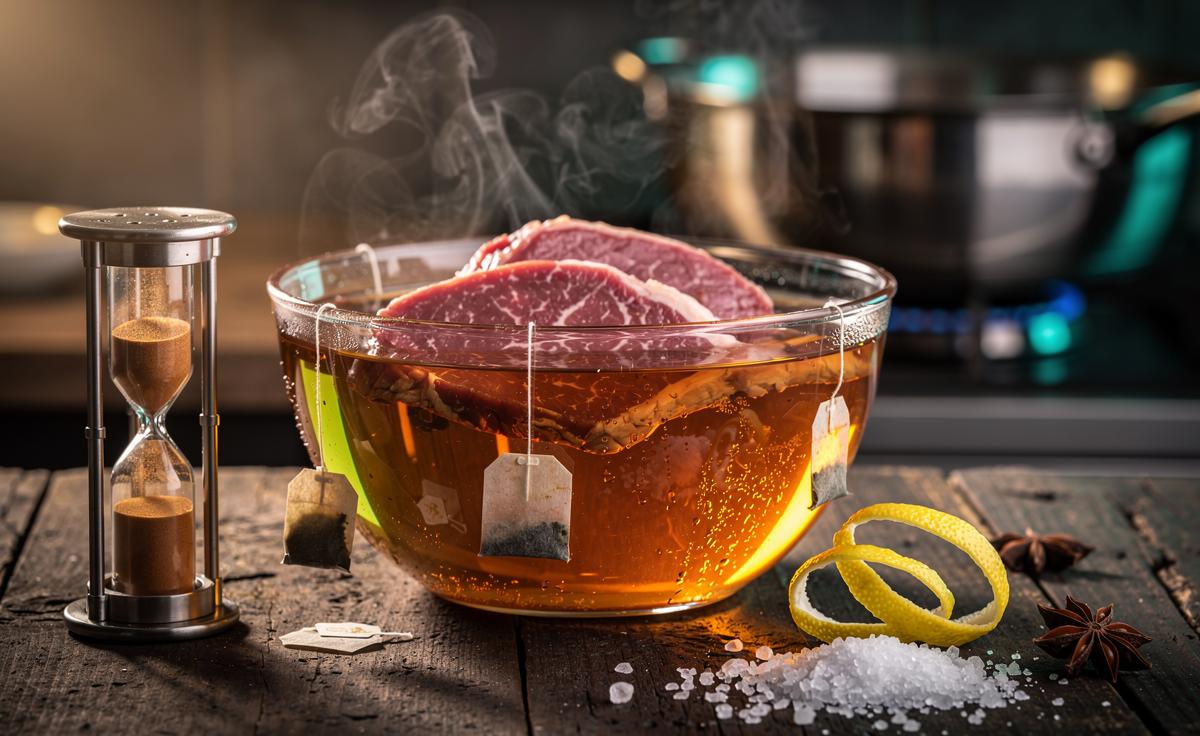
Start with 2–3 black tea bags (Assam or English Breakfast) in 500 ml freshly boiled water. Steep 3–4 minutes, remove bags, and add 1 tablespoon salt plus 1–2 teaspoons sugar to create a light tea brine. Cool to warm—about 50–60°C. You want it hot to the touch, not scalding. Temperature matters: too hot can “cook” the surface; too cool reduces the effect.
Submerge thin steaks, pork chops, boneless chicken thighs, or lamb leg slices. Time it: 8–12 minutes for thin cuts, 10–15 minutes for thicker pieces up to 3 cm. Swirl once or twice to keep contact even. Lift the meat, pat very dry, and season lightly—remember the brine added salt. Sear hard in a preheated pan or over high grill heat to lock juices and build crust. Rest briefly, then slice.
Food safety counts. Use clean vessels. Discard the tea brine after use. Never reuse a raw-meat tea bath, and don’t chill it for later—bin it. If you want aromatics, add cracked pepper, citrus peel, or a star anise during steeping, then strain before bathing the meat. Keep sugar modest; it helps browning but burns if heavy.
Choosing the Right Tea and Pairings
Tea variety shapes both tenderness and taste. Black teas deliver higher tannins and robust flavor—great for beef or lamb. Oolong sits in the middle, rounding pork without bitterness. Green tea is lighter; it lifts chicken or delicate pork fillet without darkening the surface. Herbal infusions like chamomile contain few tannins; they offer aroma but little tenderizing power. Match intensity to the cut: stronger tea for bolder meats, gentler tea for lean, mild proteins.
| Tea Type | Approx. Tannin Level | Flavor Note | Best For | Steep Time |
|---|---|---|---|---|
| Black (Assam, Ceylon) | High | Malty, brisk | Beef, lamb | 3–4 min |
| Oolong | Medium | Floral, toasty | Pork, duck | 3–5 min |
| Green (Sencha, Jasmine) | Lower | Grassy, fresh | Chicken, pork fillet | 2–3 min |
| Lapsang Souchong | High | Smoky | Beef skirt, venison | 2–3 min |
| Rooibos | Low | Honeyed, soft | Chicken (aroma only) | 4–5 min |
For seasoning, think synergy: soy and black tea echo savoury depth; lemon zest brightens green tea; five-spice flatters oolong. A little sugar rounds edges and builds crust without turning the brew into syrup.
Common Pitfalls and How to Fix Them
Bitterness usually means over-extraction. If the tea tastes harsh in the mug, it will taste harsher on meat. Fix it by cutting steep time, diluting 1:1 with warm water, or switching to oolong. When in doubt, brew lighter and extend the bath to the 10–12 minute mark rather than steeping the tea darker.
Grey, tight surfaces suggest too-hot liquid or too long a soak. Keep the bath warm, not boiling, and cap contact at 15 minutes. Drying matters too: waterlogged meat won’t brown. Pat dry aggressively and oil the pan, not the meat. If salt balance tips high, shorten the bath or halve the salt; you can always finish with flaky salt at the table.
Flavour clashes happen. A smoky lapsang can overwhelm chicken. Choose tea as you’d choose wine: weight meets weight. For collagen-heavy cuts (shin, brisket), tea helps the surface but can’t replace time. Sear, then braise low and slow; use brewed tea in the braising liquid for a double effect. Tea is a tool, not a crutch—use it to complement technique, not to sidestep it.
Tea isn’t just a beverage; it’s a smart cook’s shortcut. In ten unrushed minutes, a warm, well-brewed bath of tannins and salt sets meat up for juicier bites and better browning, with flavours that play beautifully with pantry staples. It’s inexpensive, repeatable, and easy to tweak for different cuts. Short contact, right temperature, and thoughtful tea choice are the pillars. The next time a bargain cut lands in your basket, will you reach for a tea bag and see how far a simple brew can take your dinner?
Did you like it?4.6/5 (30)