In a nutshell
- 🥛 The science: lactic acid, casein, fat, and calcium loosen tight starch and protein networks, accelerating hydration and yielding velvety textures in about 15 minutes.
- ⏱️ Fast-softening staples: oats, stale bread, desiccated coconut, and raisins plump quickly; couscous, instant polenta, ground nuts, and even canned fish benefit with buttermilk, kefir, or warm whole milk.
- 🧪 Method that works: use a 3:1 milk-to-ingredient ratio for small flakes and a 2:1 ratio for crumbs/nuts; warm to 45–60°C, soak 10–15 minutes, then drain or squeeze for precise texture.
- 🛡️ Smart cautions: calcium can firm bean skins, so avoid dry pulses; prioritise food safety by chilling cold soaks and discarding milk used with raw fish or meat.
- 🍽️ Extra payoffs: milk adds flavour, gentle sweetness, and protein for better binding; lactose-free milk and some cultured plant options work, though results vary with non-dairy proteins.
Open your cupboard and you’ll find stubborn textures everywhere: tough breadcrumbs, brittle desiccated coconut, raisins that chew like rubber. Reach for milk. In minutes, those pantry staples turn pliant, plush, usable. The secret is lactic acid—naturally present in cultured dairy and slowly developing in fresh milk—plus the unique chemistry of casein, fat, and calcium. Together they hydrate, denature, and lubricate. The result is food that yields sooner and cooks more evenly. In just 15 minutes, acidity and hydration can reshape structure without mush. It’s gentle science, not kitchen folklore, and it unlocks texture with remarkable consistency when you combine the right staple with the right milk.
The Science: How Lactic Acid Works in Milk
Milk isn’t just liquid. It’s a suspension of casein micelles, milk fat globules, minerals such as calcium and phosphorus, and a slightly acidic water phase. Fresh milk sits close to neutral pH (~6.6), while cultured dairy—buttermilk, kefir, yogurt—drops toward pH 4.5–4.7. That shift matters. Lower pH gently denatures proteins at the surface of grains, flours, nuts, and crumbs, loosening tight networks and letting water in. At the same time, dissolved lactose and milk salts drive osmotic flow, pulling moisture where it’s needed.
Starch is the other player. Lactic acid speeds hydration by weakening hydrogen bonds that keep starch granules tight, while a mild rise in temperature accelerates swelling. Casein and fat then act like tiny shock absorbers, coating particles and reducing friction so softened foods feel velvety rather than soggy. Use cultured dairy or gently warmed milk to reach the 15‑minute sweet spot. One caveat: calcium can cross-link pectin, firming skins in some pulses. That’s why milk excels with cereal- and protein-based staples, less so with unsoaked dried beans.
Pantry Staples That Soften Fast in Milk
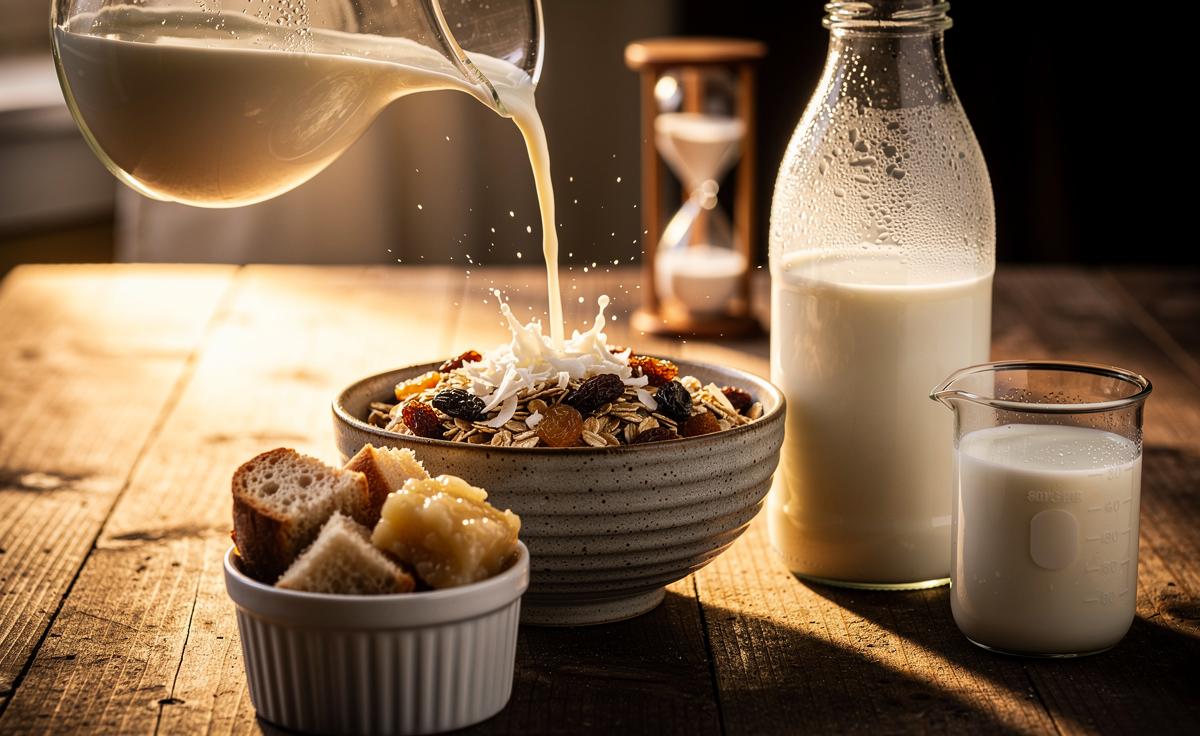
Rolled oats turn from papery to plush quickly. Stir them into warm whole milk or kefir and they plump within a quarter-hour, giving you spoonable oats long before “overnight.” Stale bread is another winner. Crusts soften as acid loosens gluten bonds while fat slicks the crumb, ideal for meatballs, dumplings, or a speedy bread pudding. Desiccated coconut regains chew in minutes; milk’s fat restores juiciness that water alone can’t. Even raisins and sultanas benefit: they draw in lactose-rich moisture and lose that jaw-testing resistance.
Pinhead couscous and instant polenta respond beautifully, too. The milk soak softens edges and tempers bitterness, leaving grains that steam or simmer more evenly after draining. Ground almonds or hazelnuts loosen and become spreadable, perfect for praline bases or frangipane. Canned fish with a strong aroma—mackerel, sardines—can rest briefly in milk to mellow intensity before frying. Avoid acidic milk with dry beans if you want speed; the skins may toughen before the interior hydrates. Choose staples built on starch or denature-prone proteins and you’ll hit that 15-minute mark consistently.
Quick Method: The 15-Minute Milk Soak, Step by Step
Pick your dairy. For maximum softening, reach for buttermilk, kefir, or thin yogurt; their lactic acid concentration is higher. Whole milk also works, especially warmed. Measure a 3:1 milk-to-ingredient ratio for small, thirsty items like oats or coconut; use 2:1 for breadcrumbs and nuts. Warm to 45–60°C if safe for your ingredient—hotter than bath-warm, not simmering—to accelerate hydration without cooking. Salt is optional; a pinch helps seasoning and can subtly tighten proteins on the surface, adding resilience. Sugar rounds harsh edges for fruit.
Submerge fully, stir once, then wait. Ten minutes for flakes and fine crumbs; 15 minutes for dried fruit or coconut; up to 20 for chunkier bread cubes. Drain or squeeze as needed and use immediately. For delicate aromas, a quick rinse post-soak is allowed, though you’ll lose some dairy richness. Keep food safety in view: refrigerate soaks under 4°C when not warming, and discard milk that’s been in contact with raw meat or fish.
| Ingredient | Best Dairy | Time | Texture Result | Tip |
|---|---|---|---|---|
| Rolled oats | Warm whole milk | 10–15 min | Creamy, spoonable | Add pinch of salt early |
| Stale bread | Buttermilk | 12–15 min | Tender, cohesive | Squeeze before mixing |
| Desiccated coconut | Whole milk | 15 min | Juicy, supple | Warm for faster plumping |
| Raisins | Kefir | 15 min | Plump, less chewy | Rinse lightly if desired |
| Instant polenta | Whole milk | 10–12 min | Evenly hydrated | Finish on the hob |
Flavor And Nutrition Payoffs
Softening is only half the story. Milk brings flavor. Lactose adds gentle sweetness that rounds corners on tannic nuts and fibrous grains. Milk fat carries aromatic compounds deeper into food, so spices bloom and vanilla sings. Textural success arrives with a bonus of richness most plain water can’t match. Protein in milk also stabilizes air and moisture, so soaked breadcrumbs bind better and fry crisper. For fruit, a dairy bath reduces astringency, lending a pastry-shop gloss to humble sultanas.
Nutritionally, you add high-value protein, calcium, and B vitamins to staples that might otherwise be carb-heavy. If you’re lactose-intolerant, lactose-free milk still works; its enzyme treatment doesn’t remove protein or fat, and slight sweetness can even improve browning later. Prefer non-dairy? Use cultured alternatives with real lactic acid bacteria—some oat and soy kefirs qualify—though outcomes vary because their proteins differ from casein. Season thoughtfully, taste often, and remember the principle: gentle acidity plus thorough hydration equals fast, controllable softness.
With a carton of milk and 15 spare minutes, yesterday’s dry goods become today’s pliable building blocks, primed for cooking that feels effortless. The chemistry is simple: lactic acid relaxes structures, water fills the gaps, and fat makes the landing soft. From oats to coconut, from breadcrumb panades to plumped fruit, your pantry is full of textures waiting to change. Ready to try it tonight—what will you soften first, and how will that new texture rewrite a favorite recipe?
Did you like it?4.4/5 (24)