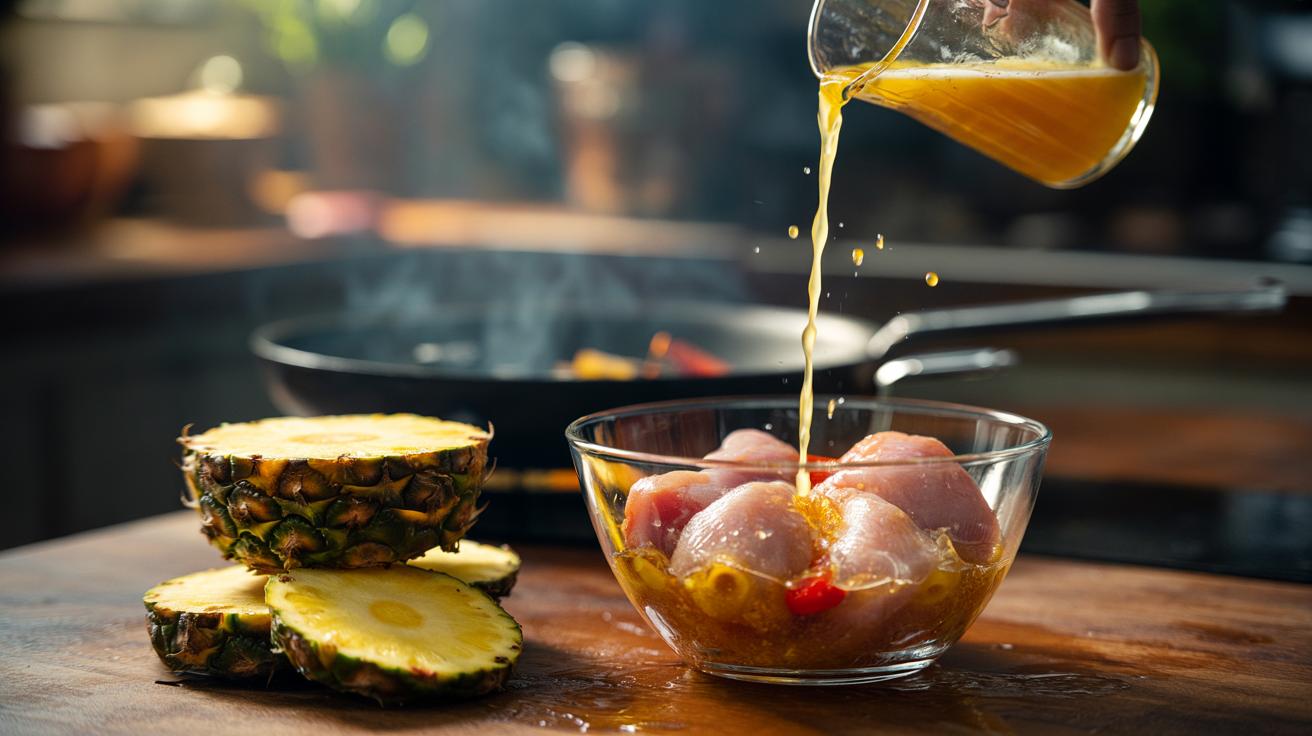
In a nutshell
- 🍍 Pineapple juice’s enzyme bromelain rapidly tenderises proteins, boosting flavour absorption in minutes rather than hours.
- ⏱️ Technique matters: dilute juice, watch texture, and keep marinating windows short; think minutes, not marathons, then pat dry for better browning.
- 🥫 Fresh vs canned: fresh is fastest but riskier; canned (pasteurised) is gentler and offers a wider timing margin for control.
- 🧪 Practical guidance: a quick-reference table gives starting times for fish, prawns, chicken, pork, and tofu, with ratios for reliable, repeatable results.
- 🛡️ Safety and pairing tips: boil used marinades before glazing, avoid dairy curdling, and pair with ginger, soy, allspice, or chilli for global flavour profiles.
Pineapple juice isn’t just sunny sweetness; it’s a precision tool. In minutes, this tropical liquid transforms chewy cuts into succulent bites, infusing zingy depth while quietly tenderising. The secret is bromelain, a natural protease that slices through tough protein strands, unlocking flavour pockets that would take hours with traditional marinades. It’s fast. It’s forgiving when handled well. And it’s surprisingly versatile, from weeknight chicken skewers to plant-based centrepieces. Used correctly, pineapple juice can deliver a full-flavoured, tender result in the time it takes to set the table. Here’s how to control the chemistry, protect texture, and coax bright, balanced flavour into your next marinade—without turning dinner to mush.
Why Pineapple Works: The Science of Bromelain
The power of pineapple lies in bromelain, a heat-sensitive enzyme abundant in fresh juice and the fruit’s core. This enzyme targets collagen and myofibrillar proteins, clipping long chains into shorter fragments. The result is rapid tenderisation and better permeability: flavours from soy, garlic, chilli, or herbs move into the meat or tofu more easily. Unlike acid-only marinades, which can tighten proteins and toughen the surface, bromelain quietly unties the knots. That’s why pineapple marinades feel different on the tooth—juicy rather than mealy when timed right. Fresh, unpasteurised juice works fastest; canned juice, often pasteurised, has less active enzyme and tenderises more slowly.
Temperature and time matter. Bromelain remains effective in the fridge, but works quickest a few degrees cooler than room temperature, which is why brief bench-time followed by chilling can be strategic. Keep an eye on pH, too. Pineapple’s natural acidity brightens flavour and assists the enzyme, while salt helps season deeply. Oil isn’t necessary for the tenderising step but carries fat-soluble aromas and promotes even searing. Control is the watchword: small pieces, shorter times; large pieces, slightly longer—but never hours with fresh juice. Think minutes, not marathons.
Quick Flavour, Not Mush: Timing and Technique
The fastest route to great texture is dilution and restraint. Mix fresh pineapple juice with neutral oil and an umami base—light soy, fish sauce, or miso—then add aromatics. For delicate proteins like prawns or white fish, use a higher dilution and the shortest window. For chicken thighs, pork shoulder, or tofu, extend carefully. As a rule: stop the moment the surface turns satin-soft to the touch. Pat dry before cooking to encourage browning, and save leftover marinade for glazing only after a rolling boil. Grain direction matters: scoring thick cuts increases surface contact but shortens the safe time dramatically. Skewers marinate faster than fillets. Bite-size pieces, faster still.
Below are starting points; adjust for thickness and freshness. Use canned juice if you need a longer window with less risk. Never rely on time alone—texture is your guide.
| Protein | Juice Ratio (Juice:Other) | Time (Fresh Juice) | Time (Canned) | Notes |
|---|---|---|---|---|
| White fish fillets | 1:3 | 5–10 min | 10–15 min | Rinse lightly, pat very dry |
| Prawns | 1:2 | 6–8 min | 10–12 min | Avoid over-marinating; turns soft fast |
| Chicken breast | 1:1 | 10–20 min | 20–30 min | Do not exceed 30 minutes with fresh juice |
| Chicken thighs | 1:1 | 15–30 min | 30–45 min | Score lightly for even uptake |
| Pork shoulder (thin slices) | 1:1 | 15–25 min | 30–40 min | Ideal for grills and stir-fries |
| Firm tofu | 1:1 | 15–30 min | 30–45 min | Press tofu first for best results |
Pairings, Safety, and Practical Tips
Pineapple plays well across cuisines. For Caribbean notes, marry juice with allspice, thyme, Scotch bonnet, and dark rum (a splash). For East Asian brightness, pair with ginger, garlic, light soy, sesame oil, and spring onion. To go Middle Eastern, fold in sumac, coriander seed, and a touch of tahini—use canned juice here to slow the enzyme and protect dairy-like elements. Bromelain can curdle milk and yoghurt; pick coconut milk or separate the dairy as a finishing sauce. Vegetables? Mushrooms, aubergine, and jackfruit adore it. Potatoes and brassicas, less so—aim for post-roast glazing instead of raw marination.
Handle safely. Marinate in the fridge in a shallow dish or zip-top bag, removing air for even contact. Discard used marinade or boil it hard for at least 3 minutes before basting. Keep raw and cooked tools separate. Those with latex–fruit syndrome may react to pineapple; test cautiously. Seeking alternatives? Kiwi and papaya contain actinidin and papain—potent, faster, and even riskier for texture. Use them in smaller amounts or blend with pineapple to moderate aggression. For a quick weeknight glaze, reduce pineapple juice with soy, brown sugar, and chilli to a syrup; brush in the final minutes of cooking for lacquered edges and concentrated, tangy sweetness.
Pineapple juice turns waiting into minutes and transforms flavour from surface-level to saturated. The trick is discipline: measure, time, taste, and stop before softness becomes slump. Keep fresh juice for speed, canned for control, and always balance enzyme bite with salt, sweetness, and smoke from the pan or grill. A little goes a long way. Once you’ve felt that perfect tender snap under the fork, it’s hard to go back to overnight marinades. What will you try first: a citrusy prawn flash-marinade, lacquered pork slices, or a smoky tofu skewer with ginger and sesame?
Did you like it?4.5/5 (20)