In a nutshell
- 🧁 Gelatine forms a microscopic net that anchors air bubbles, keeping whipped cream lofty; use double cream for best stability without rubbery texture.
- 🧪 Follow the method: bloom, melt, temper, then whip; dose at 0.4% (about 1 g per 250 ml), adding to soft peaks and finishing at medium peaks for clean piping.
- 📏 Prioritise precision: add gelatine at 30–35°C, never boil, and account for sugars/acids; leaf equivalents (Gold) match powdered amounts for consistent results.
- 🌱 Vegetarian swaps: iota carrageenan (0.15–0.25%) mimics gelatine’s supple set; use agar sparingly to avoid brittleness, and note xanthan thickens but won’t stabilise foam as well.
- 🛠️ Troubleshoot quickly: temper to prevent strings, reduce dose to fix graininess, and chill for transport; expect 24–48 hours of neat, glossy, stabilised whipped cream.
Glossy swirls that stand tall on trifles and cupcakes are a pastry chef’s quiet flex. Yet British kitchens know the struggle: whipped cream collapses just when guests arrive or photos are due. The fix is small and clever. A whisper of gelatine lends structure without stealing the cream’s freshness, mouthfeel, or dairy sweetness. Think of it as a discreet scaffold that stops foam from slumping under its own weight. Used right, it’s invisible on the palate, visible on the plate. Add a sprinkle, gain hours of stability. Here is how to stabilise whipped cream so it survives warm rooms, lengthy services, and the commute to a celebration.
Why Gelatine Keeps Whipped Cream Lofty
Whipped cream is a fragile network of fat-stabilised air bubbles suspended in liquid. Time, warmth, and vibration shake that network apart. Gelatine, a gentle gelling protein, forms a microscopic net in the watery phase of cream, anchoring bubbles and slowing drainage. It does not turn the cream into jelly if you dose modestly. Instead, it limits coalescence and keeps peaks defined. The result? Cleaner piping, neater slices, fewer tears from soggy pavlova.
Technically, gelatine’s helical chains hydrate when bloomed in cold water, then re-link as they cool, creating a soft, flexible matrix. Because this matrix sits around milk fat globules and air cells, it resists weeping and temperature swings better than sugar alone. A little gelatine changes the timeline, not the flavour. Use double cream for best results; the fat content (around 48%) already stabilises foam, and gelatine simply completes the job. With whipping cream at 35%, the benefit is even more obvious, extending hold without making the texture bouncy.
The Method: Step-by-Step Stabilising With Gelatine
First, bloom. Sprinkle powdered gelatine over cold water and let it hydrate for five minutes. Typical working ratio for stabilising, not setting, is about 0.4% gelatine to cream by weight: 1 gram for 250 millilitres. That’s roughly one third of a teaspoon. Do not guess generously; more is not better. Too much gelatine makes cream rubbery and masks its delicate flow.
Second, melt. Warm the bloomed gelatine gently until liquid and clear. A brief nudge in a microwave or a small pan over low heat is enough. Never boil. Then temper: stir in a spoonful or two of cold cream or vanilla to cool the gelatine to lukewarm. This simple step prevents shock-setting and avoids stringy threads.
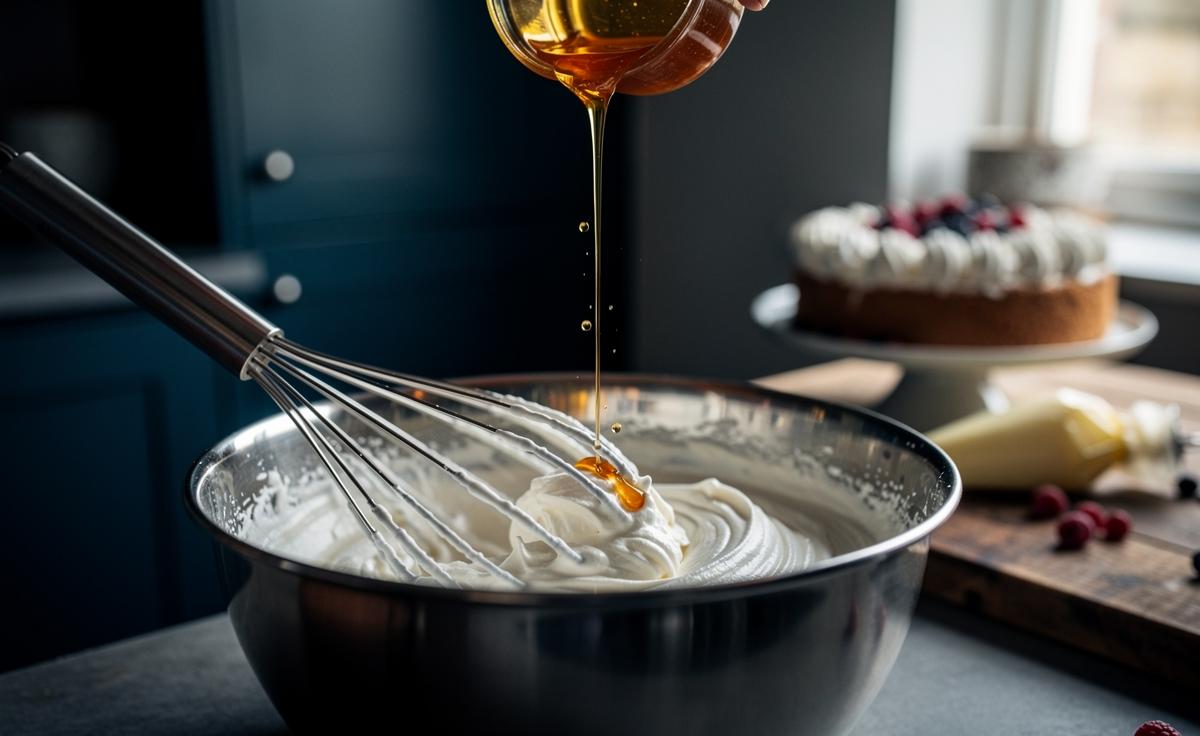
Third, whip. Beat very cold double cream with sugar to soft peaks. With the mixer running low, stream in the tempered gelatine. Increase speed and stop at medium peaks for piping, soft-medium for spreading. The cream will firm slightly as it rests in the fridge, tightening to a smooth, sliceable finish. If flavouring with citrus or alcohol, add these before gelatine so its final concentration matches the liquid you’re actually stabilising.
Ratios, Temperatures, and Substitutions
Precision beats bravado. Keep gelatine warm but not hot, and match dose to volume. Sugar sweetens but also stabilises a touch; acidic additions slightly weaken gelatine’s hold, so avoid over-acidifying. Aim to add gelatine between 30 and 35 degrees Celsius, with the cream cold to the touch. Temperature discipline prevents lumps and preserves silkiness. Below is a simple guide for common batch sizes and equivalents.
| Cream Volume | Powdered Gelatine | Leaf Gelatine (Gold, ~200 Bloom) | Bloom Water |
|---|---|---|---|
| 250 ml | 1 g (about 1/3 tsp) | 1/2 leaf (about 1 g) | 15 ml (1 tbsp) |
| 500 ml | 2 g (about 2/3 tsp) | 1 leaf (about 2 g) | 20–30 ml |
| 1 litre | 4 g (about 1 1/3 tsp) | 2 leaves (about 4 g) | 40–60 ml |
Vegetarian options? Iota carrageenan plays nicely with dairy proteins and offers a supple set at 0.15–0.25%, though it needs careful dispersion and heat to hydrate. Agar gives a brittle gel and can make whipped cream grainy as it cools; use sparingly if you must. A tiny pinch of xanthan gum (0.1%) thickens but lacks the airy stability of gelatine. If you want the closest analogue for piping or layered desserts, iota carrageenan is the safer bet.
Troubleshooting and Creative Uses
Found strings in the bowl? The gelatine was too cool when added or hit very cold cream without tempering. Gently fold in a splash of warm cream to re-emulsify, then whisk briefly. Graininess signals over-gelatinisation or overheating; next time, drop the dose to 0.3–0.35% and keep the melt below a simmer. If the cream weeps after chilling, the peaks were too soft before refrigeration; whisk a touch longer next round. Stop at medium peaks; the fridge finishes the set for you.
Once mastered, the range widens. Pipe sturdy rosettes onto pavlova that shrug off humidity. Layer Victoria sponge with berries and stabilised whipped cream that slices cleanly. Fold in espresso for tiramisu, cocoa for mousse-like swirls, or a nip of rum for festive bakes, secure in the knowledge the structure will hold. For transport, chill the bowl for 10 minutes before boxing. For service, keep below 8 degrees Celsius, and you’ll get 24–48 hours of handsome, glossy peaks with no compromise on flavour or lightness.
Stabilising with a pinch of gelatine keeps cream honest: pure dairy flavour, elegant lines, reliable performance under heat and lights. The technique is small, the payoff outsized. It rescues bakers from last-minute re-whips, and it gives home cooks confidence to finish desserts early without fear. Your pavlova dome, your trifle crown, your birthday piping all deserve that quiet insurance. Will you try the 0.4% rule on your next batch, or is there another stabiliser you trust to give whipped cream staying power without stealing its soul?
Did you like it?4.5/5 (25)