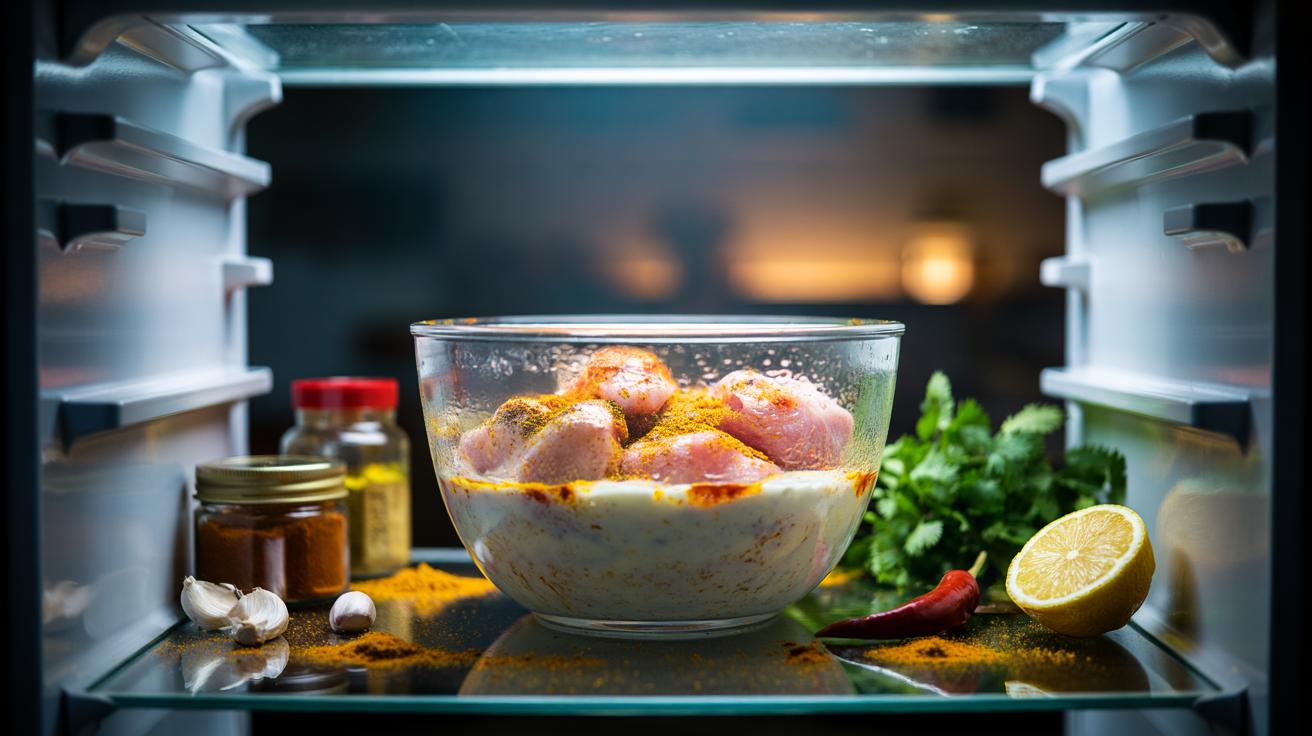
In a nutshell
- 🧪 Yogurt’s gentle lactic acid and calcium‑activated enzymes relax muscle proteins without mush, delivering supple, juicy texture overnight.
- 🧂 Build a smarter marinade: whole‑milk yogurt, 1.0–1.2% salt, a touch of sugar, oil, garlic, and ginger for extra protease power.
- ⏱️ Timing matters: 6–12 hours (thighs ~12, breasts 6–10), always chilled at 0–5°C; wipe off excess for better browning.
- 🍗 Compared with sharp acids, yogurt (pH ~4–4.6) tenderises evenly, while lemon/vinegar can quickly turn surfaces mealy.
- ⚠️ Safety and cooking: marinate in the fridge, boil any leftover marinade before using as sauce, then cook hot for crisp, caramelised results.
In British home kitchens, a simple pot of plain yogurt can do what expensive gadgets and tricky techniques often can’t: it can turn chicken silky, juicy, and forgiving to cook. The secret isn’t just creaminess. It’s chemistry. An enzyme‑rich, mildly acidic, calcium‑laden marinade slips between muscle fibres and coaxes them to relax, producing a texture that feels almost basted from within. This is tenderising without the risk of a chalky, mushy exterior. Overnight, the transformation becomes striking. Fibres loosen. Moisture retention improves. Flavours bloom. Whether you’re skewering thighs for the grill or simmering a weekday curry, yogurt’s steady, measured power does the heavy lifting while you sleep.
The Science Behind Yogurt’s Tenderising Power
Yogurt’s magic starts with lactic acid, which typically sits around pH 4–4.6—gentle compared with lemon juice or vinegar. That mild acidity causes controlled protein denaturation, helping muscle fibres unwind just enough to feel supple once cooked. Unlike harsh acids that can seize and “cook” the meat’s surface, yogurt works slowly and evenly. It nudges rather than bullies. Equally important is calcium. Dairy’s calcium ions are known to activate the meat’s endogenous proteases (notably the calpains), the very enzymes that, post‑slaughter, help ageing beef become tender. In chicken, that activation translates into a perceptible softening without turning to mush.
There’s more. Live cultures in many yogurts provide enzymes of their own, and when your marinade includes staples like ginger (rich in the protease zingibain), the proteolytic effect compounds. Salt in the marinade draws water into the muscle via osmosis and aids protein solubility, boosting juiciness and binding. A little oil distributes fat‑soluble aromas and cushions high‑heat cooking. The result is a multifactor tenderiser that balances acidity, enzymatic action, and moisture management. That balance explains why yogurt marinades excel with lean cuts like breast as well as with flavourful but fibrous thighs.
Contrast this with sharper acids. Lemon or vinegar can etch the exterior quickly, leaving a mealy ring and an unbalanced sourness. Yogurt, by comparison, seasons and conditions the meat while calmly infusing aromatics. Think of it as controlled conditioning: a slower, smarter softening that protects texture, deepens flavour, and prepares the surface for handsome browning.
How to Build a Smarter Yogurt Marinade
Start with plain, unsweetened whole‑milk yogurt. Its fat supports flavour and protects proteins during cooking. Greek yogurt clings well, though you may want to loosen it with a spoon of water or whey for better coverage. For 1 kg chicken, try 250–300 g yogurt, 10–12 g fine salt (about 1.0–1.2%), 1–2 tsp sugar or honey, 1–2 tbsp oil, and your aromatics. Salt is non‑negotiable—it’s the engine of moisture retention. Sugar promotes browning; oil carries spices and helps the marinade spread.
Aromatics provide flavour and sometimes extra enzymatic help. Grated ginger (1–2 tbsp) contributes natural protease activity; crushed garlic layers savoury depth. Add spices that welcome fat—cumin, coriander, paprika, turmeric—or fresh herbs. A squeeze of lemon adds brightness, but keep it minimal; you want yogurt’s gentleness, not a sour blitz. For chilli heat, use Kashmiri chilli for colour without brutal fire. Balance is key: enough spice to sing, not so much acid that it shouts.
Texture tweaks matter. If you need a thinner marinade for even coating, whisk in a tablespoon of water per 100 g yogurt. For drumsticks or thighs with skin, score lightly to help penetration; for breast, avoid deep cuts that create dryness points. Bag the chicken with the marinade, press out air, and refrigerate. Ideally, rotate the bag once or twice during the rest to keep coverage even. Finally, remove excess marinade before cooking: a light veil aids browning; a heavy coat can steam.
Timing, Texture, and Safety: What to Expect Overnight
Time is flavour’s quiet ally. Two hours will help. Eight to 12 hours is the sweet spot for most pieces. Overnight, the enzyme‑rich mix has time to relax muscle proteins and season deeper. Thighs welcome the full 12; breasts often peak around 6–10 to avoid over‑softening the surface. Keep everything chilled at 0–5°C. Always marinate in the fridge, never on the counter. When you’re ready, pat the chicken dry, brush off clumps, and cook hot: grill, roast, or pan‑sear. You’ll notice quicker browning, fuller aroma, and juicier bites.
Safety is simple. Use a clean container, avoid reusing raw marinade unless you boil it, and keep raw and cooked utensils separate. If you crave a sauce from the marinade, simmer it briskly for several minutes to kill pathogens, then balance with fresh herbs and a squeeze of lemon. Expect texture changes to be most dramatic at the surface; salt and small molecules travel further, but thick marinades rarely penetrate deeply. The mouthfeel improvement, however, is unmistakable.
| Marinade | Typical pH | Ideal Time | Texture Risk | Best Use |
|---|---|---|---|---|
| Yogurt | ~4–4.6 | 6–12 h | Low mush risk | Breast, thighs, skewers |
| Buttermilk | ~4.5 | 2–12 h | Very low | Fried chicken brines |
| Lemon juice | ~2–3 | 30–120 min | Surface mealy if overdone | Quick marinades |
| Vinegar | ~2–3 | 30–90 min | High if prolonged | Sharp glazes |
Expect a subtle tang after an overnight rest and a noticeable upgrade in succulence. If you detect sourness creeping in, shorten the marinade next time or reduce added acids. The guiding principle remains steady: gentle acidity plus calcium, empowered by enzymes and salt, is what truly transforms the texture overnight.
Yogurt doesn’t just tenderise; it orchestrates. Gentle acid relaxes. Calcium activates helpful enzymes. Salt and aromatics weave flavour through every bite. Cooked hot, the chicken browns handsomely and stays juicy, delivering that elusive restaurant‑level tenderness at home with supermarket simplicity. For a weeknight curry, smoky tandoori‑style skewers, or crispy fried thighs, this enzyme‑rich marinade earns its place in your repertoire. What cut will you try first—and how will you personalise the mix to suit your kitchen’s signature style?
Did you like it?4.6/5 (28)