In a nutshell
- 🔬 Raises surface pH with baking soda to loosen muscle proteins, boost water retention, and improve browning—effective within about 15 minutes.
- ⏱️ Follow the 15-minute method: dilute or lightly sprinkle, coat, rest, rinse, and pat dry; salt after drying and cook over high heat for best sear.
- 📊 Practical ratios and timings for beef strips, chicken pieces, pork chops, and burgers guide predictable results, with dryness emphasised as non-negotiable.
- 🍳 Optimise flavour and safety: avoid overuse to prevent alkaline taste, keep meat chilled during the rest, and layer seasonings post-rinse for clean, balanced flavour.
- 🎯 Use on thin cuts and small pieces (stir-fry beef, chicken slices, pork slivers); avoid thick roasts, delicate fish, and already brined meats; great for make-ahead meal prep.
For cooks in a hurry, turning a chewy cut into something silkier can feel like alchemy. The trick, though, is chemistry. A rapid marinade with household baking soda lifts pH at the meat’s surface, loosening muscle proteins and unlocking tenderness in minutes, not hours. Home tests and chef folklore agree on the sweet spot: about 15 minutes. That’s enough to soften fibres without inviting soapy flavours or mealy textures. Whether you’re stir‑frying beef strips, coaxing juiciness from chicken breast, or saving a value pack of pork from the stew pot, this method delivers weeknight speed with weekend results. Here’s how and why it works—precisely and safely.
The Science Behind Baking Soda Tenderising
Meat is a tangle of muscle fibres bound by connective tissue. When you raise the surface pH with sodium bicarbonate, you alter how myofibrillar proteins—especially actin and myosin—behave. They repel each other slightly and hold onto more water. That means less tight contraction when heat hits the pan. The effect is localised: primarily at the outer few millimetres, which is exactly where chewiness bites. Because the shift is rapid, you don’t need an overnight soak. Fifteen minutes typically yields a perceptible softening that you can feel under the knife and taste in the pan.
Contrast this with acidic marinades. Vinegar, wine, and citrus tenderise via denaturation and collagen swelling, but they often need hours and risk a mushy surface if pushed too far. Enzyme powders like papain and bromelain break down proteins more aggressively, yet they’re easy to overshoot. Baking soda is different. It’s a gentle pH nudge rather than a proteolytic blitz. The result: cleaner flavour, better juiciness, and fewer variables to manage. Used judiciously, it also improves browning, because drier, less exuding surfaces sear more readily at high heat.
The 15-Minute Method: Ratios, Steps, and Timing
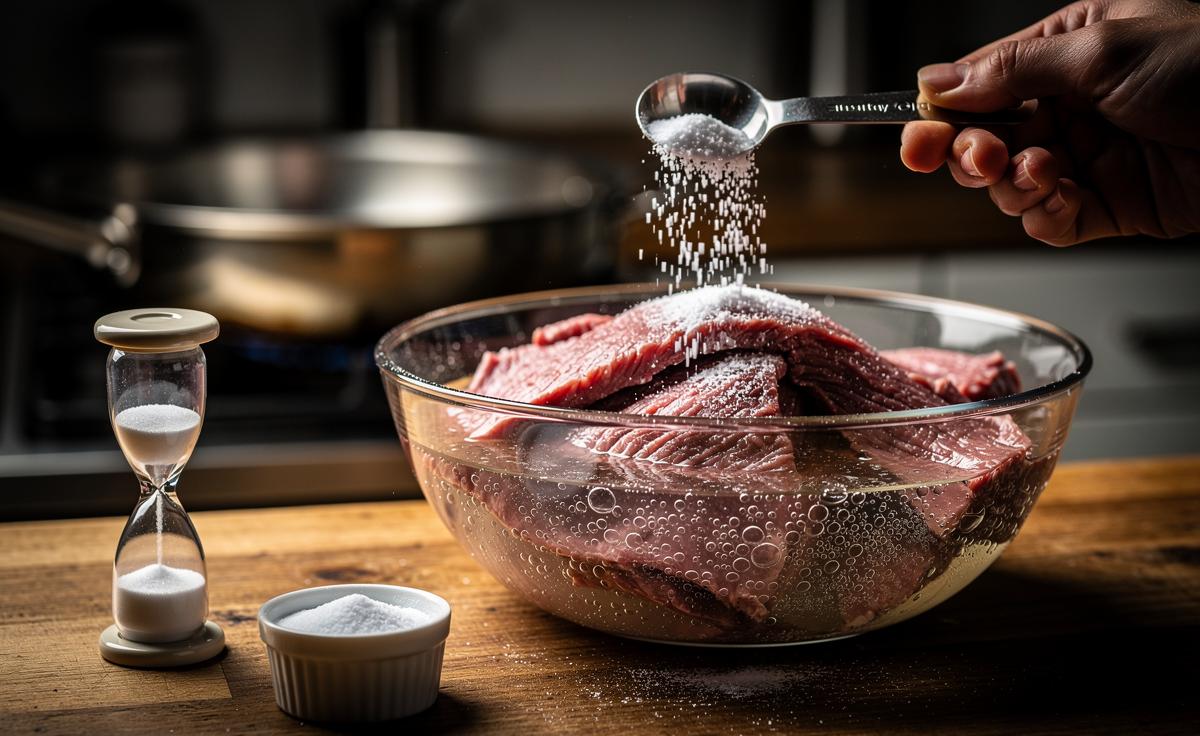
The reliable baseline for strips or small pieces is a diluted solution. Dissolve baking soda in cool water, toss to coat, rest, then rinse and dry. For larger cuts, a light sprinkle can work—still brief, still measured. Resist the urge to extend the clock; fifteen minutes is the goldilocks window for most thin cuts. Below are practical ratios to keep things predictable at home.
| Cut/Use | Method | Ratio | Time | Notes |
|---|---|---|---|---|
| Beef strips (stir‑fry) | Solution | 1/2 tsp baking soda per 250 ml water per 500 g meat | 15 minutes | Rinse, pat very dry, then season and cook hot |
| Chicken breast/thigh pieces | Solution | 1/2 tsp per 300 ml water per 500 g | 12–15 minutes | Rinse lightly; add salt after drying |
| Pork chops (thin) | Light sprinkle | 1/4 tsp per side for 150–200 g chop | 10–15 minutes | Wipe or rinse; dry before searing |
| Ground meat (burgers) | Slurry | 1/4 tsp per 500 g mixed with 1 tbsp water | 5–10 minutes | Do not overmix; avoids springy texture |
Workflow is simple: coat, wait, rinse (unless using a very light sprinkle), dry thoroughly, then season. Salt after the rinse to avoid early moisture draw. High‑heat cooking—wok searing, skillet frying, or grilling—capitalises on the improved surface for browning. Dryness is non‑negotiable: water inhibits crust and dilutes flavour.
Flavour, Texture, and Safety Considerations
Too much baking soda, or too long a rest, is where things go wrong. Overuse lifts pH so far that you’ll taste a faintly alkaline note and feel a woolly mouthfeel. Stick to the ratios and times, and you’ll avoid it. Rinsing removes residual bicarbonate and sets a neutral stage for seasoning. Some cooks skip the rinse with micro‑doses, but then you must be exacting and apply only a whisper. Either way, always pat until the surface is dry to the touch.
On flavour, baking soda is neutral compared with acidic marinades, which add tang. Use the quick tenderise as a foundation, then layer taste with soy, garlic, spices, or dry rubs after drying. Beware salt timing: salting early can counteract water retention at the surface. Add it just before heat or as part of a post‑rinse marinade. From a safety perspective, normal hygiene rules apply. Keep meat refrigerated during the 15‑minute rest. Wash hands, board, and bowl. Bicarbonate is food‑safe at tiny percentages, and the rinse mitigates any residual taste. If it smells soapy, you used too much.
When to Use It—and When Not To
This technique shines on thin cuts and small pieces: skirt, flank, sirloin strips, chicken breast slices, pork stir‑fry, lamb shoulder slivers. It’s a hallmark of Chinese “velveting” adapted for home speed. For weeknight noodles or fajitas, the payoff is immediate—shorter cook times, tender bites, better sear. It’s also handy for meal prep: pre‑slice, tenderise, rinse, dry, then refrigerate up to a day. Season and cook when you’re ready. Busy schedule, better texture—no trade‑off.
Where it’s unhelpful: thick roasts, bone‑in joints, or aged steaks where depth, not just surface, dictates chew. With these, the effect is too shallow to matter. Avoid delicate fish; it goes soft too quickly. Be cautious with already brined meats or those pumped with solutions—combined treatments can skew texture. And if you love the minerally bite of a dry‑aged steak, leave it alone. Use the bicarbonate trick as a targeted tool, not a reflex. Think of it as a scalpel, not a sledgehammer.
Tenderising with baking soda is fast, forgiving, and quietly transformative. It boosts juiciness, encourages browning, and rescues bargain cuts without masking flavour. The keys are modest doses, the 15‑minute clock, and diligent drying before heat. From Tuesday stir‑fries to Friday kebabs, it’s an ally that earns its place next to the salt. Now that you know the ratios and red flags, what cut will you try first—and how will you build flavour on top of your newly tender canvas?
Did you like it?4.5/5 (20)