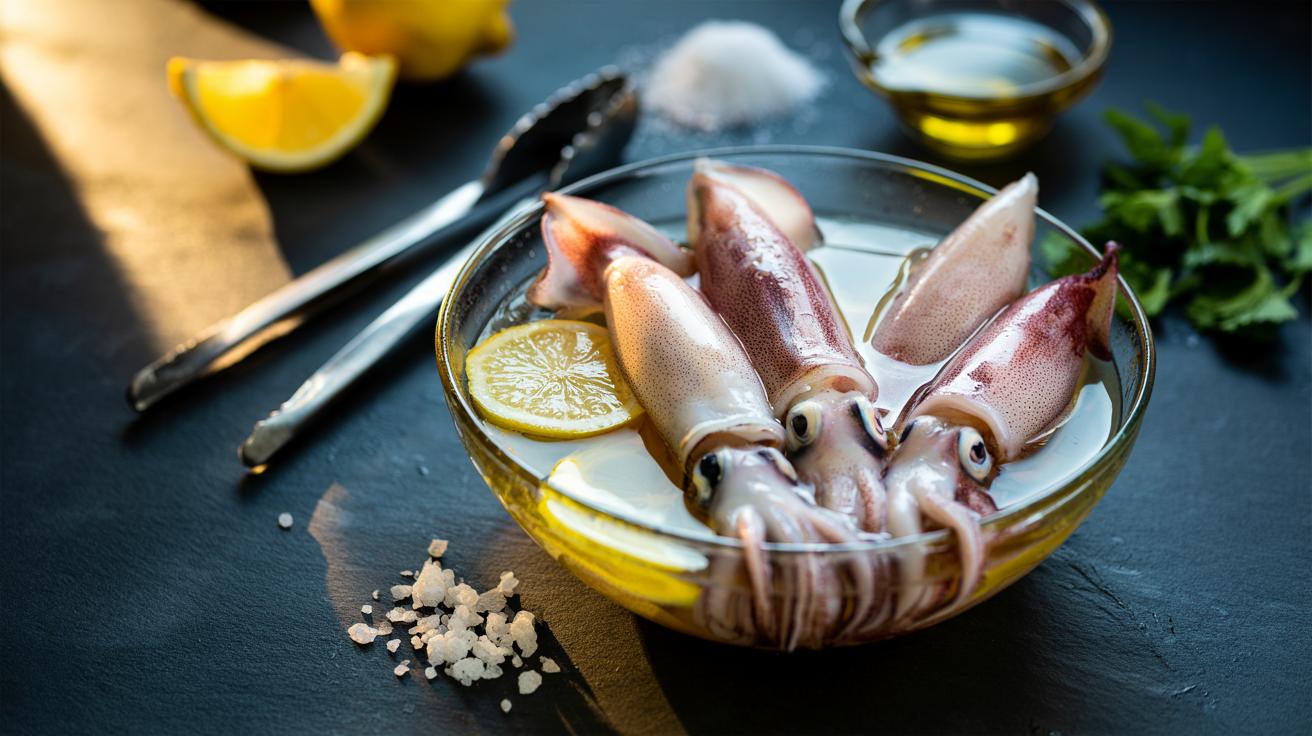
In a nutshell
- 🧪 Science: citric acid lowers pH and denatures squid’s myofibrillar proteins and collagen; it acts at the surface in minutes, so brief exposure yields tender, springy flesh without the mealy texture of over-acidification.
- ⏱️ Timing & ratios: For 250 g, use 2 tbsp lemon juice + 1 tbsp oil + salt + a pinch of sugar; rings 3–5 min, scored tubes 8–12 min, tentacles 6–8 min; never exceed 20 minutes; score, drain, and pat dry.
- 🔥 Cooking: Hit high heat—sear 45–90 seconds per side for browning without rubber; or braise 30–45 minutes until silky; finish with zest or a last squeeze to boost brightness without further denaturing.
- 🛒 Safety & sustainability: Choose firm, clean-smelling European/veined squid; frozen is fine; prefer MSC-certified; marinate in glass/ceramic, keep chilled, and remember acid is not a food safety step; eat the same day.
- 📋 Practical tips: Balance acidity with salt and a touch of sugar; don’t rinse—just drain; season right before heat; for frying, dry thoroughly; the article’s cut/time guide supports repeatable tenderness and flavour clarity.
Lemon meets squid. A small squeeze, a swift change. In home kitchens and behind fish counters across Britain, cooks swear by lemon juice to turn a potentially rubbery supper into a delicate, springy treat. The secret is chemistry you can taste: citric acid nudges squid proteins into submission, softening texture while brightening flavour. Done right, it works quickly. Sometimes almost instantly. Yet the difference between supple and sodden can be minutes, not hours. Here’s how and why to use lemon as a tenderising tool, the pitfalls to dodge, and the techniques to make your next plate of calamari sing with clean, coastal clarity.
The Science of Citric Acid and Squid
Squid is lean, high-protein seafood built from myofibrillar proteins (actin and myosin) wrapped in fine collagen. When exposed to an acid such as citric acid from lemon juice, these proteins partially unravel, a process called denaturation. The surface tightens, becomes opaque, and paradoxically softens as tangled strands relax and hold moisture differently. The key is the rapid drop in pH. Lemon juice sits around pH 2–3, and even when diluted in a marinade, it remains assertive enough to act fast.
Acid works at the surface first and fast. You’ll see a colour shift within minutes. That’s your cue the chemistry has started. Salt enhances this effect by helping proteins solubilise; a pinch of sugar steadies sharpness without muting brightness. Leave squid bathing too long and the network can break down excessively, turning mealy or chalky. Aim for a gentle nudge, not an acid bath. Think quick precision, not prolonged pickling. Short exposure equals tender, bouncy squid; long exposure risks pasty bite. This balance lets you capture lemon’s clean lift while preserving the flesh’s trademark snap.
The twist? Acid “cooks” without heat, ceviche-style. That isn’t the goal here. We’re preparing for heat, not replacing it. Keep times brief so the pan or grill can finish the job, delivering aroma, char, and that satisfying, delicate chew.
Timing, Ratios, and Cuts: A Practical Guide
Success starts with proportion and patience measured in minutes. For 250 g of prepared squid, combine 2 tablespoons lemon juice with 1 tablespoon neutral oil, 1/2 teaspoon sea salt, and a pinch of sugar. Add zest for perfume, not extra acidity. Toss to coat, then watch the clock. Most thin cuts need only 3–10 minutes. Score tubes in a shallow crosshatch to increase surface area; the pattern helps acid work evenly and looks beautiful when it curls on heat. Rinse? Not necessary if you’ve seasoned lightly; instead, drain well and pat dry so the pan sears instead of steams.
| Cut | Weight Guide | Lemon Juice | Time Window | Note |
|---|---|---|---|---|
| Thin rings (5–7 mm) | 250 g | 2 tbsp | 3–5 min | Fast soak; cook immediately |
| Scored tubes (2–3 cm wide) | 250 g | 2 tbsp | 8–12 min | Stop at first sign of opacity |
| Tentacles | 250 g | 1.5–2 tbsp | 6–8 min | Drain thoroughly; they hold water |
| Whole small squid | 200–300 g | 3 tbsp | 12–15 min | Butterfly for even contact |
Never exceed 20 minutes for quick-cook methods. Past that, the flesh starts losing its fine structure. Want more lemon without extra acid? Finish with zest, herbs, or a squeeze at the table. Keep lemon’s power on a timer, and you’ll capture tenderness without sacrificing texture.
Cooking After the Soak: Heat, Texture, and Flavour
The best partners for lemon-softened squid are ferocious heat and brevity. A cast-iron pan, smoking grill, or ripping-hot wok gives you browning in seconds. Pat dry after the marinade, add a film of oil, sear 45–90 seconds per side for rings and scored tubes. Tentacles take a touch longer. You’re chasing caramelisation, not stew. Over two minutes on medium heat means rubber. Either cook hard and quick or go the opposite way: a gentle braise of 30–45 minutes in tomato, wine, or saffron until silky.
Seasoning follows the same logic. Lemon starts the party; salt is your conductor. Dust with sea salt just before heat. Add chilli flakes for lift, parsley for grassy snap, or anchovy for depth. A final squeeze of lemon brightens without overpowering because it hits the plate, not the protein structure. For frying, the acid pre-soak keeps rings tender under a light coating. Shake off excess moisture, dredge quickly, then fry hot. High heat locks in the lemon’s perfume while crisping the exterior. Serve immediately with aioli or a verdant herb sauce.
Buying, Safety, and Sustainability Notes
Quality in equals quality out. Look for firm, translucent flesh with a clean sea smell. In UK markets, common species include European squid (Loligo vulgaris) and veined squid (Loligo forbesii). Frozen is a smart buy: ice crystals disrupt muscle fibres slightly, which can assist tenderness after thawing. Choose MSC-certified product where available and note seasonal abundance; prices fall when inshore fisheries are active. Preparation matters too. Peel the purplish membrane, remove quill and innards, and blot dry before the lemon even comes near.
Acid is not a food safety step. It doesn’t reliably kill pathogens or parasites. Keep squid chilled, marinate in glass or ceramic (not reactive aluminium), cover, and refrigerate during the short soak. Use clean tongs and bowls. If you’re not flash-cooking immediately, drain and hold cold for no more than an hour. Leftovers? Eat the same day; texture declines rapidly. For flavour without extra acidity, lean on zest, herbs, or infused oils. With careful sourcing, cold discipline, and that timed lemon touch, you’ll get pristine flavour and resilient tenderness every time.
Lemon doesn’t just add brightness; it rewrites squid’s texture in minutes, handing you control over chew, juiciness, and aroma. Treat the acid like a scalpel, not a mallet. Time it. Dry it. Sear it hot or braise it long, and let the lemon frame the sweetness of the flesh rather than shout it down. Ready to put the stopwatch by the chopping board and see how precisely you can tune tenderness—then taste the difference for yourself?
Did you like it?4.5/5 (26)