In a nutshell
- 🥝 Science: Kiwi’s actinidin enzyme snips muscle proteins (including collagen) at the surface, delivering fast tenderising without penetrating deeply.
- ⏱️ Method: Apply a thin kiwi smear for about 10 minutes, then scrape and wipe clean, season, and sear hard to heat‑inactivate the enzyme.
- 🔪 Cuts & timing: Rump/Sirloin 8–10 min; Skirt/Flank 10–12; Ribeye 6–8; Fillet 3–5—match time to thickness and err short.
- 🔥 Flavour & texture: Keep contact brief to avoid mushy results; scraped kiwi leaves minimal flavour, boosted by a soy/butter glaze after wiping.
- 🛡️ Safety & myths: Discard kiwi that touched raw meat, watch for kiwi/latex allergies, and remember enzymes act only on the surface—no overnight soaks.
What if a supermarket kiwi could turn a tough steak silky in a lunch break? It sounds like pub lore, yet the science is solid, swift and frankly delicious. The secret lies in the fruit’s natural protease arsenal, which snips stubborn meat fibres with clinical precision. No vacuum marinade. No gadgets. Just ripe kiwi flesh, ten minutes of patience, and a hot pan. Used properly, this is not a cover-up for poor beef but a texture tune‑up that keeps flavour intact. Time is everything with this method. Rush it and you gain. Overdo it and you’ll make paste. Here’s how to get it beautifully right.
Why Kiwi Works: The Science of Actinidin
Green kiwifruit contains actinidin, a plant protease that excels at cutting the peptide bonds in muscle proteins and some connective tissue components such as collagen. Think of it as a microscopic set of scissors. At room temperature, actinidin remains active and rapidly nibbles away at the surface layer of steak, loosening the structure so it feels tender under the knife and on the palate. It does not “soak in” deeply; this is a precise surface treatment. That’s good news: your beefy core remains intact while the bite becomes forgiving.
Unlike mechanical tenderising, which tears fibres, enzymatic tenderising alters them. Actinidin targets proteins like myosin and actin, disrupting the lattice that makes meat chewy when undercooked or from hard‑working muscles. It’s unusually resilient compared with other fruit enzymes, functioning across a broad pH range and staying active in the fridge, albeit more slowly. Papaya’s papain and pineapple’s bromelain do similar jobs, but kiwi offers a gentler curve—fast enough for weeknights, less prone to ruining texture if you watch the clock.
Two caveats matter. First, salt on raw meat can pre‑denature proteins at the surface, partly changing how enzymes bite; time your salting smartly. Second, lengthy exposure makes mush. Past 20–30 minutes on thinner cuts the structure collapses; the tender becomes weak, watery and oddly jammy. Ten minutes is the sweet spot where science feels like magic.
The 10-Minute Method, Step by Step
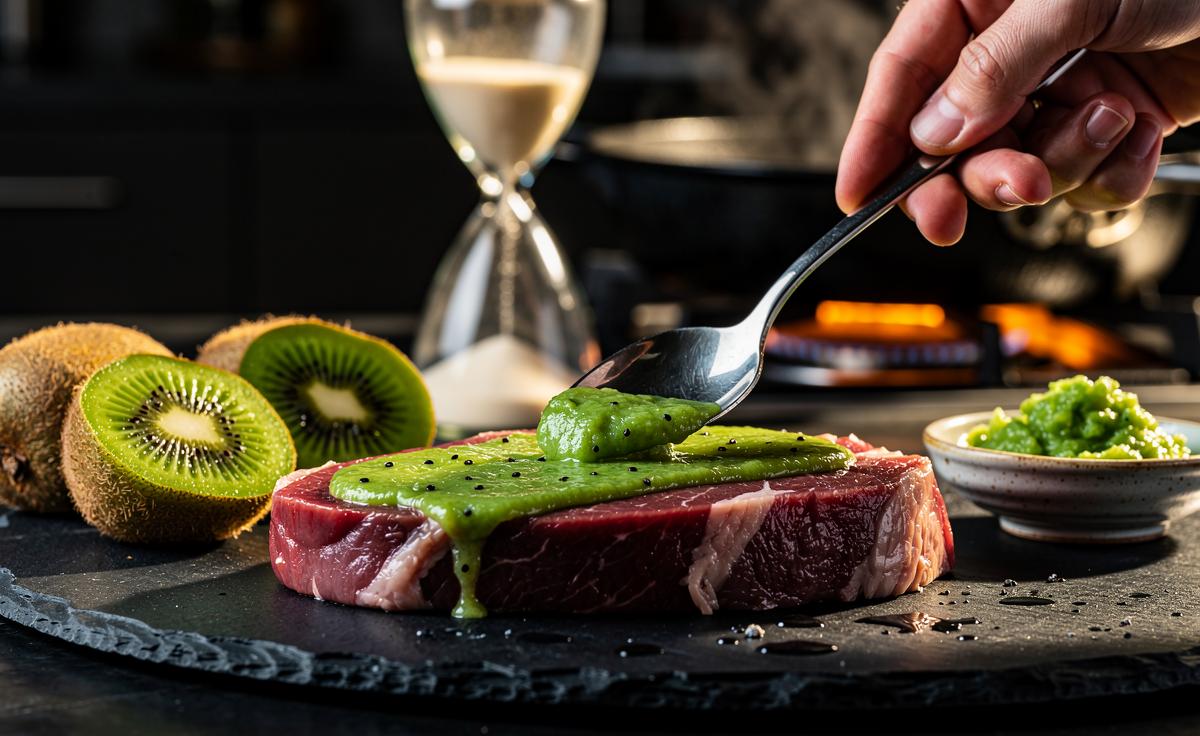
Pick a ripe green kiwi. Softer is stronger. Gold varieties work, but they’re generally milder. Peel, then mash the flesh with a fork into a coarse paste. One medium kiwi will handle roughly 400–600 g of steak. Pat the meat dry. Spread a thin, even film over both sides—no need to drown it. Set a timer. Five to eight minutes for thin steaks, ten for thicker or more sinewy cuts. Use the pause to heat your pan until it shimmers.
When the timer pings, scrape the fruit off thoroughly and wipe with kitchen paper. This matters: leftover sugars scorch, and lingering enzyme keeps working. Now season. If you prefer a dry brine, salt the steak 45–60 minutes ahead, then apply kiwi only for the last ten minutes. Otherwise, salt right after you wipe. Add pepper later to avoid burning. Sear in a little neutral oil or beef fat, aiming for a deep crust. Rest as usual. The knife will tell you it worked.
Flavour shifts are subtle. Kiwi’s green notes don’t shout once wiped away and seared, yet many tasters perceive a faint sweetness on the browned edge. Want insurance? Brush with oil and a dash of soy after wiping to anchor savoury depth. Heat instantly inactivates actinidin, locking the texture exactly where you set it. That’s the beauty of a hard sear and a stopwatch: tender, not slushy.
Timing, Cuts, and Flavour Trade-Offs
Different muscles need different minutes. A lean rump or sirloin with visible fibres responds brilliantly in ten. Skirt and flank can take a touch more because of their coarse grain, though you should still tread carefully. Fillet? It’s already tender; a quick three to five minutes is plenty, if you use kiwi at all. Match contact time to thickness and toughness, and always err short the first time you try a new cut. You can’t un-tenderise.
| Cut | Thickness | Kiwi Contact Time | Notes |
|---|---|---|---|
| Rump/Sirloin | 2–3 cm | 8–10 minutes | Best balance of tenderness and beefiness. |
| Skirt/Flank | 1.5–2 cm | 10–12 minutes | Slice across grain; watch for over-softening. |
| Ribeye | 3–4 cm | 6–8 minutes | Marbling helps; keep kiwi thin. |
| Fillet | 3–4 cm | 3–5 minutes | Optional only; minimal gain. |
As for flavour, scraped‑off kiwi rarely intrudes. Still nervous? Add a post-wipe glaze: soy, Worcestershire, a dab of butter. The fruit’s subtle acid and sugars have already tuned the surface, so savoury notes pop dramatically after searing. Short contact preserves meaty identity; long contact tastes oddly fruity and feels wet. Keep it snappy, and your steak will taste like steak—just more indulgent.
Safety, Myths, and Chef Tricks
Food safety first. Always apply kiwi with clean utensils, then discard any leftover fruit that touched raw meat. Wash boards and hands. People with kiwifruit allergy or latex–fruit syndrome should avoid this method; actinidin can provoke reactions. Concerned about raw enzymes? Relax: the moment the steak hits the pan, heat denatures actinidin. Cooking flips the off switch on the enzyme instantly.
Now the myths. No, enzymes won’t march centimetres into beef like brine does; they act where they’re smeared. No, resting in the fridge overnight with kiwi isn’t “extra tender”—it’s a texture disaster. Ten to fifteen minutes remains the gold zone. And no, you don’t need sugar or acid to “activate” actinidin. It works out of the gate. That said, a pinch of salt after wiping focuses flavour and helps crust formation; applying salt far in advance is fine, but schedule kiwi for the end.
Pro moves? Dry-brine thick steaks for an hour, then apply a wafer‑thin layer of kiwi for the last 8–10 minutes before cooking. For skirt, tenderise ten minutes, wipe, then brush with soy and oil to promote Maillard browning. If you want aromatics without fruit notes, mix mashed kiwi with neutral yoghurt, spread ultra-thin, and keep it to seven minutes—protein in dairy buffers the enzyme slightly. When in doubt, shorten the contact and test a corner.
Used with a cool head and a warm pan, kiwi is a scalpel, not a sledgehammer. In ten minutes you can turn weeknight cuts into weekend bites, while keeping the steak’s character intact. The secret is restraint: thin layer, strict timing, proper wipe, hard sear. That’s all. The reward is a tender chew, a booming crust, and juices that stay put. Will you try the stopwatch method on your next rump or give skirt the kiwi treatment and push for pub‑level perfection at home?
Did you like it?4.5/5 (24)