In a nutshell
- 🍚 Rice thickens via gelatinisation: heated grains release amylose and amylopectin, boosting viscosity around 70–80°C; gentle stirring and awareness of retrogradation shape body during cooking and cooling.
- 🔎 Choose the right grain for the job: basmati for light clarity, Arborio/Carnaroli for creaminess, brown rice for nutty heft, glutinous for rapid thickening, and parboiled when minimal thickening is desired.
- 🛠️ Use flexible methods: add 10–15 g raw rice per 500 ml and simmer, blitz cooked rice into a slurry, or whisk in rice flour; season boldly at the end because salt/acids slow gelatinisation.
- 🥣 Texture and nutrition: clean, dairy-free, gluten-free thickening with modest calories; expect day-two tightening and loosen with stock when reheating, simmer gently to avoid graininess.
- ✅ Control and safety: lid off to concentrate, muslin sachets for clear broths, stop when a spoon leaves a brief trail, and cool/store rice-containing soups promptly to stay food-safe.
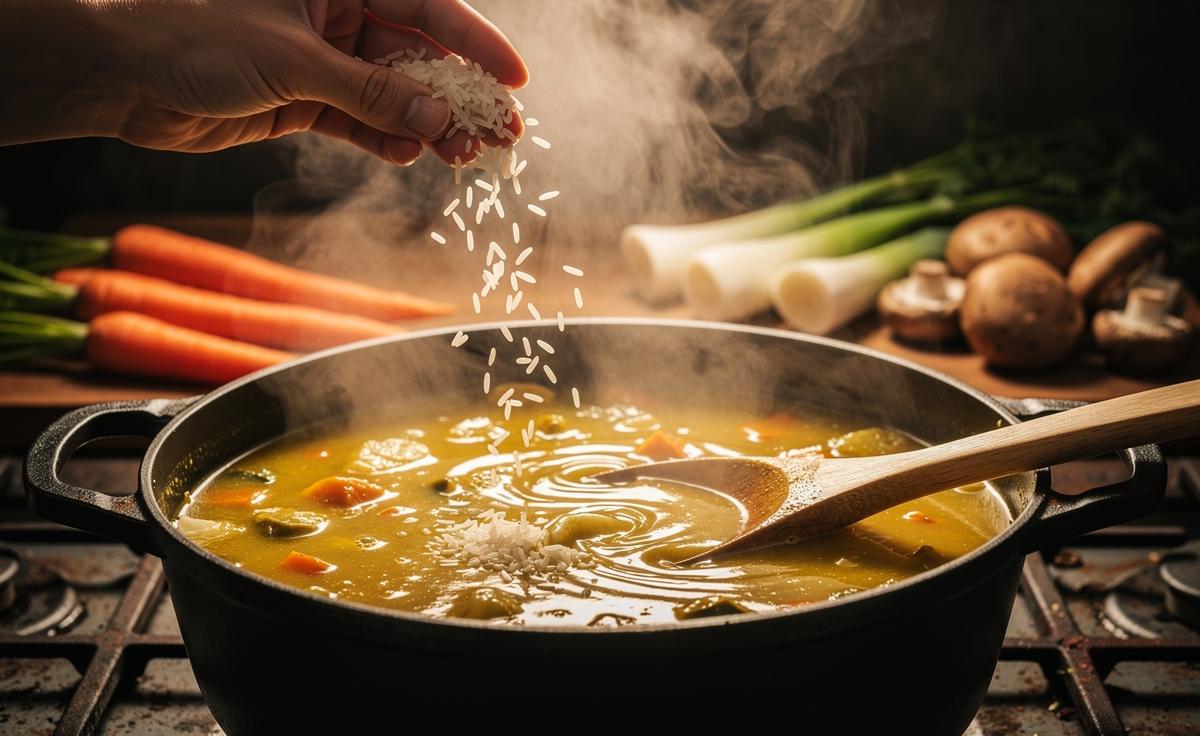
When a soup tastes right but looks thin, rice is the quiet fixer that saves dinner. These humble grains don’t just soak up liquid; they release starches that transform a watery broth into something plush, glossy, and deeply satisfying. Chefs use it. Home cooks swear by it. It’s budget-friendly, naturally gluten-free, and kind to delicate flavours, especially when cream would bludgeon the balance. The trick is knowing which rice, which method, and when to stop. Add too little and nothing changes; too much and you veer into porridge. With heat, time, and the right grain, rice thickens soup cleanly without floury taste or greasy heaviness.
The Science of Rice Absorption
Rice thickens because of gelatinisation: as grains heat in liquid, their starch granules swell, burst, and leak a tangle of amylose and amylopectin. Those molecules trap water and increase viscosity. Temperature matters. Most varieties gel between 70–80°C, but salt and acidity can nudge that window higher, so a tomato-rich broth may need a slightly longer simmer. Agitation helps the process; gentle stirring shears starch into the soup, thickening not just around each grain, but throughout the pot.
Different rices behave differently. Long-grain types, higher in amylose, absorb steadily and create a light, silky body. Short-grain, richer in amylopectin, thickens faster and creamier. Brown rice carries its bran, so it’s slower to hydrate but adds nutty depth and fibre. Heat plus time unlock starch granules—no roux required. Keep an eye on evaporation: some perceived thickening is simply water leaving the pot. Lid on for consistency, off for concentration. The sweet spot is where spoon trails hold briefly, then settle, a sign that starch is doing the heavy lifting without turning gluey.
One more variable: cooling. As soup rests, starch retrogradation tightens the matrix. That’s great for body tomorrow, but you may need a splash of stock when reheating to return it to the perfect flow.
Choosing the Right Rice for Your Pot
Pick rice as you’d pick a tool. For a delicate chicken broth, basmati gives lift without clouding flavours. For vegetable soups that want creaminess, Arborio or other risotto rices deliver a lush finish quickly. Jasmine adds perfume—use sparingly if aromatics are already busy. Brown rice contributes chew and nuttiness, though it demands patience. Glutinous (sticky) rice thickens at speed but can edge towards gummy if left too long. Parboiled and converted rices are more resistant; they’ll plump but release less starch, producing less thickening per gram.
Use this guide to match grain to goal:
| Rice Type | Starch Profile | Thickening Speed | Texture/Effect | Best For |
|---|---|---|---|---|
| Basmati (long-grain) | Higher amylose | Moderate | Light, clear body | Chicken, light veg broths |
| Arborio/Carnaroli | Higher amylopectin | Fast | Creamy, velvety | Blended veg, mushroom |
| Brown Rice | Bran slows absorption | Slow | Nuttier, hearty body | Lentil, tomato, minestrone |
| Glutinous (Sticky) | Very high amylopectin | Very fast | Dense, can be gummy | Small batch, quick fixes |
| Parboiled | Resistant starch | Slow | Minimal thickening | When texture must stay thin |
Choose by finish, not fashion: the “best” rice is the one that delivers your target texture. If in doubt, basmati for subtlety or Arborio for creaminess rarely disappoints.
Methods: From Whole Grains to Blitzed Grains
Whole grains, simple method: add 10–15 g of raw rice per 500 ml of soup. Simmer gently for 15–25 minutes until grains are tender and the liquid glosses. Fish out the grains if you want a smooth finish, or leave them in for texture. For crystal-clear broths, tie the rice in muslin; it will release starch but not shed grains. Add rice gradually and stop when the spoon leaves a short-lived trail—this prevents over-thickening.
Leftover cooked rice works brilliantly. Blitz 60–80 g cooked rice with a ladle of hot soup into a smooth slurry, return to the pot, and simmer 3–5 minutes. It thickens fast, with very little risk of catching on the bottom. For precision, use rice flour or finely ground raw rice: whisk 1 tablespoon per 500 ml of cold liquid, then stream it into the simmering soup, stirring. Give it 2–3 minutes of bubble to cook out any raw note.
Control variables. Salt and acids delay gelatinisation—season boldly at the end, and add lemon or vinegar off the heat. If blending, pulse, then blend fully; partial blending releases starch from vegetables and rice alike, adding body without heaviness.
Texture, Nutrition, and Reheating Considerations
Rice thickening is not just practical; it’s strategic. Compared with cream, it adds minimal fat while delivering complex carbohydrates and a little fibre (especially with brown rice). The mouthfeel is clean. Flavours stay bright. For dairy-free or gluten-free diets, it’s a reliable route to comfort without compromise. Rice gives you body without masking the broth’s character. That matters with seafood bisques or herb-forward vegetable soups where cream can smother nuance.
Expect change on day two. As your soup cools, starch tightens and the mixture thickens further. When reheating, loosen with stock or hot water—roughly 30–60 ml per portion—until it moves like warm honey. Avoid vigorous boiling; simmer gently to keep starch chains intact and prevent graininess. Freezing is fine, but thaw slowly in the fridge for best texture. If you’ve gone too far and it’s dense, balance is simple: dilute, re-season, and add a drizzle of olive oil for sheen. A final note on safety: cooled rice can harbour bacteria; keep the pot hot above 63°C or chill rapidly and store promptly.
Rice is a cook’s quiet insurance policy. It rescues thin soups, builds silky textures, and does it without shouting over your ingredients. Keep a jar near the hob and you’ll never fear a watery broth again. Try a spoonful in carrot soup for satin gloss, or suspend a muslin sachet in chicken stock for subtle body that doesn’t give the game away. Master the ratios, watch the heat, and stop the moment your spoon says “just right”. What soup will you thicken first, and which grain will you trust to do the job?
Did you like it?4.4/5 (21)